Small Call to Action Headline
Lynn's Earth/Gardening Academy


Climate Smart Environmental Design™
Designing living systems that thrive in a changing world.
Let’s start here:
The climate is shifting.
Weather patterns are less predictable.
Water arrives differently.
Heat lingers longer.
Storms hit harder.
Most people respond by reacting.
I prefer to design.
Climate Smart Environmental Design™ is my framework for creating growing spaces — from balconies to backyards to full food forests — that are built for adaptation, regeneration, and long-term resilience.
It’s not about panic.
It’s about intelligent stewardship.
What It Really Means
Climate Smart Environmental Design™ is the integration of:
Ecological literacy
Systems thinking
Practical implementation
Long-term resilience strategy
It asks better questions before we ever put a plant in the ground:
Where does water move — and how can we slow and hold it?
How can soil improve year after year instead of degrade?
What plant communities support one another naturally?
How do we design for diversity instead of dependency?
What will this space need in 5, 10, 20 years?
Instead of chasing problems, we design systems that prevent them.
That’s the difference.
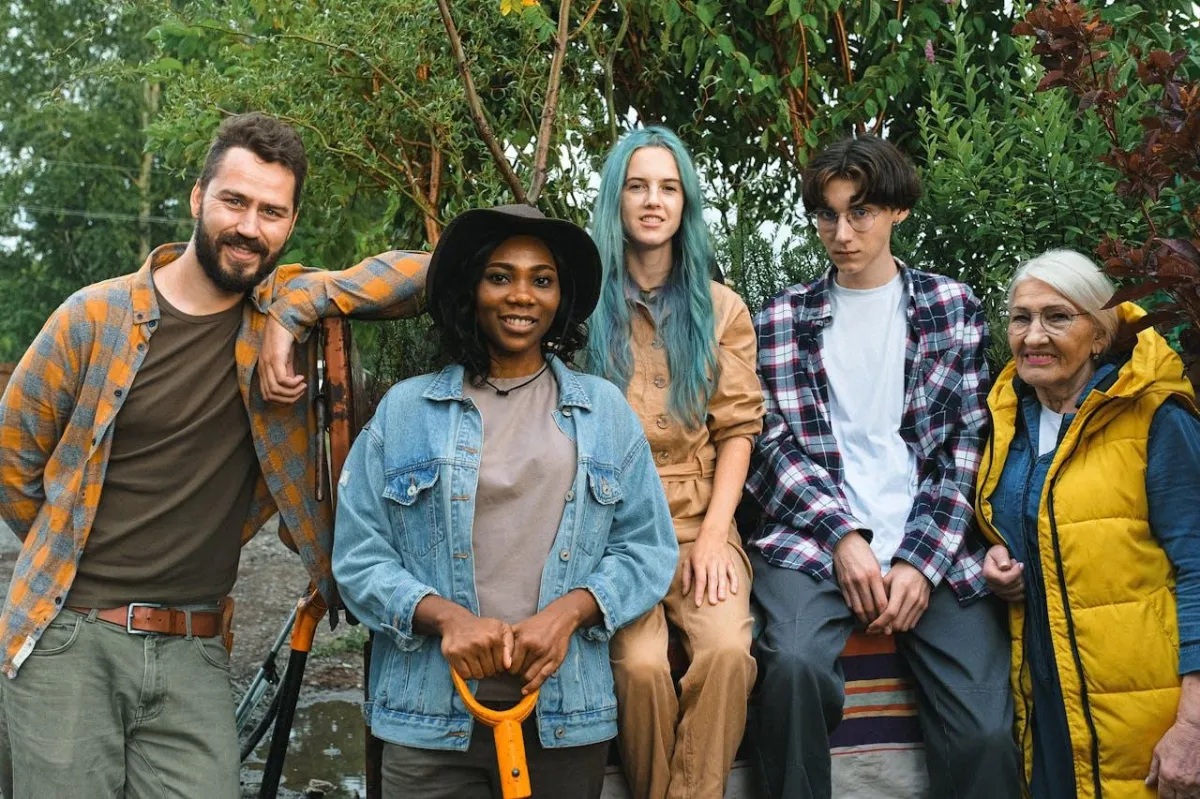
From Gardening… to Stewardship
Traditional gardening often focuses on:
What to plant
When to plant
How to fix what goes wrong
Climate Smart Environmental Design™ begins one layer deeper.
It focuses on:
Why the system functions the way it does
How patterns interact
Where resilience is built
How energy flows through the space
This is where gardening evolves into stewardship.
You stop fighting nature.
You start collaborating with it.
And something shifts.
You feel less reactive.
More grounded.
More capable.
Because you understand the design.
The Pillars of Climate Smart Environmental Design™
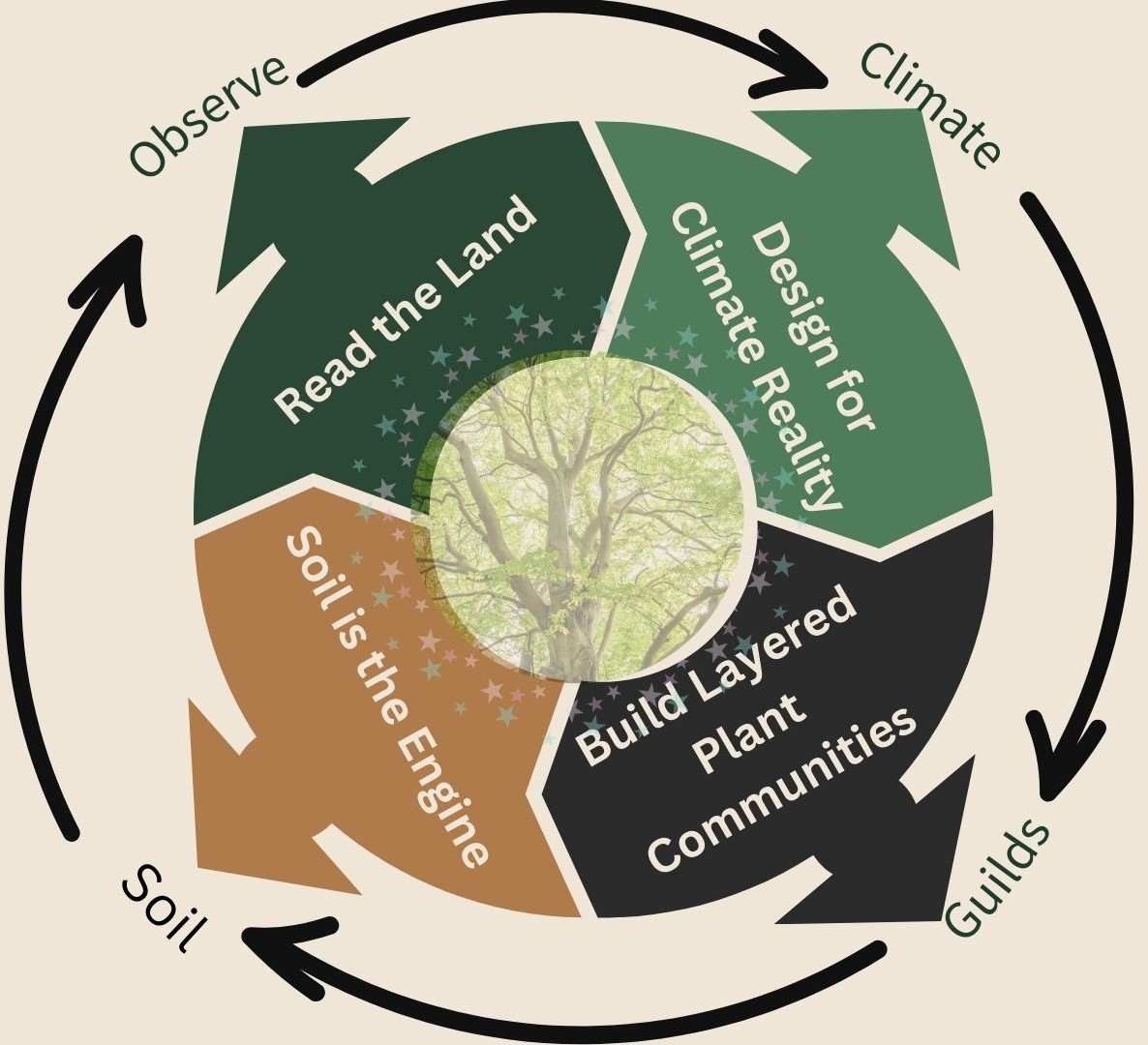
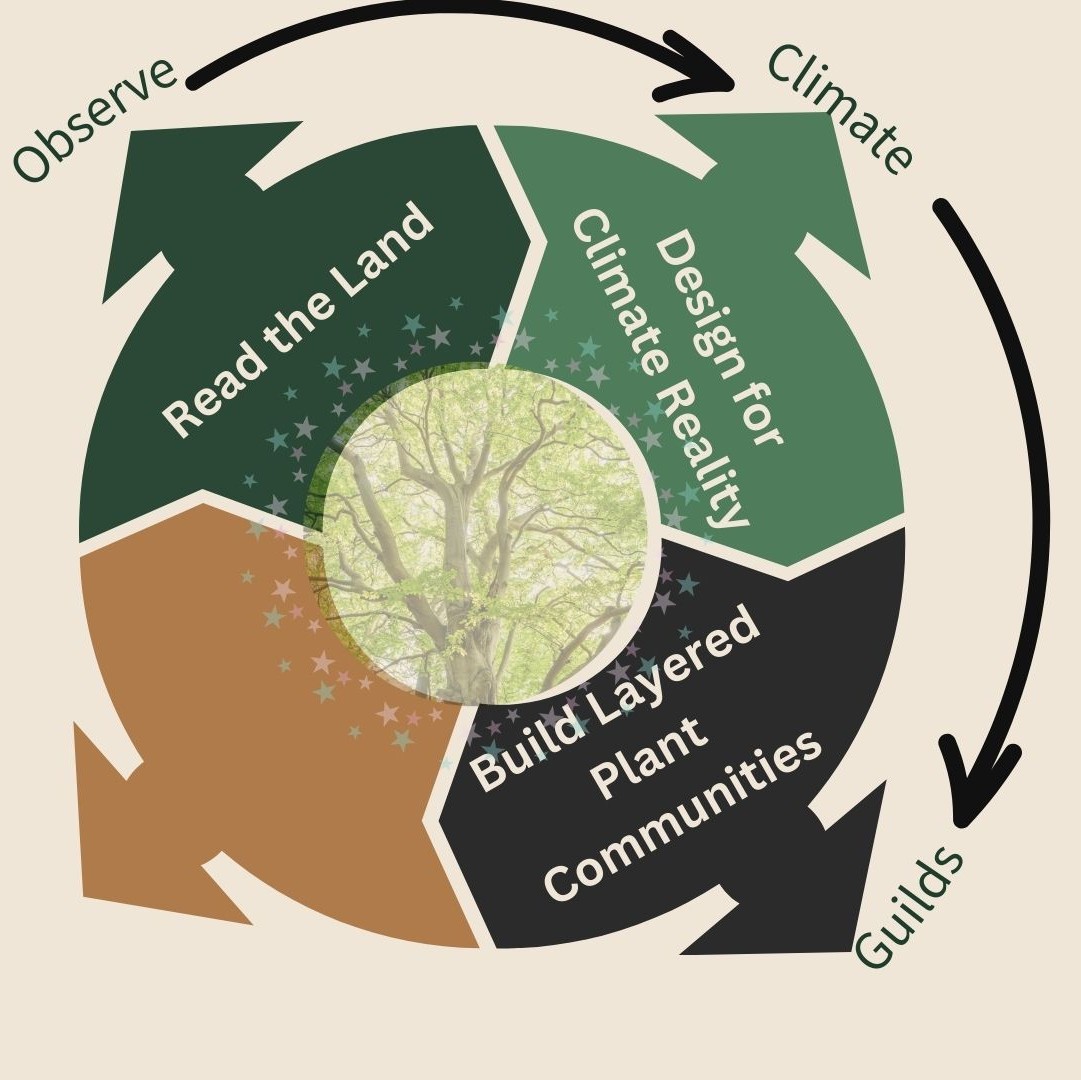
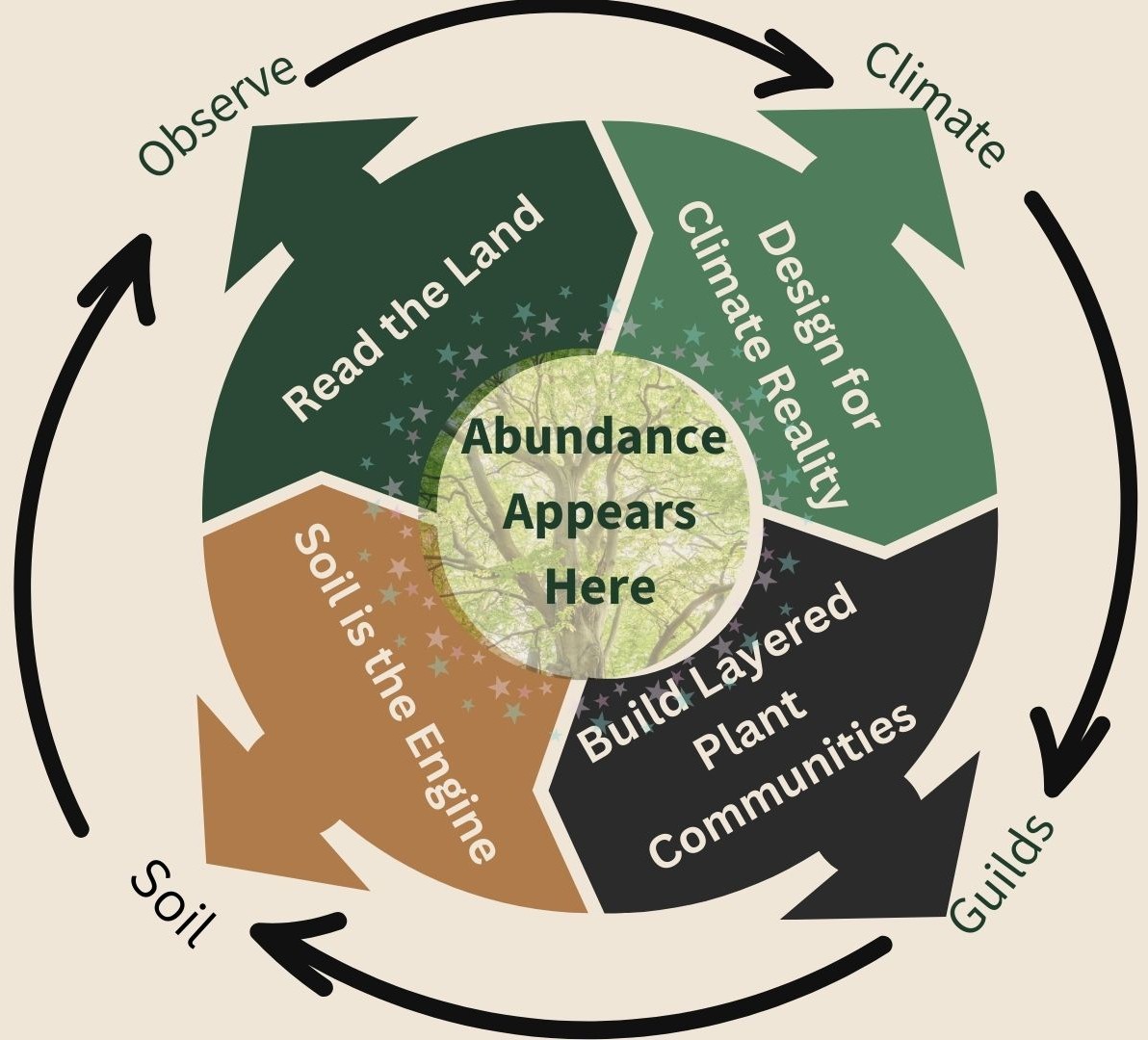
Climate Smart Environmental Design™ rests on four core pillars.
They are simple to say.
Lifelong to practice.
Transformational when applied together.
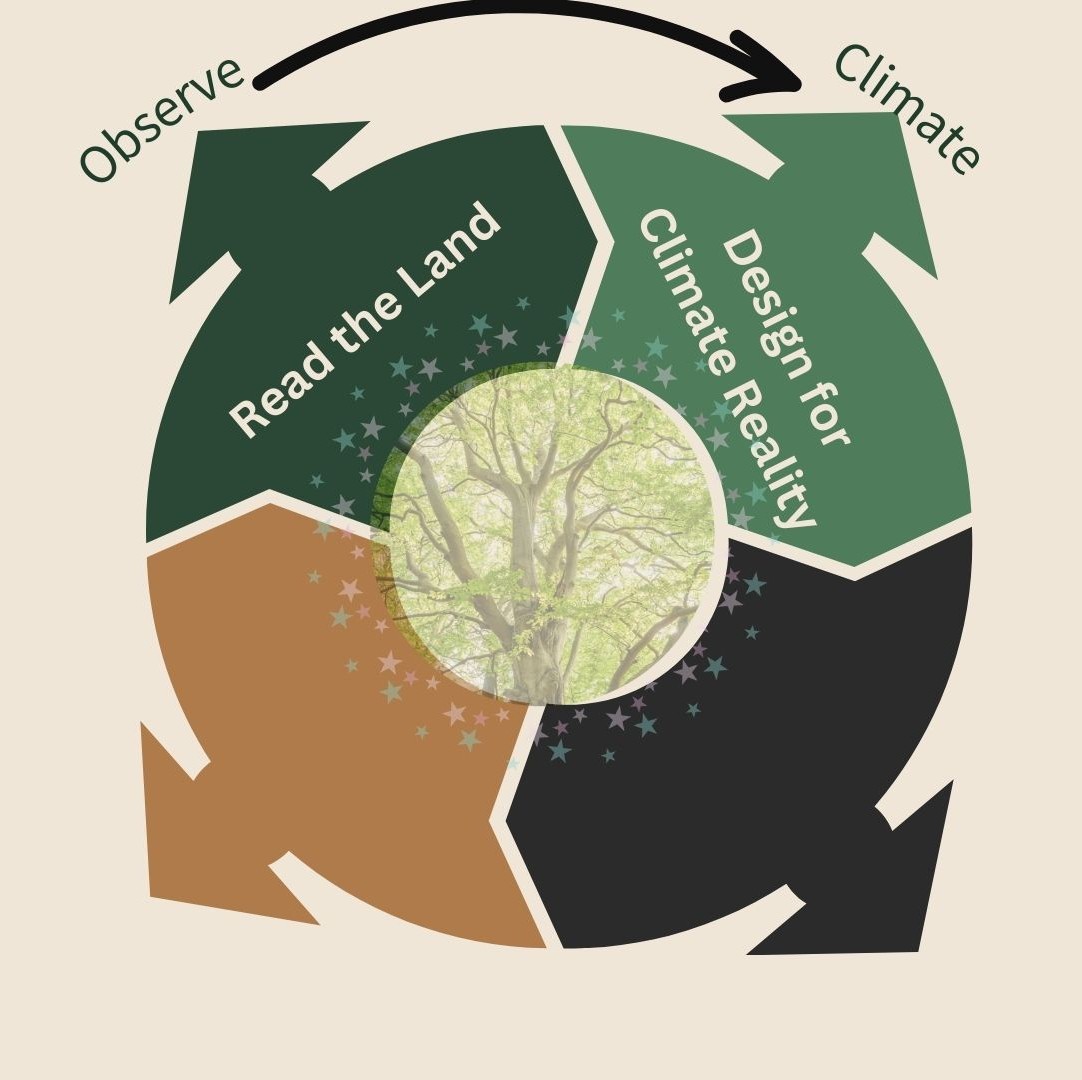
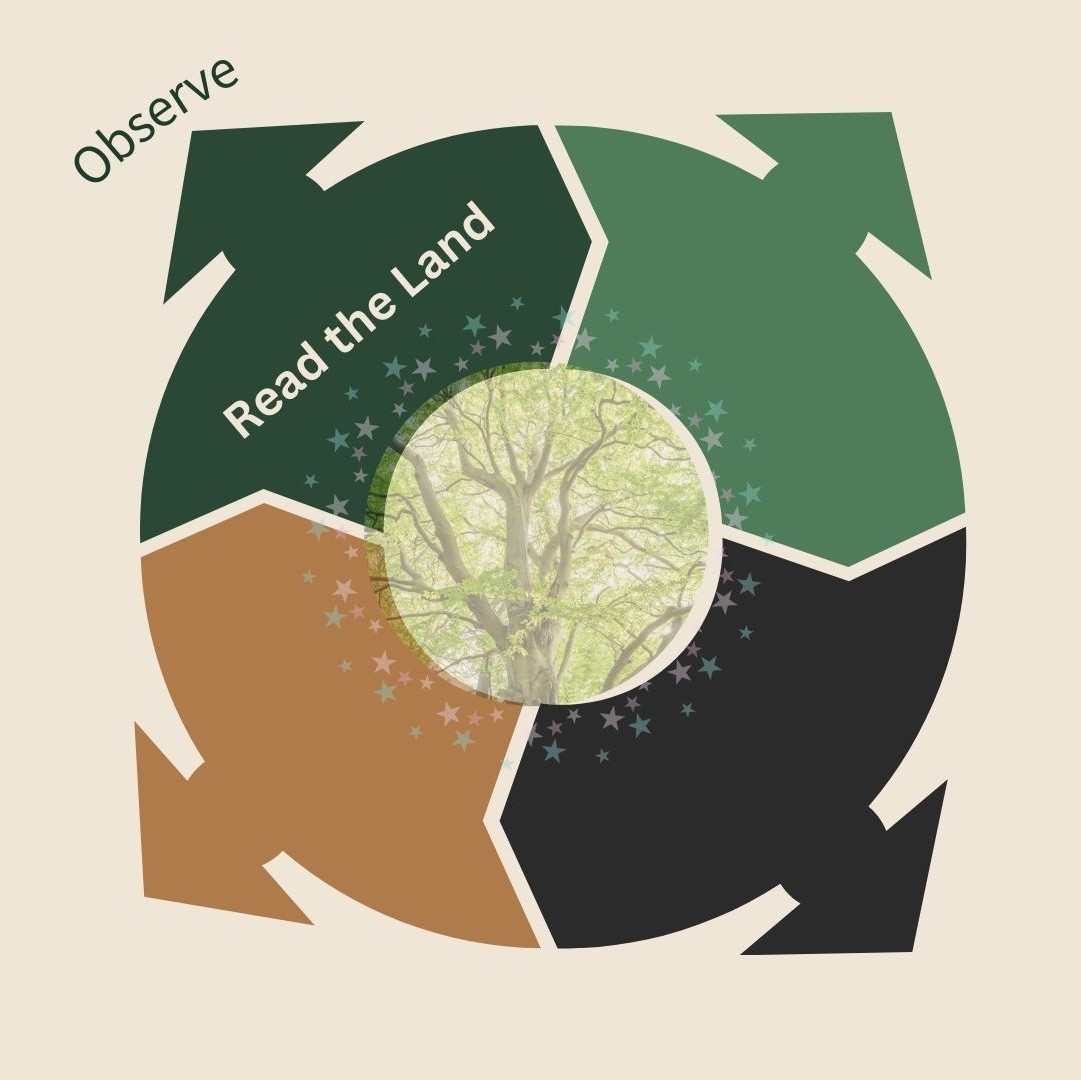
1. Read the Land
Before we plant, we observe.
Where does the sun linger longest?
Where does frost settle?
Where does water pool — or rush away?
What already thrives here without help?
Every landscape is already speaking.
Reading the land means slowing down long enough to notice patterns — slope, soil texture, wind exposure, microclimates, existing plant communities.
Design begins with humility.
We don’t impose a plan onto the land.
We interpret what it’s telling us — and work with it.
When you learn to read the land, you stop guessing.
You start designing with clarity.
3. Build Layered Plant Communities
Nature does not grow in rows.
It grows in relationships.
Trees.
Shrubs.
Perennials.
Groundcovers.
Roots.
Vines.
Layered plant communities create:
Natural pest balance
Moisture retention
Temperature moderation
Biodiversity that strengthens the whole
Instead of monocultures that require constant intervention, we design plant guilds and layers that support one another.
Diversity isn’t decorative.
It’s structural resilience.
When plants collaborate, you work less —
and harvest more stability.
2. Design for Climate Reality
Hope is not a strategy.
Climate Smart Environmental Design™ acknowledges what is:
Hotter summers.
Stronger storms.
Longer dry spells.
Unpredictable swings.
We design for the conditions we are actually living in — not the ones we wish we had.
That means:
Choosing plants suited to projected conditions
Managing water intentionally
Creating wind buffers and shade
Planning for resilience instead of perfection
When we design for climate reality, we reduce vulnerability.
Your garden becomes adaptive.
Your system becomes flexible.
Your confidence grows.
4. Soil Is the Engine
Soil is not dirt.
It is infrastructure.
It is biology.
It is chemistry.
It is community.
If soil health improves, everything improves.
Climate Smart Environmental Design™ treats soil as the engine of the entire system:
Feeding it with organic matter
Protecting it with living roots and cover
Encouraging microbial life
Minimizing disturbance
Healthy soil holds water longer.
Buffers temperature swings.
Cycles nutrients naturally.
Builds fertility over time.
When the soil is strong, the system is strong.
Always start with the engine.
When the Pillars Work Together
Read the land.
Design for climate reality.
Build layered plant communities.
Strengthen the soil engine.
Individually, each principle is powerful.
Together, they create landscapes that:
Adapt instead of collapse
Improve instead of exhaust
Feed people while supporting ecosystems
This is not trend-based gardening.
It is long-view design.
It is stewardship rooted in literacy.
And once you understand these pillars, you don’t just plant differently.
You see differently.
Where It Lives
Climate Smart Environmental Design™ is the foundation beneath everything I teach.
It informs:
Urban Eden™ — designing resilient systems even in small spaces
Backyard Bounty™ — structuring productive home gardens that improve over time
Life in the Food Forest™ — building layered, climate-adaptive ecosystems
Different scales.
Same intelligence.
Whether you’re growing herbs on a balcony or planting a multi-layered perennial system, the thinking is consistent.
That consistency is what creates results.
This Isn’t About Fear
It’s about responsibility.
It’s about recognizing that the way we grow food matters —
not just for yield, but for soil health, biodiversity, and future stability.
You don’t need to overhaul your life overnight.
You need to start where you are — with better design.
A single container can be climate smart.
A raised bed can be climate smart.
An entire property can be climate smart
.
Resilience scales.
Why This Matters Now
We are living in a time when:
Supply chains wobble
Weather surprises us
Food costs rise
Landscapes struggle
The answer isn’t anxiety.
It’s literacy.
When you understand how living systems function,
you become less dependent on fragile inputs and more capable of creating stability.
That is quiet power.
That is stewardship.
The Invitation
Climate Smart Environmental Design™ is not a trend.
It’s a long view.
If you want to:
Grow food with confidence
Improve your soil every year
Design spaces that adapt instead of collapse
Leave land better than you found it.
Then you’re already thinking like a climate smart designer.
You don’t need to be perfect.
You just need to begin — intentionally.
And I’m here to guide you through it.

Empowering Your GardeningJourney


