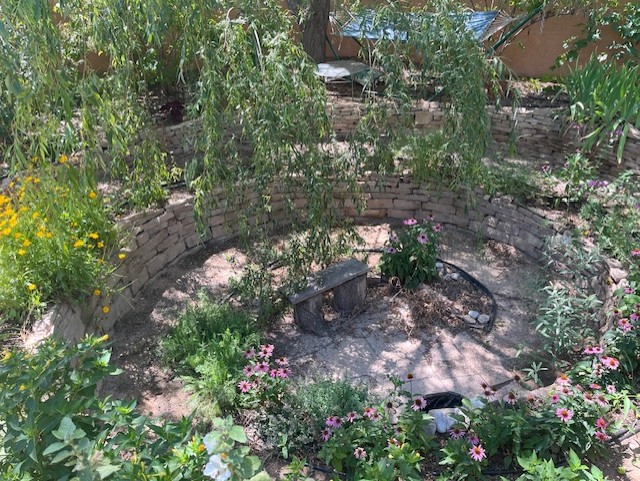
What is a Food Forest?
A Complete Guide for Families Who Want More From Their Land
If you have ever stood at your back door and thought, "Surely this patch of grass could do more than just give me something to mow," you are in good company. For many of us, the backyard is mostly a chore list: grass to cut, weeds to battle, and not much else to show for it.
But imagine for a moment: what if your yard could feed your family, cool your house in the summer, clean the air, invite butterflies and bees, and turn into one of the prettiest things you’ve ever grown? And best of all, what if it did most of that without demanding your weekends with a mower and a never-ending to-do list?
In this post, we’ll dig into what a food forest is, how it works, why it matters (especially these days), and what you’ll need to get started. Whether you have a postage-stamp backyard or a few acres to play with, there’s a way to make this work for you.
Let’s get started.
What Is a Food Forest?
A food forest is a living, layered ecosystem you plant on purpose, with the goal of growing food and other useful things for people. The idea comes from permaculture, and Robert Hart helped make the term popular. Think of it as a forest that’s been given a gentle nudge by a gardener: it looks and acts like a natural forest, but you choose the plants so they feed your family and help the local wildlife, too.
The magic word here is "multilayered." A food forest is not just a row of fruit trees, or a veggie patch with an apple tree on the side. It’s a whole community of plants, stacked from the tallest tree to the tiniest ground cover, all working together like a healthy forest—except most of what grows is something you can eat, use for medicine, or put to good use. People have been doing this for centuries, long before it had a fancy name. Many indigenous cultures shaped their landscapes this way, though early settlers often mistook these carefully managed places for wild, untouched forests.
Usually, about 60 to 80 percent of the plants in a food forest are there to feed you. The rest are the helpers: they attract good bugs, fix nitrogen in the soil, make mulch, give wildlife a home, or just keep the whole system humming along.
This mix matters. Nature doesn’t do monocultures—fields of just one crop are fragile and needy. They gobble up fertilizer, water, and your time, because they’re fighting against how nature likes to work. A food forest, on the other hand, works with nature. Over time, it gets more productive, more resilient, and takes care of itself more and more.
The Seven Layers of a Food Forest
What really sets a food forest apart from your average garden is its vertical design. Instead of just one layer of plants, you get seven layers (sometimes even more), each with its own job. Where a regular veggie patch uses just the ground, a food forest stacks plants from the tallest tree to the lowest ground cover. Each layer catches its own bit of sunlight and rain, and together, they can produce three to five times as much food as a traditional garden.
1. The Canopy Layer
This is where your big fruit and nut trees live: apples, pears, walnuts, pecans, chestnuts, or mulberries, depending on where you garden. The canopy is the backbone of your food forest, giving shade, shelter from the wind, and a good chunk of your calories. If you’re working with a smaller yard, look for semi-dwarf trees so you don’t end up with a jungle you can’t reach.
2. The Sub-Canopy Layer
Here you’ll find the smaller trees and big shrubs that like a bit of shade or the edge of the forest. Think elderberry, serviceberry, pawpaw, or dwarf fruit trees. They fill in the space between the ground and the tallest trees, and give you even more variety at harvest time. Need a plant that helps feed the soil? The Siberian pea shrub is a good pick for this layer, and it can get up to 20 feet tall.
3. The Shrub Layer
This is the berry patch of your food forest: currants, gooseberries, bush cherries, raspberries, blueberries, and hazelnuts all fit here. For their size, these shrubs are some of the hardest workers, producing loads of fruit in the dappled shade under the bigger trees. If you like variety in your fruit bowl, this layer is your friend.
4. The Herbaceous Layer
This layer isn’t just for herbs—it’s for any plant without a woody stem. Here’s where your perennial veggies, herbs, and flowers go: comfrey, yarrow, mint, chives, sorrel, asparagus, and lavender all fit the bill. Lavender is a double-duty plant, bringing in pollinators and helping keep pests in check. Many of these are what gardeners call "dynamic accumulators"—their deep roots pull up minerals from way down in the soil, and when their leaves fall and break down, those nutrients become food for the rest of your plants.
5. The Ground Cover Layer
This is the living carpet of your food forest. Low-growing plants like strawberries, clover, creeping thyme, and sweet woodruff spread out to cover the soil, keeping it moist, stopping erosion, and beating weeds at their own game. This layer quietly does a lot of heavy lifting for the health of your garden. Before your ground covers fill in, you can use sheet mulch—a layer of cardboard topped with leaves and compost—to protect and feed the soil.
6. The Root Layer
Underground crops like garlic, burdock, skirret, groundnut, and Jerusalem artichoke occupy the root layer. These plants use space that would otherwise go unused, and many others are among the most nutritious and reliable foods you can grow.
7. The Vertical/Climbing Layer
Vines and climbers weave through the other layers, using vertical structures, other plants, and trellises to reach the light. Grapes, kiwi, hardy passion fruit, hops, and beans are common climbers in a food forest. They add enormous productivity in a small footprint.
Some designers add an eighth layer: the aquatic layer, for food forests that include a pond or water feature. Watercress, water chestnuts, and lotus are all possibilities here.
The beauty of this layered structure is that it mimics the vertical complexity of a natural forest, which means it captures more sunlight, uses more of the available rainfall, supports more biodiversity, and produces more food per square foot than any single-layer growing system.
How a Food Forest Differs From a Garden or an Orchard
Most of us grew up with one of two mental models for growing food at home: the vegetable garden or the fruit tree. Both are wonderful. Neither is a food forest.
A vegetable garden is primarily annual. You plant it, tend it intensively through the growing season, harvest it, and then start over the following year. It produces abundantly, but it requires significant inputs of time, labor, compost, seeds, and water every single season. There is no momentum. Every year begins at zero.
An orchard is perennial, which is a step closer to a food forest. But a conventional orchard is a monoculture or near-monoculture. It grows one or a few species in rows, with bare soil or short grass between them. That bare or simplified understory means the system is not supporting itself. You still need to bring in fertilizer, manage pests, and do significant pruning and maintenance.
A food forest is different from both because it is designed for succession. That means it is intentionally planted to move through stages over time, becoming more complex, more diverse, and more self-sustaining as it matures. In the early years, you are doing more work, establishing plants, managing competition, and building soil. In practice, you usually start with the larger structural trees first and develop the smaller layers around them over time. But as the system matures, it begins to take care of itself more and more. The ground covers suppress weeds. The nitrogen fixers feed the fruit trees. The deep-rooted herbs break up compacted soil. The leaf litter builds organic matter. Different plants also contribute distinct ecological functions, so the whole system generates its own fertility.
This is the quality that makes a food forest so profoundly different from any other approach to growing food. It is not a system you maintain. It is a system you build, and then it continues to build itself.
Why Start a Food Forest? Three Compelling Reasons
There are many reasons to consider a food forest, but three are particularly urgent and relevant for families right now.
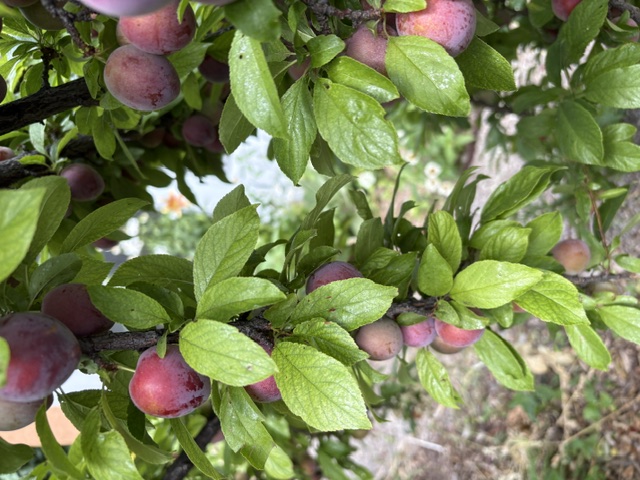
Reason One: Food Security and Grocery Savings
Food prices have risen sharply in recent years, and most honest projections suggest they are not coming back down. Quite likely, they will continue to rise. The combination of supply chain disruptions, climate-related crop failures, rising energy costs, and increasing demand from a growing global population means the era of cheap, abundant, stable grocery-store food is behind us.
A food forest is one of the most powerful responses to this reality that an individual family can take on their own property.
The core reason is the perennial nature of most food forest plants. Once a perennial food plant is established, it produces food year after year with very little ongoing cost. It functions as a resilient food production system, not just a garden. There are no seeds to buy, no beds to prepare, and no seasonal planting and replanting. The plant is simply there, doing what it does, and you show up to harvest.
This is fundamentally different from the economics of annual vegetable gardening. Annual gardens are wonderful and worthwhile, but they require inputs every single year. A mature food forest, by contrast, operates largely on its own fertility cycle. The leaves that fall feed the soil. The soil feeds the roots. The roots feed the canopy. And the canopy feeds your family.
Families who make this shift often save 30 percent or more on their grocery bills once the food forest reaches maturity. Not by living entirely off the land, not by becoming subsistence farmers, but simply by having an abundant, diverse, productive ecosystem on their own property that supplies a meaningful portion of their fresh fruit, vegetables, nuts, and herbs.
A food forest also includes annual food crops, especially in the early stages, before the perennial structure has fully developed. So you are not waiting years to see your first harvest. If you do not want to wait for everything from seed, you can buy plants to get a head start. You are producing food from the beginning, while the longer-term perennial infrastructure takes shape around your annual beds.
The food security dimension goes beyond cost savings. There is something deeply stabilizing about knowing that your family has food growing in your yard that does not depend on a supply chain, a delivery truck, or a grocery store remaining fully stocked. In an era of increasing uncertainty, that kind of resilience has a value that is hard to put a dollar figure on.
Reason Two: Climate Healing on Your Own Land
Most conversations about climate change focus on large-scale industrial solutions: renewable energy, carbon capture technology, policy changes, and corporate responsibility. Thisdoes fruely matter. But climate healing can also take place at the scale of individual pieces of land, and food forests are among the most effective tools for that work.
Land degradation, the depletion and destruction of healthy soil ecosystems through industrial agriculture, development, overgrazing, and chemical use, is now understood by many scientists to be as significant a driver of our climate crisis as the burning of fossil fuels. Degraded land cannot absorb and store carbon. It cannot hold water. It cannot support the microbial life that keeps ecosystems functioning. It becomes, instead, a source of carbon release, flooding, drought, and collapse.
A food forest directly reverses this process.
When you plant a food forest, one of the first things that begins to happen is the return of soil life. The mycorrhizal networks, those extraordinary webs of fungal connections that link plants together underground, begin to re-establish themselves. These networks are not just fascinating biology. They are the infrastructure of a healthy ecosystem. They allow plants to share water, nutrients, and even chemical signals about pest pressure. They are how a forest thinks, communicates, and self-regulates. As the system matures, it also improves soil health and biodiversity over time.
As the mycorrhizal networks return and the soil life diversifies, several important things happen. More water is absorbed into the soil and stored there, and shaping the land to slow water helps infiltration and reduces erosion, rather than letting runoff carry topsoil away. Carbon is removed from the air through photosynthesis and stored in the soil, where it supports soil life and stays out of the atmosphere. The local temperature drops as the tree canopy shades the ground and releases water into the air through transpiration. Wind is reduced. Pollutants are filtered. Biodiversity returns.
As plants grow, they are continuously converting water and carbon dioxide into sugars and oxygen through photosynthesis. Every leaf on every plant in your food forest is doing this work, all day, every day through the growing season. A mature food forest, with its multiple layers of foliage, does this at an extraordinary scale compared to a lawn or a bare garden bed.
It is worth pausing on what this means. By planting a food forest on your land, you are not just growing food. You are actively participating in climate restoration. You are rebuilding soil. You are storing carbon. You are returning water to the landscape. You are creating habitat for insects, birds, and other wildlife that are under enormous pressure from habitat loss. You are making the air around your home cleaner and cooler.
And you get to eat strawberries while you do it.
This is not a small thing. The cumulative impact of thousands of families making this choice on their own land is genuinely significant. It will not solve climate change on its own, but it is real, tangible, local climate action that produces abundance rather than requiring sacrifice.
Reason Three: A Healthier Environment for Your Family
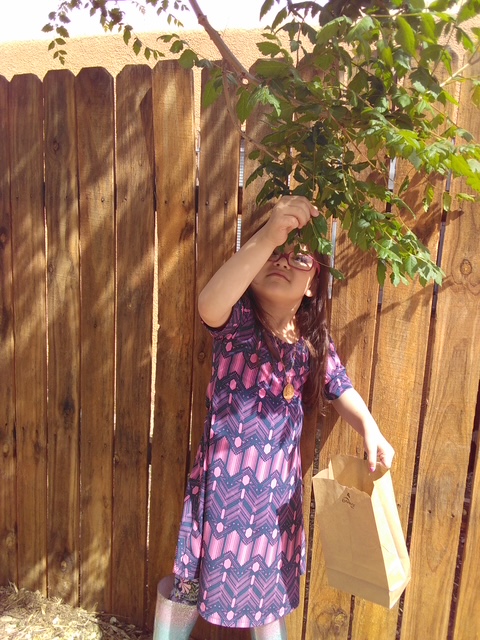
The immediate environment in which your family lives, the air you breathe, the water that moves through your property, the temperature of your outdoor spaces, the presence or absence of chemicals in your soil, all of these are directly affected by what is growing on your land.
A food forest creates a measurably healthier immediate environment in several important ways.
Temperature regulation. A well-planted food forest canopy can reduce the temperature of the area beneath it by several degrees compared to an open lawn or paved surface. This matters enormously in an era of increasingly intense heat events. Your outdoor spaces become genuinely usable again in the heat of summer. Your home stays cooler. Your energy bills reflect that.
Air quality. Plants filter particulates, volatile organic compounds, and other pollutants from the air through their leaves and roots. A diverse, layered planting with significant leaf surface area does this work at a meaningful scale. The air in and around a mature food forest is genuinely cleaner than the air over a lawn or bare soil.
Water quality. A food forest dramatically reduces runoff from your property. Rather than rainwater rushing across impermeable or degraded surfaces and carrying whatever is on them, soil, chemicals, debris, into storm drains and waterways, a food forest absorbs that water into its deep root systems and soil structure. The water that does leave your property has been filtered through layers of organic matter and microbial life.
Chemical reduction. A food forest, by design, is not a system that depends on chemical inputs. Species diversity creates natural pest and disease resistance. The soil life creates natural fertility, which often means less work managing pests and fertility once the system is established. You are not spraying pesticides on the plants your children play beneath and the fruit your family eats. That is not a small benefit.
Mental and emotional health. This one is harder to quantify but no less real. Access to green space, to living ecosystems, to the sensory richness of a diverse planting, has well-documented positive effects on mental health, stress levels, attention, and overall well-being. Having that kind of space in your own backyard, a place that is alive and changing and producing abundance, is genuinely good for the humans who live with it.
How Much Land Do You Need?
One of the most common misconceptions about food forests is that you need a lot of land to create one. You do not.
Food forests can be successfully designed and implemented on properties ranging from a generous urban backyard to several acres of rural land. The principles are the same. Most sites still need at least 6 hours of sunlight daily for a productive food forest. The scale and species selection simply adjust to what you have.
A quarter-acre suburban lot can support a food forest. With a couple of semi-dwarf fruit trees in the canopy, a layer of berry shrubs, a rich herbaceous understory, and ground covers that suppress weeds while feeding pollinators, you increase diversity productivity. That small system, once established, can produce hundreds of pounds of food per year and transform your entire property.
On half an acre or more, you have room to design a more complex system with a fuller canopy, more diverse species, perhaps a small pond, and dedicated zones for different functions. Productivity increases significantly, and the ecological impact becomes more substantial.
On several acres, you are designing a genuine food forest ecosystem that can provide most of a family's food needs, support significant biodiversity, and serve as a meaningful component of local ecological infrastructure.
The right scale for you is the one that matches your land, your energy, your budget, and your goals. The right plan depends on the site, budget, and goals. You do not need to do everything at once. Many thriving food forests were built incrementally, adding plants and layers over several years as resources and knowledge allowed.
1.6 Common Questions About Food Forest Design
How long does it take to see results?
It depends on what you mean by results. If you mean "when will I harvest my first food," the answer is quickly. Annual vegetables, strawberries, herbs, and fast-growing shrubs like raspberries can produce in the first season. If you mean "when will the system feel established and abundant," most food forests hit their stride between years three and seven, with ongoing growth and increasing productivity for decades after that.
The most important thing to understand is that you are not waiting years to experience the benefits. You are building something from the beginning that is already working, already healing soil, already feeding pollinators, already producing food. The experience of tending a young food forest is itself deeply rewarding.
Does a food forest require a lot of maintenance?
In the early years, yes, there is meaningful work involved. You are establishing plants, managing competition from existing weeds and grass, building soil, and learning your site. But the trajectory of a food forest is toward less maintenance over time, not more. As the system matures, the ground cover suppresses weeds, the canopy shades out competition, the soil life manages fertility, and the whole system becomes increasingly self-regulating, with the garden functioning more cohesively. Many mature food forest gardeners describe their maintenance as primarily harvest and observation, with occasional pruning and replanting.
What about climate and region?
Food forests can be designed for virtually any climate where plants grow. The specific species you choose will differ dramatically between a humid subtropical climate and a semi-arid high desert, but the principles of layered, diverse, perennial planting apply everywhere. The key is choosing plants adapted to your specific conditions rather than trying to force them to grow where they do not belong. Where possible, source species locally to improve adaptation and resilience.
Where do I start?
Start with observation. Before you plant anything, spend time watching your land. Where does water collect after rain? Where is it dry? Where does the sun hit in the morning and afternoon? Where is the existing shade? What is already growing, and what does that tell you about your soil? Take note of water flow, sun patterns, and which plants already perform well before you put anything in the ground. The more you know about your site before you plant, the better your design decisions will be.
Then start small. Pick one area. Plant one plant community, a central plant surrounded by companions that support it. Learn from that. Expand from there.
The Deeper Vision
A food forest is not just a gardening strategy. It is a different way of relating to land.
Most of us have inherited a model of land management that is fundamentally extractive. We take from the land without giving back. We simplify it, control it, and optimize it for short-term productivity without considering what it costs the land, soil, water, or ecosystem over the long term. We treat our yards as aesthetic backdrops to our lives rather than living systems with their own intelligence and needs.
A food forest invites a different relationship. It asks you to observe before you act. To work with the tendencies of your land rather than against them. The core idea is to learn from natural ecosystems. To think in decades rather than seasons. To measure success not just in pounds of food harvested but in the health of the soil, the diversity of species, the return of birds and bees and butterflies, the quality of the water moving through your property.
This is not idealism. It is ecology. And it turns out that when you work with ecological principles rather than against them, the result is both more productive and more beautiful than anything you could achieve by force, especially when many of the most essential choices are the permanent ones made early, like water, access, and structure.
Families who make this shift often describe it as one of the most meaningful things they have ever done with their land. Not because it is easy, but because it is real. Because it connects them to something larger than themselves. Because it produces genuine abundance while healing the land it grows on. Because their children grow up knowing where food comes from, watching ecosystems at work, and developing a relationship with the living world that will shape how they move throughout their lives.
That is what a food forest is really about. Not just groceries. Not just climate metrics. A different way of living on the land you already have.
Ready to Start Your Own Food Forest?
If this has you looking at your yard differently, I want to invite you to take the next step with me.
The Living Abundance Immersion is my 10-week program where I walk you through food forest design and the process of implementing your own food forest from the ground up. We cover site assessment, species selection for your specific climate and conditions, layered design, plant community planting, soil building with compost and natural fertilizers, irrigation, water systems, and the ongoing rhythms of tending a maturing food forest as you plan for different sites and develop the system over time. We also cover how to protect young plantings and use woody biomass, such as wood chips, as mulch.
This is not a theoretical course. It is a hands-on, step-by-step journey through the real work of creating a thriving edible ecosystem on your land, whatever size that land happens to be.
If you are ready to stop looking at your yard and wondering what it could be, and start building what it actually can be, I would love to have you join us.
Register here or drop "ABUNDANCE" in the comments, and I will send you the details directly. 🌱


