Nitrogen Fixing Trees: A Practical Guide for Food Forests and Gardens
It’s amazing how some trees can help feed the plants around them. As you prune apple trees or mulch berry bushes, nitrogen-fixing trees quietly work below the surface, taking nitrogen from the air and turning it into nutrients for the soil. This process doesn’t need factories or store-bought fertilizer—just roots, helpful bacteria, and a partnership that’s been evolving for ages.
If you want to build a food forest or improve your garden soil without buying lots of extra products, learning about these trees can make a big difference.
Key Takeaways
Nitrogen-fixing trees work with special bacteria in their roots to turn nitrogen from the air—which is about 78% of our atmosphere—into forms that plants can use. This boosts soil fertility without needing synthetic fertilizers.
These trees take care of their own needs first, but nearby fruit trees benefit over time as leaves fall, roots die back, and pruned branches break down. This process adds nitrogen-rich material to the soil over three to five years.
A well-designed food forest uses a mix of nitrogen-fixing trees, shrubs, and perennials. Place them so they help fruit trees but don’t create too much shade or compete for water.
For each species in this guide, you’ll find details about the best climate, water needs, sunlight, and soil pH. This helps you choose the right nitrogen fixers for your garden.
How you manage these plants is important. Pruning regularly helps share more nitrogen and keeps some species, like autumn olive, from becoming too aggressive or invasive.
What Are Nitrogen Fixing Trees and Why They Matter
Nitrogen-fixing trees can form a partnership with certain bacteria—mainly Rhizobium for legumes and Frankia for actinorhizal species. These bacteria live in root nodules and turn nitrogen from the air (N₂) into ammonia, then into forms like ammonium and amino acids that plants can use.
You can think of this process like an underground factory. The tree gives carbon from photosynthesis, and the bacteria give back fixed nitrogen. This partnership can greatly improve soil fertility, which is why nitrogen-fixing trees are so important in sustainable agriculture—they help reduce the need for synthetic fertilizers.
Leguminous nitrogen-fixing trees are the most common type, with more than 650 species that play key roles in natural ecosystems. In orchards and food forests, these trees act as support plants, slowly improving the soil for other plants through falling leaves, root changes, and pruning.
You can use these trees to help young fruit trees grow on poor soil, restore nutrients in overused pastures, or improve soil in city gardens with low fertility. In regular farming, nitrogen-fixing plants can add anywhere from 45 to 700 pounds of nitrogen per acre (50 to 800 kg per hectare) each year, depending on the species and how they’re managed.
Nitrogen-fixing trees add nitrogen to poor soils and also help improve soil structure and biodiversity. Still, you need to manage your soil well by adding organic matter, keeping the pH right, and making sure there’s enough moisture. You’ll usually see the biggest savings on fertilizer after three to five years of adding plant material regularly.
How Biological Nitrogen Fixation Works
Most of the air around us—about 78%—is nitrogen gas (N₂). But most plants can’t use this nitrogen directly. It stays in the air, out of reach, until nitrogen-fixing bacteria get involved.
Here’s how it works, step by step:
Compatible bacteria infect the roots of nitrogen fixing trees through root hairs.
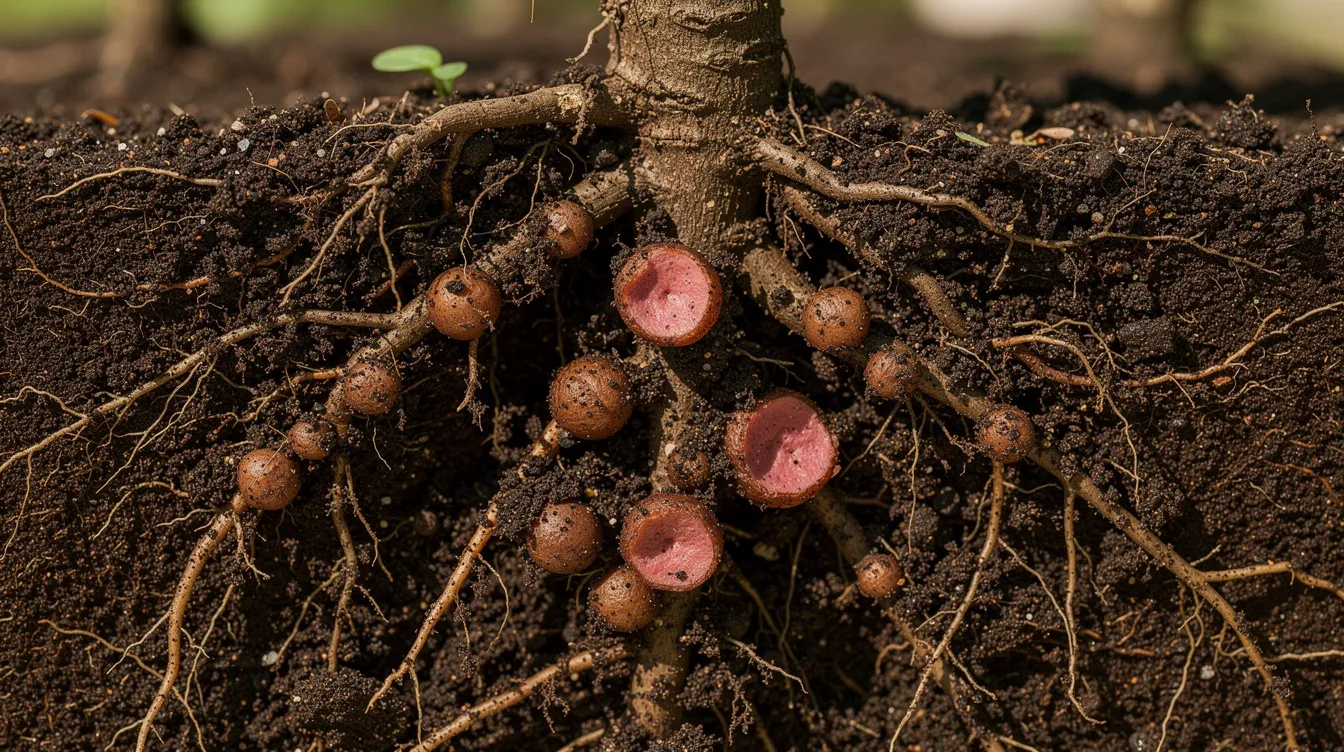
The tree responds by forming nodules-small swellings where bacteria live, protected from oxygen.
Inside these root nodules, bacteria use the enzyme nitrogenase to turn atmospheric nitrogen into ammonia.
The plant converts ammonia into ammonium and amino acids, which it can use for growth.
Nitrogen reaches other plants via decomposing leaf litter and root dieback.
Nitrogen-fixing trees often have deep roots, so they can reach nutrients deep in the soil. This helps keep the soil stable and supports other plants by dropping leaves that feed soil microbes.
Legume vs. Actinorhizal Nitrogen Fixers:
Legumes (black locust, mesquite, acacias) partner with Rhizobium bacteria; often faster fixation rates
Actinorhizal species (alder, sea buckthorn, goumi) partner with Frankia; often more tolerant of poor soil and cold climates
Several factors affect how well nitrogen fixation works, such as soil pH (most nitrogen fixers prefer around 6.0 to 7.0), oxygen, soil temperature, and adequate phosphorus and molybdenum. If you see pink or red nodules on the roots, that means the process is active. You can gently dig near young nitrogen-fixing plants to check their roots.
Nitrogen Fixing Trees vs. Shrubs
Choosing between tall nitrogen-fixing trees and smaller shrubs depends on your space and what you want to achieve. In a food forest, each layer has its own role. Large trees form the canopy and add lots of plant material over time, while shrubs grow closer to fruit trees and provide benefits without much shade.
The idea of a “nurse tree” is to use fast-growing nitrogen fixers to protect and feed young fruit trees for five to ten years. As the orchard grows, you can thin or prune these trees back.
Advantages of nitrogen fixing shrubs (goumi, Siberian pea shrub):
Easier to prune and manage
Less shade competition
Faster nitrogen cycling to nearby plants
Suitable for small gardens
Trade-offs to consider:
Potential competition for water and light
Some species like autumn olive are considered invasive in many U.S. states
Regular pruning or coppicing required
For a balanced setup, put tall nitrogen-fixing trees on the north side of fruit trees, place medium-sized shrubs on the sunny sides, and use low-growing fixers like clover and vetch as living mulch or cover crops.
Designing Nitrogen Fixer Guilds Around Fruit Trees
A fruit tree guild is like a small ecosystem built around each tree. It includes nitrogen fixers, plants that gather nutrients, flowers for pollinators, and groundcovers. You can also use nitrogen-fixing trees in systems like alley cropping, living fences, and windbreaks to improve soil and get other benefits.
Sample temperate apple guild (USDA zones 4–8):
Living mulch ring of white clover (herbaceous fixer)
Black locust or alder 12 to 20 feet (4–6 m ) to the north
Goumi shrubs at eastern and western edges
Sample warm-climate citrus guild (USDA zones 9–11):
Pigeon pea 6 to 10 feet (2–3 m) from trunk
Gliricidia as taller canopy support
Sunn hemp as seasonal groundcover
In agroforestry, nitrogen-fixing trees can be used in alley cropping, hedgerows along slopes, and living fences. They offer shade, animal feed, and help enrich the soil all at once.
Spacing guidelines:
Large nitrogen fixing trees: 12 to 20 feet(4–6 m) from fruit tree trunks
Nitrogen fixing shrubs: 3 to 6 feet (1–2 m) away
Orient taller fixers to avoid shading solar-hungry fruit trees
Top Nitrogen Fixing Trees for Home Orchards (With Climate, Water, Light, and pH)
The next section describes popular nitrogen-fixing tree species, from black locust in cooler areas to gliricidia in the tropics. For each tree, you’ll see details about climate, water, sunlight, and soil pH needs.
When choosing nitrogen-fixing trees, think about what you want from them—some give food, animal feed, wood, or all three. Always check your local invasive species lists before planting.
(Note that you will not be planting a solid acre of nitrogen-fixing trees, but the amounts per acre are given for comparison purposes.)
Black Locust (Robinia pseudoacacia)
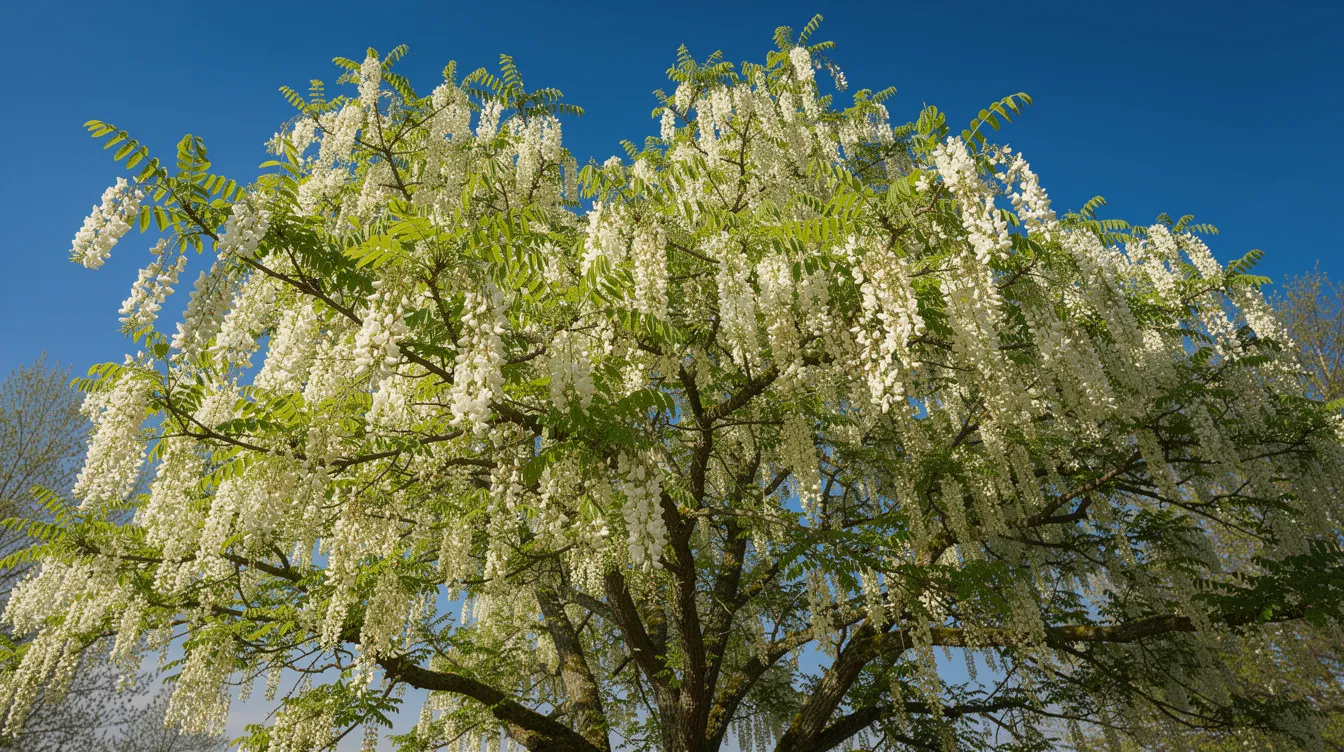
Black locust is a fast-growing legume tree and strong nitrogen fixer producing fragrant flowers beloved by pollinators. Its rot-resistant wood makes excellent fence posts and firewood.
Climate Zones: USDA 4–8; tolerates -30°C (-22°F)
Water Needs: Drought-tolerant once established; moderate moisture first 2–3 years; avoid waterlogged soils
Light: Full sun (6+ hours daily); reduced fixation in shade
Soil pH: 6.0–7.5 optimal; tolerates down to 5.0; strongly alkaline soils above ~8.0 limit uptake
Young trees fix approximately 25 to 50 pounds per acre (30–75 kg /ha) per year, with some sites reaching over 90 pounds (100 kg.) Pruning nitrogen-fixing trees like black locust can enhance the nitrogen available to nearby plants, as removing branches leads to decomposition of connected roots and their nodules, releasing nitrogen into the soil.
When planting, scarify the hard seed coats to promote germination, typically using hot water as a method. Coppice every 3–7 years to manage size and produce nitrogen-rich mulch. Watch for suckering and potential invasive spread outside its native Appalachian and Ozark ranges.
Honey Locust (Gleditsia triacanthos)
Honey locust is often listed as a nitrogen fixer, but the evidence is mixed. It might have some nitrogen-fixing bacteria, but it mainly acts as a support tree with an open canopy and provides animal feed. Its deep roots also pull up nutrients from lower soil layers.
Climate Zones: USDA 4–9
Water Needs: Moderately drought-tolerant; needs watering during prolonged droughts in the first 3–5 years
Light: Full sun; valued for light, dappled shadeSoil pH6.0–8.0; tolerates slight alkalinity
Pick thornless types if you’re planting near paths. Even if honey locust doesn’t fix much nitrogen, its fallen leaves and pods add organic matter and help cycle nutrients for fruit trees.
Alders (Alnus spp.)
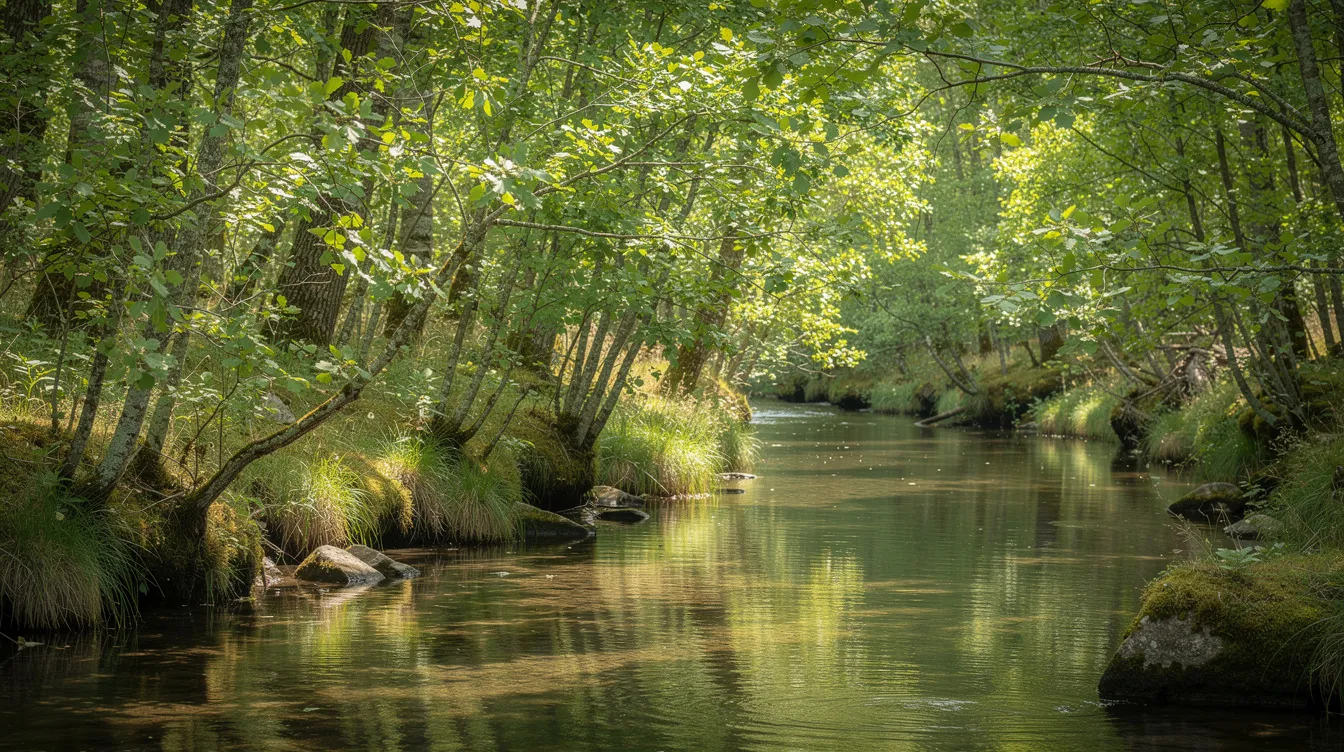
Alders are actinorhizal nitrogen fixers partnering with Frankia bacteria, widely used in riparian restoration and temperate agroforestry. Red alder (A. rubra) and European alder (A. glutinosa) are most common.
Climate Zones: USDA 4–8
Water Needs: Prefers moist to wet soils; tolerate flooding; avoid very dry sites
Light: Full sun to light partial shade
Soil"\: pH5.5–7.0
Pure red alder stands sustain long-term fixation rates of 90 to 260 pounds per acre (100–300 kg N/ha} per year, among the highest for temperate woody species. Certain nitrogen-fixing trees like red alder also help release rock-derived nutrients, further enhancing soil fertility.
Grow alder along the wet edges of orchards and cut it back every three to six years. This gives you poles and mulch while keeping the trees healthy.
Mesquite (Prosopis spp.)
Mesquite is a classic nitrogen fixing tree of arid regions, valued for deep roots, nitrogen fixation, animal fodder pods, and fuelwood. It’s widely used across the U.S. Southwest, Mexico, and parts of Africa.
Climate Zones: USDA 8–11; tolerates lows to -12°C (10°F)
Water Needs: Extremely drought-tolerant once established; deep watering first 2–3 years; avoid waterlogged sites.
Light: Full sun required
Soil pH: 6.0–8.5; performs well in alkaline desert soils
Plant mesquite far enough from irrigated fruit trees to prevent roots from competing. Use trimmed branches as mulch. Be aware that some types, like P. juliflora, are invasive in parts of Africa and Asia.
Gliricidia (Gliricidia sepium)
Gliricidia is a fast-growing tropical legume used as living fences and shade for coffee and cacao since the mid-20th century in Central America. NFTs like gliricidia provide shade and regulate microclimates in agricultural systems.
Climate Zones: USDA 10–12; frost-free areas above ~18°C (64°F)
Water Needs: Moderate to high rainfall (1000–2500 mm/year); tolerates dry seasons; supplement in droughts
Light: Full sun for vigorous regrowth
Soil pH: 5.5–7.5
Some nitrogen-fixing trees are especially useful in subtropical and tropical farming because they help restore nutrient cycles and improve soil. For example, studies in Guadeloupe found about 313 kg of nitrogen per hectare each year in harvested plant material. You can use the cut branches from trees like gliricidia as mulch to boost crop yields. Cutting these trees back one to three times a year drops nitrogen-rich material around fruit trees.
Useful Nitrogen Fixing Shrubs and Small Trees
Nitrogen-fixing shrubs are often more practical than large trees in small gardens or city food forests. They’re easier to trim, don’t create much shade, and quickly add nitrogen-rich material to nearby plants.
Many nitrogen-fixing trees and shrubs also provide high-protein feed for animals, especially during dry seasons. This is a valuable extra benefit for people raising livestock.
Autumn Olive (Elaeagnus umbellata)
A fast-growing nitrogen fixing shrub from East Asia, widely planted for wildlife habitat and erosion control in the mid-1900s. It’s an actinorhizal nitrogen fixer producing edible fruits.
Climate Zones: USDA 3–8\
Water Needs: Drought-tolerant; benefits from moisture first 1–2 years
Light: Full sun to light partial shade
Soil pH: 5.0–8.0; performs well on sandy soils and poor soil
Be careful: autumn olive is now invasive in many U.S. states. Only plant it where it’s allowed by law. For most home gardens, it’s better to choose native nitrogen fixers or goumi instead.
Goumi (Elaeagnus multiflora)
A smaller, less aggressive relative of autumn olive, goumi produces edible red fruits and works well in permaculture food forests.
Climate Zones: USDA 5–8
Water Needs: Moderately drought tolerant; best yields with consistent moisture
Light: Full sun; acceptable fruiting in partial shade
Soil pH: 5.5–7.5
Trim goumi every one to two years to help it grow more fruit and to get nitrogen-rich branches for mulching.
Siberian Pea Shrub (Caragana arborescens)
A cold-hardy legume shrub from northern Asia, historically planted as windbreaks and producing small protein-rich seeds.
Climate Zones: USDA 2–7
Water Needs: Tolerates dry conditions; prefers well drained soil
Light: Full sun for maximum flowering
Soil pH: 6.0–7.5
Plant Siberian pea shrub in hedgerows on the north and west sides of orchards. This gives wind protection and provides branches rich in nitrogen for mulching.
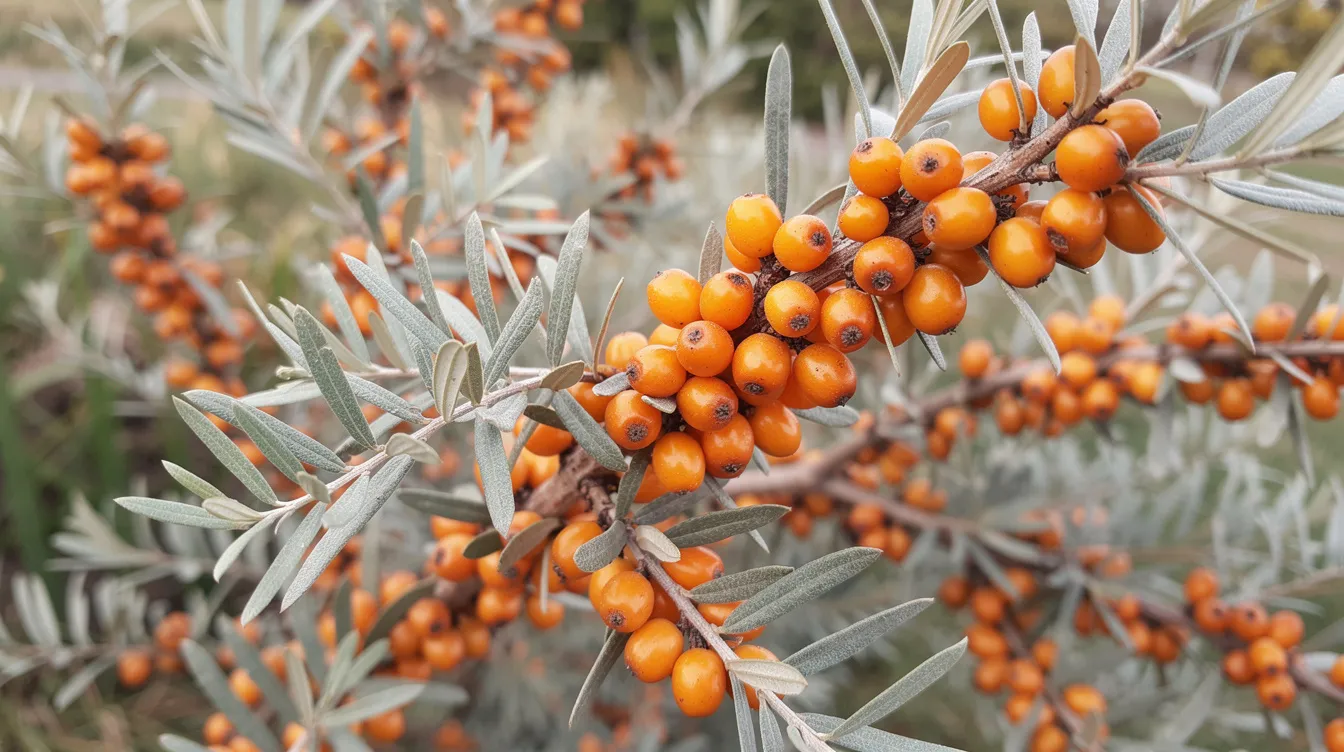
Sea Buckthorn (Hippophae rhamnoides)
A hardy actinorhizal deciduous shrub from Eurasian coasts, producing bright orange berries rich in vitamin C and essential oil compounds.
Climate Zones: USDA 3–7
Water Needs: Prefers well drained soil, even dry sandy soils; tolerates wind and salt; avoid waterlogging
Light: Full sun essential
Soil pH: 5.5–7.0
Sea buckthorn spreads quickly by sending up new shoots and can form dense patches. Plan your planting carefully and remove extra shoots regularly. Use the cut branches as high-quality mulch.
Water, Light, and Soil pH: Getting Conditions Right for Nitrogen Fixers
If the soil is in poor condition, nitrogen fixation might slow down or stop, even if the trees are still alive. Most nitrogen-fixing trees need full sun and well-drained soil, except for alders, which can handle wetter spots.
Quick comparison:
Drought-tolerant: mesquite, black locust, autumn olive
Prefers moist soils: alder, gliricidia
Cold extremes: Siberian pea shrub, sea buckthorn, black locust
Aim for a soil pH of 6.0 to 7.0 for most legumes, and 5.0 to 7.5 for actinorhizal species. Test your soil before planting. It’s best to choose nitrogen-fixing plants that fit your current conditions, instead of trying to change your soil a lot.
Managing Nitrogen Fixing Trees for Maximum Benefit
Just planting nitrogen-fixing trees doesn’t always mean your fruit trees will get more nitrogen. How you manage them matters. Pruning helps by causing some root nodules to die and release nitrogen into the soil. Studies show that adding synthetic nitrogen can reduce nodule growth by 60 to 70 percent, so avoid using fertilizer near nitrogen fixers.
Try the chop-and-drop method: cut branches or shoots from nitrogen-fixing plants a few times a year and leave them as mulch around your fruit trees. As the leaves and branches break down, they add nitrogen and organic matter to the soil.
Nitrogen-fixing trees can help forests store more carbon by speeding up tree growth. But they can also increase nitrous oxide emissions, which may reduce some of the environmental benefits. That’s why it’s important to manage how many you plant.
Adding nitrogen-fixing trees to your food forest or garden makes the system stronger and more productive without needing lots of chemicals. Once your fruit trees are mature and their canopies fill in, thin out or remove some nitrogen fixers, especially if light or water is limited.
Integrating Nitrogen Fixing Trees into a Food Forest Plan
Nitrogen-fixing trees are important pioneer plants in damaged areas. They help restore forests faster and improve soil fertility. Planting them is key to bringing degraded land back to health more quickly.
A good starting point is to plant one nitrogen-fixing tree or shrub for every two to four fruit trees in the early years. As your soil gets better and the system matures, you can reduce the number of nitrogen fixers.
For best results, plant tall nitrogen-fixing trees on the north side of fruit tree rows (in the northern hemisphere) to avoid shading your fruit trees.
Step-by-step design checklist:
Define your climate zone
Test soil pH
Map sun exposure and existing shade
Select nitrogen fixers matching site conditions
Plan pruning and thinning schedules
Phased establishment:
Years 1–2: Focus on nitrogen fixers and groundcovers
Years 2–4: Add most fruit trees
Years 5+: Reduce nitrogen fixer density while maintaining a few as long-term support
You can add nitrogen-fixing trees to agroforestry systems to help restore nutrient cycles and improve soil fertility, especially in subtropical and tropical forests.
Frequently Asked Questions About Nitrogen Fixing Trees
These questions cover common concerns that might not have been answered earlier. Always check with local extension offices or native plant groups about invasive species rules in your area.
How long does it take for nitrogen fixing trees to improve soil for my fruit trees?
You’ll see small improvements in one to two growing seasons as leaves and roots break down. Bigger, measurable increases in soil nitrogen usually show up after three to five years of growth and regular pruning.
How fast you see results depends on the species and your climate. Fast-growing tropical trees like gliricidia can show effects in two to three years. Cooler-climate trees like black locust or alder might take four to seven years to build up a lot of plant material. For the quickest results, use nitrogen fixers along with compost and good watering.
Do I still need fertilizer if I plant nitrogen fixing trees?
Nitrogen-fixing trees can cut down on the need for store-bought nitrogen fertilizer, but they might not replace it entirely—especially if you’re aiming for high yields in a commercial setting.
Nitrogen fixation doesn’t provide other nutrients like phosphorus, potassium, or micronutrients. Keep adding compost, rock dust, or balanced organic fertilizers as needed. As your soil improves, you can slowly use less synthetic nitrogen.
Can nitrogen fixing trees become invasive or cause problems?
Yes, some nitrogen-fixing trees, like black locust and autumn olive, have become invasive outside their native areas. They spread by seeds and shoots, outcompete native plants, and can change natural nitrogen cycles.
Always check your local invasive species lists before planting. Choose native nitrogen fixers or non-invasive options when possible. Watch out for thorny branches, lots of new shoots, and root competition if you plant them too close to fruit trees.
How far away should I plant nitrogen fixing trees from my fruit trees?
Plant large nitrogen fixing trees 4–6 m (13–20 ft) from fruit tree trunks. Place smaller nitrogen fixing shrubs 1–2 m (3–6 ft) away.
This spacing helps prevent roots from competing too much and lets fallen leaves and prunings improve the soil. In dry areas or where soil is shallow, plant nitrogen fixers a bit farther away to keep them from taking water from fruit trees.
How can I tell if my nitrogen fixing trees are actually fixing nitrogen?
To check if your nitrogen-fixing tree is working, gently dig near the edge of its roots and look for small nodules on the fine roots. If the nodules are firm and pink or red inside when cut, that means nitrogen fixation is happening.
If you don’t see nodules, your soil might have the wrong pH, be too wet, or lack the right bacteria. You can use commercial inoculants or soil from around healthy nitrogen fixers to help. If your plants are growing well and have healthy green leaves without extra fertilizer, that’s another sign nitrogen fixation is working.
Nitrogen-fixing trees aren’t a quick solution—they build soil fertility slowly and steadily over the years. Start with one species that fits your climate and site, prune it regularly, and learn from how your system responds. It takes patience, but the benefits add up over time and will keep feeding your food forest long after you stop adding extra inputs.


