Growing Tomatoes: From Seed to Harvest (Varieties, Care & Problem-Solving)
Key Takeaways
In most climates, start tomato seeds indoors 6 to 8 weeks before your last spring frost. Move the seedlings outside after they are hardened off, when nights are warmer than 50°F (10°C) and the soil is at least 55°F.
Tomatoes need at least 6 hours of direct sunlight each day, rich and well-drained soil, regular deep watering, and balanced fertilizer to grow well and stay healthy.
Choosing the right tomato variety is important. Some slicing, paste, and cherry types do better in short seasons, hot and humid, or hot and dry climates. Disease-resistant varieties and flavorful heirlooms like Cherokee Purple and Amish Paste each have their place in your garden.
It's much easier to prevent tomato diseases than to fix them later. Rotate crops, use mulch, prune lower leaves, and water at the base of the plant to keep problems away.
When you can harvest tomatoes depends on the variety. Early cherry tomatoes are ready in 55 to 65 days, many heirloom slicers take 70 to 85 days, and others may need 60 to over 100 days. Tomatoes taste best when they ripen on the vine.
Introduction: Why Growing Tomatoes Is Worth It
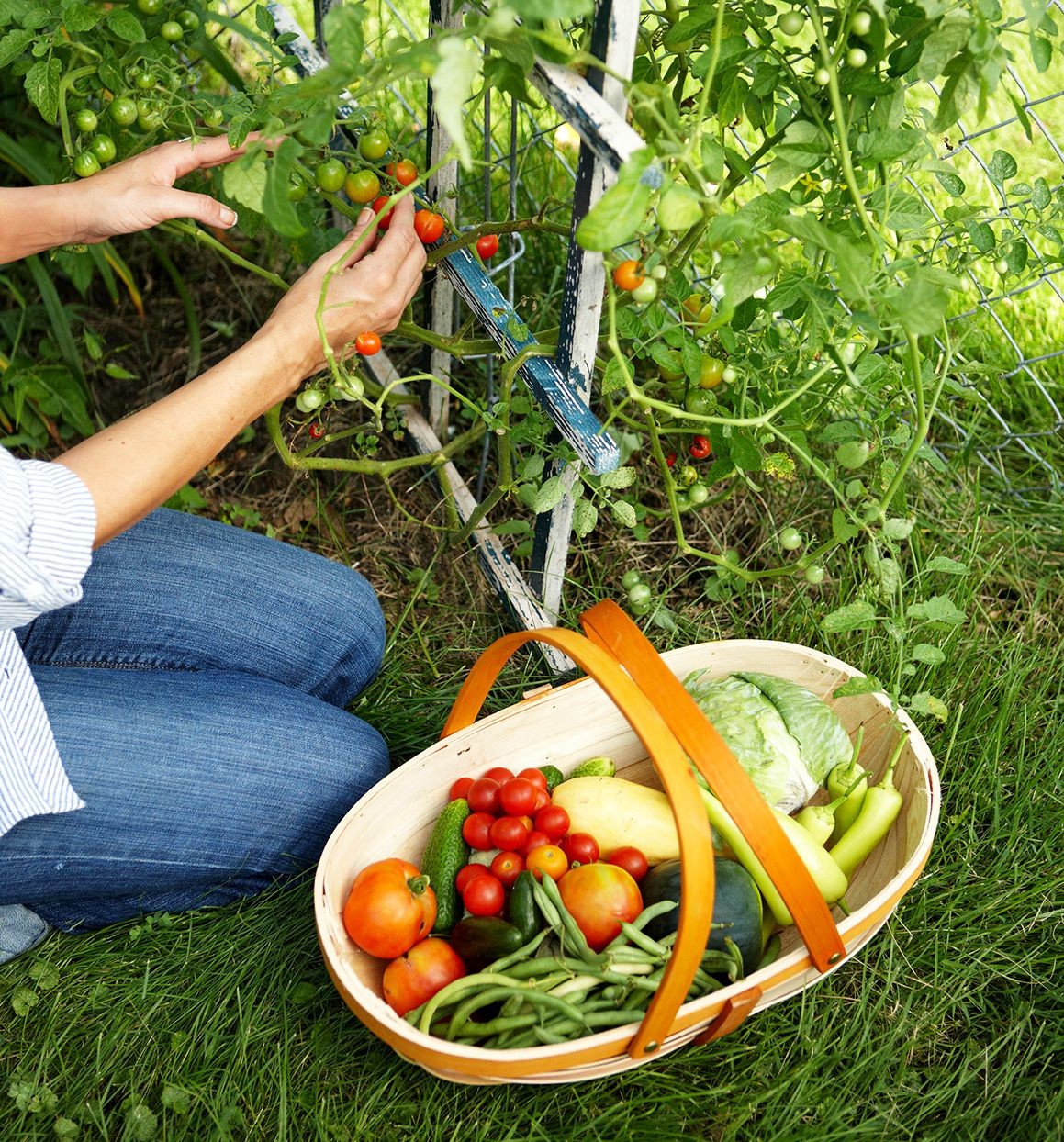
A store-bought tomato picked green and shipped cold can't compare to a sun-warmed tomato from your own garden. You'll taste the difference right away with your first homegrown tomato. That's why growing tomatoes is so popular in North America and Europe. Whether you use raised beds, rows, or containers, the basics stay the same.
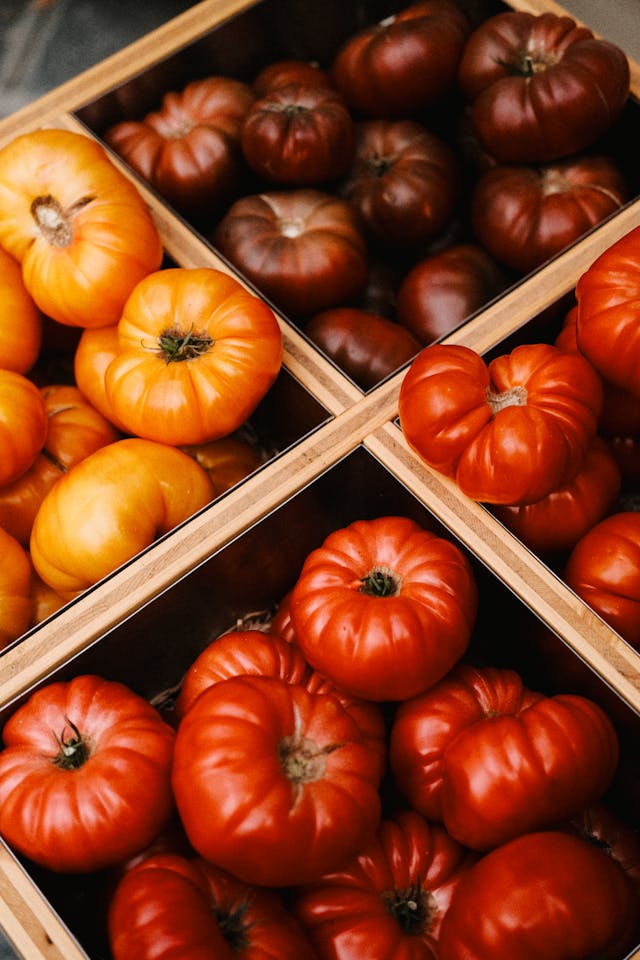
There are more than 10,000 tomato varieties, so you can find one for any climate or taste. The main types are slicing tomatoes for sandwiches and salads, paste tomatoes like Roma for sauces and canning, cherry and grape tomatoes for snacking and salads, and large beefsteaks. It's a good idea to plant a mix of these types.
This guide will show you how to start tomatoes from seed indoors, when and how to plant them outside, how to care for and fertilize them, how to choose varieties for your climate, how to avoid diseases and pests, and when to harvest and store them for the best flavor. We'll also mention specific varieties like Cherokee Purple, Amish Paste, Sun Gold cherries, Green Zebra, and modern disease-resistant hybrids to help you choose what works best in your garden.
Tomato Basics: Types, Growth Habits & Key Terms
Before you order any seeds, it helps to understand two things: how the plant grows and what you want to do with the fruit.
Tomatoes can be categorized as determinate or indeterminate, and this distinction affects everything from how tall the tomato plant will grow.
Determinate (bush) tomatoes grow to a fixed height of about 2–4 feet, set fruit in a concentrated window over a few weeks, then wind down. They're excellent for containers, small spaces, and canning runs where you want a big batch at once. Celebrity and Roma VF are classic determinates.
Indeterminate tomatoes are vining plants that grow continuously, often reaching 6–10 feet or more, and produce fruit from early summer until frost kills the vine. If you want fresh tomatoes over the longest possible window, indeterminate tomatoes are the way to go. Cherokee Purple, Sun Gold, and most heirloom slicers fall into this category.
Semi-determinate and dwarf types split the difference, offering moderate height with extended (but not unlimited) harvest.
The main fruit-use categories break down like this:
SlicerCherokee Purple, Kellogg's Breakfast, Big BeefSandwiches, salads, fresh eatingPaste / SauceAmish Paste, San Marzano, Midnight RomaMaking sauce, canning, roastingCherry / GrapeBlack Cherry, Sun Gold, Sunrise BumblebeeSnacking, salads, kids' gardensSaladetteJaune Flamme, JulietVersatile mid-size for cooking or fresh
You'll also see disease resistance codes on seed packets and labels. Common ones include V (Verticillium wilt), F (Fusarium wilt), N (nematodes), T (tobacco mosaic virus), LB (late blight), and EB (early blight). If you garden in a humid climate where diseases hit hard, choose disease-resistant varieties with multiple codes-these are your insurance crop. A reference chart from UC ANR can help you decode the letters.
A practical approach: grow at least one disease-resistant hybrid tomato as your workhorse, one reliable paste tomato for the freezer, and one or two heirloom flavor "stars" each season. That way, you get both security and incredible flavor.
Choosing Tomato Varieties for Your Climate and Use
Choosing the right variety for your climate and kitchen use is the single biggest factor in whether you produce tomatoes successfully or end up with a pile of green fruit when frost arrives. Here's how to narrow it down.
Short-Season Climates (Zones 3–5, Under 100 Frost-Free Days)
Early varieties take fewer than 70 days to harvest, which is critical when your growing season is compressed. Look for:
Early slicer: Early Girl (50–62 days), a reliable indeterminate that sets fruit fast. Stupice (52–60 days), a Czech heirloom with cold tolerance and rich flavor.
Early paste: Roma VF (60–65 days), a semi-determinate with built-in resistance to Fusarium wilt and Verticillium. Good for most paste tomato needs in a short window.
Early cherry: Sun Gold (57–65 days), an indeterminate cherry tomato with candy-sweet orange fruit and explosive yields even in cool summers.
Hot, Humid Climates (Zones 7–10, Southeastern US, Gulf Coast)
Heat, moisture, and disease pressure define this region. You need varieties that set fruit when temperatures soar and resist late blight and fusarium wilt.
Crack-resistant cherry: Juliet (60–65 days), a grape-type hybrid that shrugs off humidity and cracking. Sunrise Bumblebee or Peacevine Cherry for specialty color and flavor.
Disease-tough slicer: Arkansas Traveler (~80 days), an heirloom variety with proven fruit set during heat waves. Eva Purple Ball, another heat-resilient heirloom. Celebrity (~70 days, determinate, VFN).
Paste: San Marzano is a classic Italian paste tomato variety (~70–75 days) that does well if you can manage early blight. Striped Roman for a meatier, more disease-tolerant option.
Hot, Dry Climates (Interior West, Mediterranean)
Intense sun and low humidity favor varieties with thick skin and firm flesh that can handle drought stress and resist sunscald.
Paste: Amish Paste (~80 days), an heirloom with meaty fruit and low moisture content-ideal for making sauce and slow-roasting. Midnight Roma for a dark-skinned alternative.
Cherry: Black Cherry, a prolific indeterminate with smoky-sweet yellow fruit undertones. Porters or Sioux for dry-adapted heirlooms.
Management tip: Use organic mulch heavily and consider afternoon shade to prevent sunscald.
Best-Tasting Heirloom Tomatoes
For gardeners chasing flavor above all else, these are the names worth knowing:
Cherokee Purple (75–90 days) - dusky rose-purple slicer with smoky, complex, rich flavor. The benchmark heirloom.
Paul Robeson - deep mahogany slicer with earthy, sweet depth.
Kellogg's Breakfast - large orange beefsteak, mild and fruity, beautiful on a plate.
Ananas Noire - bicolor slicer with striking green-and-red interior.
Big Rainbow - massive yellow-and-red slicer with sweet, mild flesh.
White Cherry - a pale, translucent cherry tomato type with surprising sweetness.
These are all open-pollinated, so seed saving is feasible, but they generally lack the disease resistance of modern hybrids and need more vigilant care.
Disease-Resistant Workhorses
If you want to guarantee a tomato crop no matter what the weather throws at you, plant at least one of these:
Big Beef (VFN, plus additional resistances) - large red slicer with better-than-average flavor for a hybrid.
Mountain Merit or Iron Lady - bred for combined early blight, late blight, and soil-borne disease resistance.
Defiant PhR - a mid-size red slicer with strong late blight resistance.
Juliet - a crack-resistant grape type that produces heavy clusters.
Plum Regal - disease-resistant paste tomato for areas with heavy blight pressure.
Starting Tomatoes Indoors from Seed
Starting plants indoors lets gardeners in Zones 3–7 harvest 4–6 weeks earlier than direct sowing and opens the door to rare varieties-Green Zebra, Aurora Blue, or any heirloom variety that your big box store will never carry. Start seeds indoors at least 6 weeks before the last frost date, and up to 8 weeks before if you have strong lighting.
Timing
Sow tomato seeds indoors 6–8 weeks before your average last frost date. For example:
Zone 7 with a mid-April last frost → start late February
Zone 5 with a late-May last frost → start mid-March
Zone 4 with an early-June last frost → start early to mid-April
Plant seeds about ¼–½ inch deep in a sterile seed-starting mix.
Equipment and Setup
Seed trays or 3–4 inch pots with drainage holes
Sterile, soilless starting mix (peat, perlite, vermiculite blend)
Heat mat with thermostat to maintain soil temperature of 75–85°F (24–29°C). Germination slows severely below 65°F, and seeds may rot in a cold, wet mix.
Full-spectrum grow lights positioned 2–4 inches above tomato seedlings for 14–16 hours per day if you do not have a greenhouse or bright window.
Seedling Care
Thin to one strong seedling per cell after germination (usually 5–10 days at proper temperature)
Keep soil evenly moist but not waterlogged.
Run a small fan or lightly brush seedling tops daily to promote stocky stems and prevent leggy growth.
Begin a dilute, balanced fertilizer once the first set of true leaves appears.
Potting Up
Transplant tomato seedlings into larger containers (4-inch pots or 16-oz cups with drainage holes) once they have 2–3 sets of true leaves. When you pot up, bury the stem deeper than before. Tomatoes produce adventitious roots along any buried stem, which builds a stronger root system. Keep them under strong light until the time to plant outdoors.
If you don't want to grow plants from seed, you can buy starter plants from a nursery. Just be aware that selection is limited, and you'll still need to harden off and transplant tomatoes correctly.
Hardening Off Seedlings Before Planting Outdoors
Hardening off is a 7–10 day transition that toughens indoor-grown tomato plants so they don't wilt, burn, or stall when moved to outdoor conditions. Harden seedlings for a week before transplanting outdoors, longer if the weather is unpredictable.
Here's a practical progression:
Days 1–2: Set plants outdoors in bright shade for 2–3 hours, in temps around 55–65°F (13–18°C). Bring inside early if there are high winds.
Days 3–4: Increase to 4–5 hours, introducing some direct morning sun.
Days 5–7: Move to full-day sun exposure with light breeze. Leave out longer each day.
Days 8–10: Leave plants outdoors for 24 hours, bringing them in only if temperatures drop below 50°F (10°C), there are high winds, or frost is predicted.
By planting day, your plants should be able to handle full-day sun and wind without drooping or bleached leaves. Even if you purchased nursery tomato seedlings from a greenhouse, they may not be hardened off, so follow the same gradual acclimation steps regardless of where your plants came from.
Planting Tomato Plants Outdoors
Timing for planting should consider the danger of frost and soil temperature. Plant tomatoes after the last frost when the soil is at least 55°F, and nighttime air temperatures reliably stay above 50°F (10°C). In most of the US, that means late April to early June.
Site Selection
Choose a spot with full sun, at least 6–8 hours of direct light daily. In short-season northern climates, aim for 8–10 hours. In the hot South, some afternoon shade can help prevent sunscald and heat stress. The site should be sheltered from strong prevailing winds and should not have been used for tomatoes, peppers, eggplant, or potatoes in the last 2–3 years to reduce soil-borne disease buildup.
Soil Preparation
Plant tomatoes in rich, well-drained soil for best results. Loosen the garden soil to a depth of 10–12 inches and mix in compost or aged manure 2–3 weeks before planting. Good drainage matters in both in-ground and raised beds, as standing water kills roots quickly.
Planting Depth
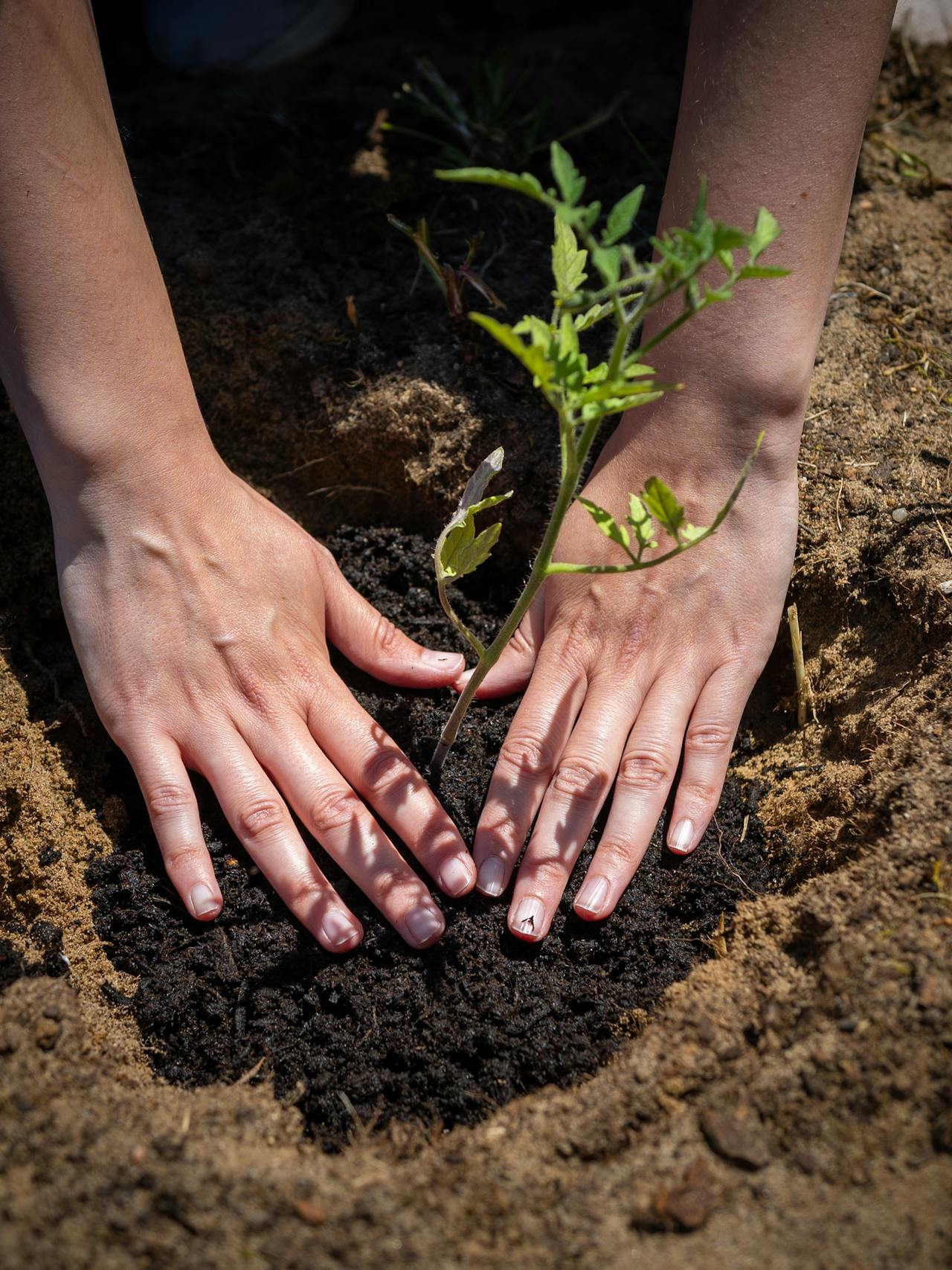
Deep planting encourages a strong root system. Bury ½ to ⅔ of the stem in the planting hole, removing leaves along the buried portion. The root ball and stem below soil level will produce new roots along the entire length. Exception: if you're using grafted plants, keep the graft union above soil level.
Spacing
Determinate and compact bush types: 18–24 inches apart
Indeterminate vines: 24–36 inches apart
Row spacing: 3–4 feet between rows or beds for airflow and access
Plants should be spaced to allow for airflow and light. Crowded plants are disease magnets.
Supports
Install stakes, cages, or trellises at planting time to cage tomatoes before root systems expand. Vigorous indeterminate tomatoes can reach 6–10 feet, so plan for 5–6 foot supports at minimum. Installing supports later risks damaging the root ball.
Requirements for Healthy, Productive Tomato Plants
Meeting the four main needs-light, water, nutrients, and air circulation will do more to grow tomatoes successfully than any single product or hack.
Light
Tomatoes need at least 6 hours of direct sunlight daily. At higher latitudes (Minnesota, Ontario, Scotland), aim for 8–10 hours. In intense-sun areas (Texas, southern Spain), 6–8 hours with afternoon shade is enough, and actually preferable to prevent heat stress.
Watering
Tomatoes should be watered at the base to keep leaves dry and reduce disease. Aim for deep, infrequent watering. Generally, water tomatoes 1–2 times per week, delivering 1–1.5 inches of water total (rain plus irrigation) per week. Increase watering during heatwaves or at temperatures above 90 degrees. Use drip lines, soaker hoses, or hand-water at the soil level. Make sure the soil is moist to the bottom of the bed or pot, or at least 18 inches if the tomatoes are planted in the soil. Uneven watering, letting plants dry out, then flooding them, is the primary trigger for blossom end rot and fruit cracking.
Soil and pH
Loose, well-drained soil rich in organic matter is ideal, with a slightly acidic pH around 6.2–6.8. A soil test every few years helps you adjust pH and fertility before planting time rather than guessing.
Mulch
After the garden soil has warmed, apply 2–3 inches of organic mulch, such as straw, shredded leaves, or wood chips, around plants. Mulch conserves soil moisture, keeps roots cooler in heat, and blocks soil splash that spreads fungal spores. It's one of the simplest ways to avoid tomato diseases triggered by wet tomato foliage.
Airflow and Spacing
Keep foliage off the ground, prune or thin dense growth on indeterminate plants, and avoid crowding. Good air circulation reduces humidity around leaves and significantly lowers the risk of disease. Remove the bottom 8–12 inches of leaves as the plant grows to create a clear zone between the soil and the canopy.
Fertilizing Tomatoes Through the Season
Tomatoes are heavy feeders and require regular fertilization. But both deficiency and over-fertilizing tomatoes can hurt your harvest. Too much nitrogen gives you lush, enormous vines and almost no fruit.
Pre-Plant
Incorporate a balanced slow-release or organic fertilizer (e.g., 5-5-5 or 4-6-3) into the planting area about a week before transplanting. A small amount of bone meal mixed into the planting hole provides phosphorus for root establishment if your soil is phosphorus-deficient.
Early Growth (Weeks 2–6 After Transplant)
Start light feedings 2–3 weeks after transplanting with a balanced fertilizer, or one with slightly more phosphorus than nitrogen or potassium, applied every 2–3 weeks. This supports root and leaf development while the plant grows and establishes.
Flowering and Fruit Production
Once blossoms appear, shift to a fertilizer with lower nitrogen and adequate potassium. Potassium supports fruit production, flavor development, and disease resistance. Avoid dumping high-nitrogen fertilizer at this stage. It causes massive vine growth at the expense of fruit.
Reading Your Plants
Learn to read the signs your tomato plants give you:
Pale yellow-green leaves → possible nitrogen deficiency
Purplish leaves, especially in cool weather → possible phosphorus deficiency (common when soil is cold)
Lush green vines with no flowers → too much nitrogen
Container-grown garden plants need more frequent, diluted feedings-often weekly-because nutrients leach out faster than in garden beds.
Training, Pruning & Supporting Tomato Plants
Pruning and training mainly applies to indeterminate tomatoes, helping improve air circulation, reduce disease, and make harvest easier. Prune indeterminate tomatoes weekly to prevent disease and keep plants manageable.
Support Options
Cages: Best for moderate indeterminates and determinates. Use sturdy, welded-wire cages-the flimsy cone cages from a big box store collapse under a full-grown plant.
Stakes: Ideal for single- or double-leader pruning of vigorous vines. Tie stems with soft fabric strips.
Trellises: String or panel systems work well for very vigorous vines like Peacevine Cherry, or Sun Gold types.
Sucker Management
Suckers are shoots that sprout in leaf axils (the V-shaped joint between the main stem and a branch). On staked indeterminate tomatoes, remove most suckers to focus energy on fewer, larger fruit. On caged plants, allow a few suckers to develop for bushier growth and more fruit production. Check weekly during peak growth in early summer.
Lower-Leaf Pruning
Gradually remove the bottom 8–12 inches of leaves as the plant grows. This keeps tomato foliage from touching soil, improves air circulation, and reduces splash-borne diseases in humid climates.
Determinate and dwarf tomato plant types should be pruned very lightly, if at all, since heavy pruning can significantly reduce total harvest. After storms or strong winds, check ties and re-secure vines to supports.
How to Avoid Tomato Diseases & Pests
Prevention through variety choice, hygiene, and cultural practices is the best way to avoid tomato diseases and pests. Tomatoes are susceptible to insect pests and diseases, and the most common issues have limited cures once established.
Crop Rotation and Sanitation
Crop rotation helps reduce the risk of soil-borne diseases in tomatoes. Rotate tomatoes and related crops (peppers, eggplant, potatoes) on a 3-year cycle or longer. Remove and dispose of infected plant debris in autumn; don't compost it. Keep beds weeded for better airflow.
Watering and Mulching
Always water at the base, never with overhead sprinklers on foliage. Wet leaves are an invitation for early blight, late blight, and septoria leaf spot. Use mulch to stop soil splash that carries spores from the ground up onto lower leaves.
Spacing and Pruning
Avoid crowding plants. Thin dense foliage on indeterminate tomatoes and maintain air movement through the canopy. The goal is to reduce leaf wetness time after rain or dew.
Choosing Resistant Varieties
Choose disease-resistant tomato varieties to avoid problems before they start. In areas with late blight, verticillium, or fusarium wilt, prioritize varieties with multiple resistance codes. Pair heirlooms like Cherokee Purple (which has minimal disease resistance) with tougher companions like Eva Purple Ball or a hybrid tomato like Iron Lady. This way, even if your heirloom tomatoes struggle, your disease-resistant varieties carry the harvest.
Basic Pest Management
Inspect plants regularly for aphids, hornworms, and whiteflies.
Hand-pick hornworms (those large green caterpillars) in June–August. They can strip a vine in days, leaving holes in leaves and fruit.
Use row cover for early-season protection against flea beetles and beet leaf hopper, which carries curly top virus.
Encourage beneficial insects (ladybugs, lacewings, parasitic wasps) instead of reaching for broad-spectrum sprays.
Tomato Problems: Flowers, Fruit Set & Common Disorders
Sometimes healthy-looking tomato plants still fail to set fruit or develop cosmetic disorders. These problems are usually caused by environmental stress or uneven watering, not by anything the gardener "did wrong."
Blossom Drop and Fruit Set Failure
High temperatures above 90°F can cause flower drop. Pollen becomes nonviable when daytime highs exceed 90°F (32°C) or nighttime lows stay above 75°F (24°C). Temporary shade cloth and consistent watering help plants resume fruit set when temperatures moderate. Heat-tolerant varieties like Heatmaster, Solar Fire, and Phoenix are bred to maintain fruit set even in brutal summers.
Pollination
Tomatoes are self-pollinating; each flower contains both male and female parts. Outdoors, wind and vibrations are usually sufficient. In greenhouses or very still conditions, lightly tapping flower clusters or the support stake every few days (ideally late morning) helps release pollen and improve fruit set. In outdoor gardens, bumble bees perform "buzz pollination," gripping the flower and vibrating their flight muscles at a frequency that shakes pollen loose far more effectively than wind alone.
Blossom End Rot
That dark, sunken patch on the blossom end of your tomato is blossom end rot, caused by inconsistent watering and disrupted calcium uptake, not usually by a lack of calcium in the soil. Water tomato plants consistently to prevent blossom end rot. Mulching and avoiding drastic dry-wet cycles are the best prevention.
Cracking and Splitting
Sudden heavy rain after dry spells causes skins to crack, especially on thin-skinned cherry tomato types and large heirlooms. Maintain steady soil moisture and choose crack resistant varieties like Juliet, Peacevine Cherry, or Arkansas Traveler in areas with unpredictable rainfall.
Sunscald
Pale, leathery sun-exposed patches appear on fruit during heatwaves, particularly in high elevation deserts and southern exposures. Keep some leaf cover over fruit trusses-this is one reason not to over-prune. Temporary shade cloth during record-hot weeks protects exposed fruit.
How to Harvest and Store Tomatoes
The harvest window depends on each variety's days to maturity. Some cherry tomato types ripen in 55–65 days from transplant, while many large heirloom slicers, such as Paul Robeson or Kellogg's Breakfast, take 75–85 days. Other tomatoes take 60 to over 100 days to harvest, depending on variety, so patience is part of the deal.
Harvest Ripeness
Tomatoes should be harvested when they are slightly firm but fully colored for their type: deep dusky rose for Cherokee Purple, rich orange for Jaune Flamme or Kellogg's Breakfast, solid red for most paste tomatoes. A ripe tomato detaches from the stem with a gentle twist. Tomatoes develop better flavor when ripened on the vine, so resist the urge to pick too early.
Breaker-Stage Harvesting
In very hot, sunny climates, you can harvest green fruit that's just starting to show color (the "breaker" stage) and finish the ripening process indoors at room temperature. This reduces cracking and sunscald without too much flavor loss. The tomatoes will continue to ripen and color up on your counter.
Storage
To store tomatoes properly, keep ripe tomatoes at room temperature, around 65–72°F (18–22°C), out of direct sun. Avoid refrigeration unless they're very ripe and you need a few extra days; cold storage degrades flavor and texture, especially in fresh tomatoes and cherry tomato types.
For short-term storage, place tomatoes in a single layer, stem side down, in a cool pantry. Note that paste tomatoes like Amish Paste and Midnight Roma, with their firm flesh, hold better in short storage than large, thin-skinned heirloom slicers.
Preserving
Excess harvest can be frozen whole (core them first), cooked down into a thick sauce and frozen in jars or ice cube trays, canned, or dehydrated. Paste tomatoes are especially suited for cooking into sauce, soups, tomato juice, and tomato paste cubes. A block of most paste tomatoes ripening at once gives you the volume needed for serious canning sessions. Dehydrated cherry tomatoes make excellent winter snacks or soup additions, a great way to extend your fall and winter crop of preserved homegrown tomatoes.
Growing Specialty & Heirloom Tomatoes (Flavor-First Choices)
Many gardeners grow at least a few tomato plants purely for flavor, color, or uniqueness rather than maximum yield or disease resistance. This is where heirloom tomatoes shine.
Best-Tasting Heirloom Slicers
Cherokee Purple, Paul Robeson, Ananas Noire, Big Rainbow, and Kellogg's Breakfast are large slicing tomatoes with complex, sweet, or smoky flavors ideal for sandwiches and fresh salads. Cherokee Purple, in particular, has an almost cult following for its smoky, wine-like depth. These are the tomatoes you grow when you want incredible flavor from your own tomatoes.
Heirloom Paste and Sauce Tomatoes
For making sauce, roasting, and canning, try Amish Paste (large, meaty fruit, low seed content), San Marzano (the Italian benchmark), Striped Roman, or Midnight Roma. These have thick walls and low moisture, which concentrates into deeply flavored sauces. Milka's Yugo Oxheart is another standout for slow-simmered preparations.
Heirloom and Specialty Cherry Tomato Types
Black Cherry (smoky-sweet, dark-skinned), Sunrise Bumblebee (striped, tangy-sweet), White Cherry (translucent, mild sweetness), and Peacevine Cherry (classic red with high nutrition) all offer prolific yields and diverse flavors ranging from sweet to rich and smoky. Cherry tomatoes are great for salads and fresh eating, but these specialty types elevate snacking to an art form.
Care Notes for Heirlooms
Treat heirloom tomato plants as slightly higher maintenance: they often need more staking, more pruning attention, and more diligent disease prevention than modern disease-resistant hybrids. The trade-off is a flavor no hybrid can quite match. The smart strategy is combining specialty heirlooms with reliable hybrid or disease-resistant varieties every season to balance flavor experiments with guaranteed harvests.
Tomato Varieties for Specific Situations
Not every garden has the same constraints, and variety selection should match space, season length, and cooking preferences.
Container and Small-Space Gardens
Choose compact determinate or dwarf varieties, or smaller indeterminate cherry tomato plants on sturdy short cages. Use a minimum 5-gallon container with drainage holes, and expect to water daily in midsummer. Container-grown plants dry out much faster than in-ground plantings and need more frequent, diluted feeding.
Cool-Summer and Coastal Climates
Early, cool-tolerant cherry tomato and saladette types that ripen reliably in 55–70 days are your best bet. Stupice, Sun Gold, and Glacier all handle cooler nights. Plant at least one short-season paste tomato, such as Roma VF, for sauce.
Bulk Sauce-Making
If you want to preserve a winter crop of sauce and canned tomatoes, plant a block of paste tomatoes-Amish Paste, San Marzano, Midnight Roma, or Striped Roman timed to ripen roughly together in late August and September for large-batch canning sessions.
Kid-Friendly Snacking Tomatoes
Ultra-sweet cherry tomato options like Sun Gold–type hybrids, Sunrise Bumblebee, or White Cherry are favorites for school gardens and patios. Kids who won't touch a slicer will eat these like candy straight off the vine.
In disease-heavy regions, always check with your local extension service or master gardeners for up-to-date lists of disease-resistant tomato plant varieties proven in your county or province. Researchers are always developing new varieties.
How to Store Tomatoes After Harvest (Short-Term & Long-Term)
How you store tomatoes can dramatically affect texture and flavor, especially for heirloom and cherry tomato varieties.
Fresh-Use Storage
Keep ripe, uncut fruit on the counter, away from direct sun and heat sources. Plan to eat fresh tomatoes within 3–5 days for peak flavor.
Managing the Glut
When tomatoes grow faster than you can eat them, sort harvests into "eat now," "cook soon," and "sauce/freezer" piles. Prioritize thin-skinned heirloom slicers for immediate fresh use. They don't hold up long.
Refrigerator Use
Slightly underripe tomatoes can be chilled briefly and brought back to room temperature for eating. But long-term cold storage degrades flavor, especially in slicing and cherry tomato types. Use the fridge only as a last resort for very ripe fruit.
Preserving
Freeze: Whole or cored tomatoes in freezer bags-skins slip off easily after thawing.
Sauce: Cook down paste tomatoes into a thick sauce and freeze in jars or ice cube trays.
Dehydrate: Cherry tomatoes, halved and dried, make excellent winter snacks or soup additions.
Can: A variety of tomato products can be canned, but be sure you know the right pH, processing time, and temperature for your canning method.
Label your stored tomato products with the variety name and date (e.g., "Amish Paste sauce – September 2026") so you can track which varieties make your favorite sauces, salsas, or tomato juice blends next season.
FAQ
How early can I start tomatoes indoors without getting leggy plants?
Starting tomato seeds more than 8 weeks before your last frost-for example, in January for a mid-April frost date-usually leads to tall, weak seedlings unless you have very strong grow lights and large pots. Stick to a 6–8 week window before the average last frost date. Keep grow lights close to the foliage (2–4 inches) and maintain cooler nighttime room temperatures around 60–65°F (15–18°C) to keep plants compact. Pot up into 4–6 inch containers once roots fill the starter cells to prevent root binding and legginess.
Can I grow tomatoes successfully on a very small balcony or patio?
Yes. Tomatoes can be grown in as little as a 5-gallon container if the variety is compact and the container gets at least 6 hours of direct sun per day. Choose dwarf or determinate cherry tomato or saladette varieties for small spaces, and use sturdy short cages or stakes. Container plants dry out faster than garden soil, so daily watering in midsummer and regular fertilizing are usually required. Make sure containers have drainage holes to prevent waterlogged roots.
What's the difference between hybrid and heirloom tomatoes, and does it affect flavor?
Heirloom tomatoes are open-pollinated varieties handed down for decades. Seeds saved from these plants grow true to the parent plant. A hybrid tomato is a deliberate cross between two parent lines; saved seed won't reliably reproduce the same plant. Many heirloom slicers, such as Cherokee Purple, Paul Robeson, and Big Rainbow, are famous for their complex flavors but tend to be more disease-prone. Hybrids often offer higher yields and disease resistance with somewhat more uniform (though still good) flavors. The best strategy is to grow a mix: a few heirlooms for flavor exploration plus some modern hybrids or disease-resistant open-pollinated types for reliability.
Do I need to hand-pollinate tomato flowers to get fruit?
Outdoors, tomatoes are usually self-pollinated by wind, vibrations, and visiting bees-no special pollination is needed. In greenhouses or very still indoor environments, gently tapping flower clusters or the stake every few days in late morning helps release pollen and improves fruit set. Lack of fruit is more often caused by temperature extremes (above 90°F or below 55°F) or plant stress than by poor pollination alone.
How long will a tomato plant produce fruit in one season?
Determinate varieties generally flower and produce fruit over a 3–5 week window and then slow down or stop-ideal for concentrated sauce-making or canning. Indeterminate tomato plants can keep flowering and fruiting continuously from early summer until killed by fall frost, especially if regularly pruned, watered, and fertilized. In frost-free climates, tomatoes may live longer than one season, but most gardeners replant yearly to avoid disease buildup and declining vigor.
“This article was initially generated using Surfer SEO’s AI‑assisted content creation tools, which provided keyword research, structure guidance, and draft content based on top‑ranking pages. The draft was then extensively edited for tone, style, and factual accuracy, with additional human‑written sections added to enhance depth and context.”


