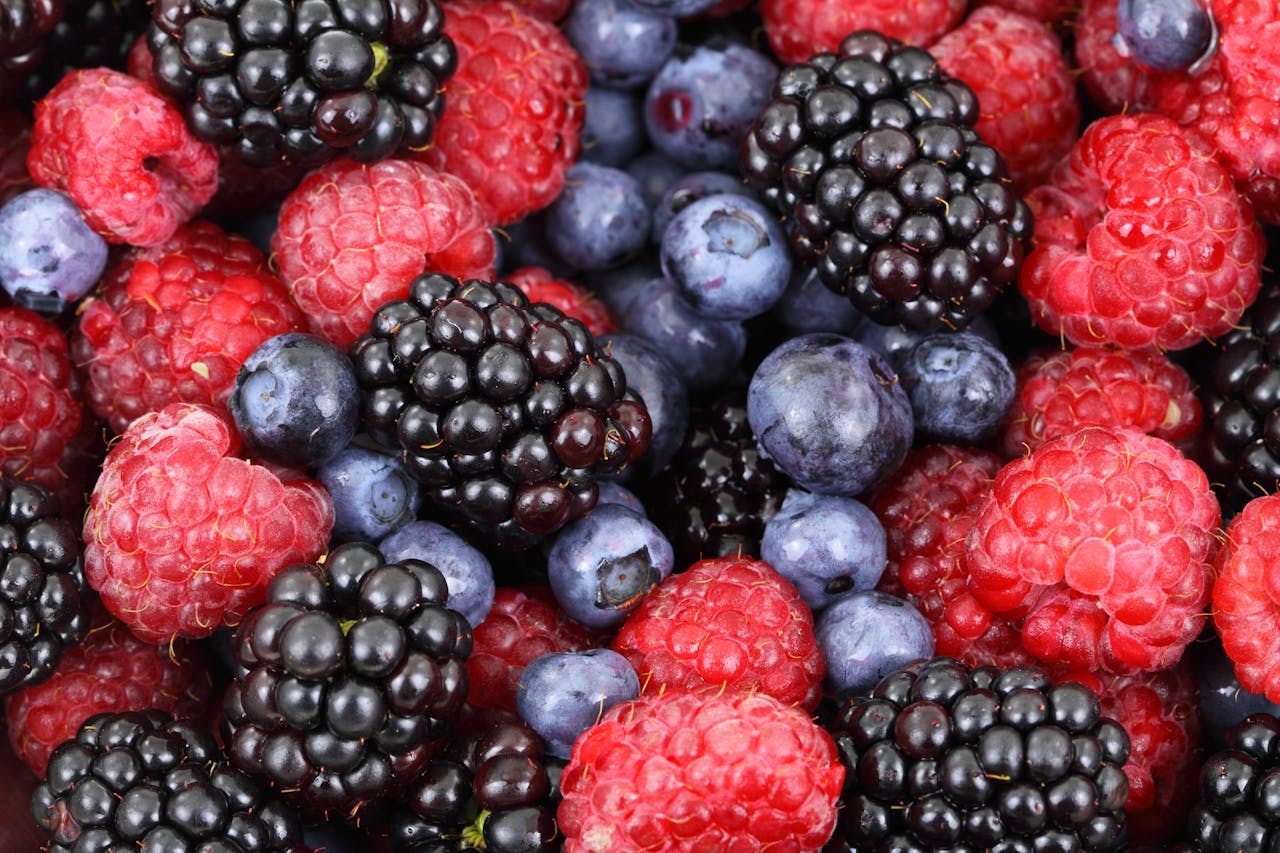
The Essential Guide to Growing Healthy Berry Bushes in Your Garden
Berry Bushes
Key Takeaways
Most berry bushes across the United States require full sun (6-8 hours daily), well drained soil that stays consistently moist, and slightly acidic soil conditions with pH ranging from 5.0 to 6.5—though blueberries demand even more acidic conditions at pH 4.5 to 5.2.
Different berries suit different regions: blueberries and raspberries grow well in cooler, moist climates of the Northeast and Pacific Northwest; blackberries and muscadines handle southern heat; serviceberries and currants tolerate colder, drier conditions in the Upper Midwest and Mountain West.
Before selecting berry bushes, always determine your USDA hardiness zone, average annual rainfall, and soil type (sandy, loamy, or clay) along with its pH level through a soil test.
Spreading canes from raspberries and blackberries need regular pruning and trellising to stay manageable, while all berries benefit from protection against birds, deer, and late spring frosts.
This guide covers region-by-region berry recommendations for the entire United States, followed by planting, care, and pruning fundamentals to help you establish productive berry plants that bear fruit for decades.
Introduction to Berry Bushes
Berry bushes represent some of the most rewarding plants a home gardener can grow. These long-lived, high-yield shrubs produce abundant crops year after year—often for 15 to 30 years with proper care—providing fresh eating, material for preserves and baking, and valuable habitat for wildlife. Whether you have a sprawling rural property or a modest suburban lot, there’s likely a berry bush suited to your space and your climate.
The main cultivated berry bush types grown across the United States include blueberries, raspberries, blackberries, currants, gooseberries, elderberries, and serviceberries. Regional specialties like muscadine grapes thrive in the warm, humid Southeast, while wild-inspired options like huckleberries grow along the Pacific Northwest coast. Each of these berry plants has specific requirements for temperature, moisture, and soil conditions—and matching those needs to your location is the single most important factor in success.
This article focuses on helping you select the right berry species for your U.S. region by examining temperature ranges expressed through USDA hardiness zones, typical rainfall patterns, and soil conditions including pH and drainage. After the regional breakdowns, you’ll find guidance on planting, ongoing care, pruning, pest management, and harvesting. The information presented here is current as of March 13, 2026, and references typical USDA hardiness zones along with 30-year climate normals for rainfall and temperature.
Understanding Climate, Rainfall, and Soil Requirements
USDA hardiness zones form the foundation for selecting berry bushes that will survive your winters. These zones are based on average annual extreme minimum temperatures, divided into 10°F increments—zone 3, for example, experiences winter lows between -40°F and -30°F, while zone 10 sees minimums only between 30°F and 40°F. Knowing your zone tells you which plants can survive dormancy in your coldest months, though microclimates created by elevation, wind exposure, and nearby structures can shift your effective zone by one or two levels.
Temperature requirements vary significantly among berry types. Many common berries—including most raspberries, blackberries, currants, and highbush blueberries—thrive in zones 3 through 8, while heat-loving plants like muscadine grapes and certain Southern highbush blueberries need the warmer conditions found in zones 7 through 10. Beyond simple survival, many berries require specific chilling hours (time below 45°F) during winter to break dormancy properly and produce fruit the following season. Insufficient chilling in warm-winter regions causes erratic blooming and fewer berries.
Regarding rainfall, most berry bushes need roughly 1 to 2 inches of water per week during the growing season, whether that comes from natural precipitation or irrigation. Consistent moisture supports berry development without creating the waterlogged conditions that foster root rot and fungal diseases like gray mold. Drainage matters as much as total moisture—berries planted in standing water often die within their first year.
Soil preferences differ by species but follow general patterns. Blueberries grow best in very acidic soil (pH 4.5-5.2) that’s high in organic matter and drains freely; their specialized root systems struggle to take up iron and manganese at higher pH levels, leading to yellow leaves and poor growth. Raspberries and blackberries prefer fertile, loamy soil with moderate acidity (pH 5.5-6.5) and good drainage. Currants, elderberries, and serviceberries tolerate heavier soils and a wider pH range, making them more forgiving for challenging sites.
Before planting any berry bushes, invest in a soil test through your local extension service—typically costing $20-50—to determine your pH and nutrient levels. Sulfur applications lower soil pH over 6-12 months, while lime raises it. Adding compost improves structure in both sandy and clay soils, helping them hold moisture without becoming waterlogged.
Best Berry Bushes for the Northeastern United States
The Northeastern United States—encompassing New England, New York, Pennsylvania, and New Jersey—features cold winters with lows reaching -25°F in many areas (zones 3-6), moderate to high annual rainfall of 35 to 50 inches, and naturally acidic native soils often found in sandy loams. This combination creates excellent conditions for several berry types, particularly those requiring winter chill and consistent moisture.
Blueberries in the Northeast
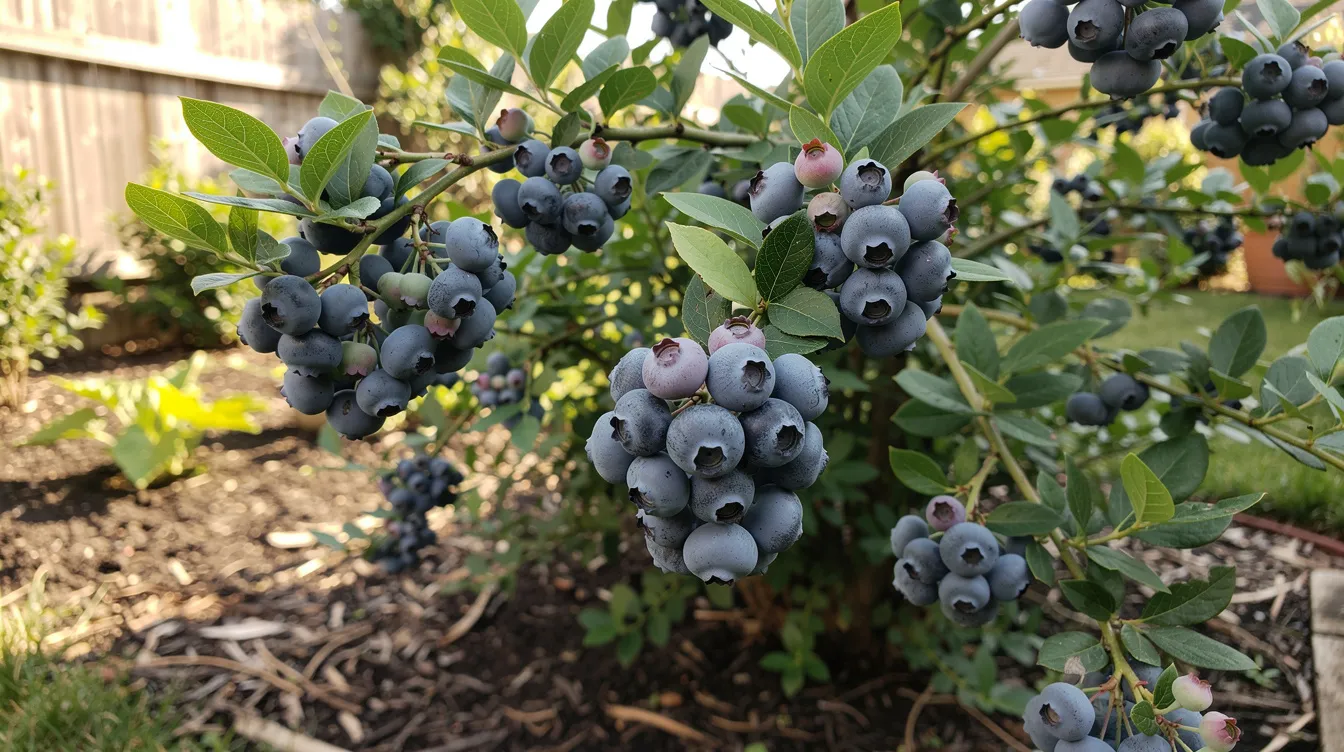
Highbush blueberries (Vaccinium corymbosum) thrive throughout this region in zones 4-7, tolerating winter lows down to about -25°F when properly established. These blueberry bushes demand acidic soil with pH between 4.5 and 5.2—a range that occurs naturally in many Northeastern forest soils but may require amendment in areas with limestone bedite.
Plant highbush blueberries in full sun on organic-rich, well-drained sites. The region’s natural rainfall of 35-50 inches usually provides adequate moisture, though summer irrigation helps during dry spells. Reliable cultivars for the Northeast include ‘Bluecrop’ (yielding 10-15 pounds per mature bush with mid-season harvest), ‘Jersey’ (a late-season variety with good disease resistance), and ‘Patriot’ (an early bloomer in a compact form suited to smaller yards). Maintain acidity with sulfur amendments if pH exceeds 5.2, and apply pine needle or bark mulch to suppress weeds while slowly acidifying the soil surface.
Raspberries in the Northeast
Red raspberries (Rubus idaeus) perform exceptionally well in the cool, moist summers and cold winters found across zones 3-6 in the Northeast. These raspberry plants prefer slightly acidic to neutral loam with pH 5.5-6.5 and require approximately 1 to 1.5 inches of water weekly during the growing season.
Understanding how raspberries grow helps with variety selection. Summer-bearing types produce fruit on floricanes—canes that grew the previous year—while fall bearing raspberries produce on primocanes, the current season’s growth. Some raspberry varieties can produce two crops in a single season on the same canes, with primocanes bearing fruit in both summer and fall. Hardy summer-bearing cultivars like ‘Latham’ handle zone 3 winters reliably, while ‘Heritage’ offers an everbearing option producing both a summer crop and fall crop. ‘Caroline’ provides heat tolerant primocane fruiting that extends the harvest into September. Raspberry plants have perennial roots and crowns, but their canes live for only two summers. All raspberry varieties benefit from trellising to manage their 4-6 foot raspberry canes and from annual removal of dead canes after harvest.
Raspberries are often propagated using cuttings and will root readily in moist soil conditions.
Blackberries in the Northeast
Blackberries present more challenges in the coldest parts of New England, where winter dieback damages or kills exposed canes. However, gardeners in warmer coastal areas and the mid-Atlantic (zones 5-7) can succeed with erect and semi-erect varieties bred for improved hardiness.
Thornless cultivars like ‘Chester Thornless’ (semi-erect, yielding 10-20 pounds per plant) and ‘Triple Crown’ (trailing with primocane fruiting capability) perform well in southern New England and Pennsylvania. Site these plants in full sun with well drained soil at pH 5.5-6.5, and provide windbreaks against winter desiccation. Consistent moisture prevents double blossom disease, a fungal problem exacerbated by drought stress.
Currants and Gooseberries
Currants and gooseberries (Ribes spp.) suit the Northeast’s cool, humid climate admirably, tolerating partial shade and performing in heavier soils than most berries. These shrubs prefer pH around 6.0-6.8 and manage well with the region’s 30-40 inches of annual rainfall.
‘Red Lake’ currant produces tart berries exceptionally high in vitamin C, while gooseberries offer a unique flavor for pies and preserves. Note that some parts of New England maintain restrictions on certain Ribes species—particularly black currants—due to their role as alternate hosts for white pine blister rust. Check local regulations before planting.
The Northeast ultimately provides ideal conditions for cold-hardy, moisture-loving berries. Winter hardiness and soil acidity stand as the primary selection criteria, with snow cover providing valuable insulation that protects roots from damaging freeze-thaw cycles.
Best Berry Bushes for the Upper Midwest and Great Lakes
The Upper Midwest and Great Lakes region—Minnesota, Wisconsin, Michigan, the Dakotas, Iowa, and surrounding areas—experiences some of the most challenging conditions for berry production: brutal winter temperatures dropping to -35°F (zones 3-5), warm and humid summers, and variable annual rainfall from 20 to over 40 inches. Heavy clay soils dominate many areas. Despite these challenges, this region produces exceptional berry crops thanks to university breeding programs that have developed specifically adapted cultivars.
Raspberries as the Regional Champion
Raspberries grow well as the flagship berry crop of the Upper Midwest, benefiting from reliable snow cover that insulates roots and crowns through the harshest months. Red raspberries dominate production, though yellow raspberries and purple raspberries also perform well in these conditions. All colors require well-drained, organic-rich loam with pH 5.8-6.5 and consistent moisture.
University of Minnesota has released numerous cultivars suited to extreme cold, including ‘Boyne’—a red floricane type ripening in early June that tolerates zone 3 winters. Michigan State University’s ‘Polana’ offers a primocane-bearing purple option. Properly managed raspberry patches in this region produce 2-4 pounds per linear foot of row when trellised. The key is ensuring drainage in heavy soils and providing drip irrigation during dry summer spells.
Both black and red raspberries succeed here, though black raspberries show slightly less cold tolerance and may require protected sites in zone 3. Understanding that raspberries spread through underground runners helps with planning—contain them with barriers or give them room to colonize their designated area.
Half-High Blueberries
Traditional highbush blueberries struggle in the coldest parts of this region, but half-high varieties—crosses between highbush and the extremely hardy lowbush species—were specifically bred for Upper Midwest conditions. Cultivars like ‘Northland’, ‘Northcountry’, and ‘Northblue’ tolerate winter lows to -35°F (zones 3-5) while producing 8-12 pounds per mature bush after four years.
These blueberries grow best in acidic sandy or peaty soils with pH 4.5-5.2, requiring 30 or more inches of annual moisture from rain and irrigation combined. Apply thick organic mulch (4-6 inches) to moderate soil temperature, retain moisture, and protect roots from winter damage on sites where snow cover proves unreliable or wind scours snow away.
Blackberries with Realistic Expectations
Standard blackberries suffer significant winter damage in zones 3-4, with 50% or greater cane dieback common. Success requires selecting trailing types that can be bent to the ground and covered with mulch or row cover fabric for winter. Even then, expect variable results.
Gardeners in zone 5 near Great Lakes shores—where water moderates temperatures—may find thornless cultivars productive with proper microclimate selection and windbreaks. But for most of this region, raspberries and blueberries represent more reliable investments.
Serviceberries Excel
Serviceberries (Amelanchier spp., also called juneberries or Saskatoon berries) deserve far more attention from Midwest gardeners. These native shrubs tolerate extreme cold to -40°F (zones 2-6), a wide range of soils including slightly alkaline clays, and relatively low moisture—performing with just 12-20 inches of annual rainfall plus supplemental irrigation.
Beyond producing sweet fruit in June (500-2000 berries per mature shrub), serviceberries offer multi-season ornamental value: white flowers in April, attractive summer foliage, and fiery fall color. The ‘Thiessen’ variety leads for fruit production, yielding up to 15 pounds per plant. Serviceberries adapt to conditions that defeat many other berries, making them essential for challenging Upper Midwest sites.
Heavy, poorly drained clay soils present the main limiting factor for berry production throughout this region. University of Minnesota trials demonstrate that raised beds (12-18 inches high) improve survival rates by 70% compared to in-ground planting in heavy clays.
Best Berry Bushes for the Southeast and Gulf Coast
The Southeast and Gulf Coast—stretching from Virginia through the Carolinas, Georgia, Florida, Alabama, Mississippi, Louisiana, and east Texas—presents nearly opposite conditions from the Upper Midwest: hot, humid summers with temperatures regularly exceeding 90°F, mild winters rarely dropping below 20°F (zones 7-10), and abundant rainfall of 40 to over 60 inches annually. Sandy and sandy-loam soils predominate. Success here depends on selecting cultivars bred for low winter chill requirements and high heat tolerance.
Southern Blueberries
Two blueberry types dominate the Southeast: Southern highbush varieties requiring only 400-600 chilling hours, and rabbiteye blueberries (Vaccinium virgatum) native to the region. Both thrive in zones 7-9 on acidic sandy or loamy soils with pH 4.5-5.5 and excellent drainage.
Rabbiteye cultivars like ‘Tifblue’ (ripening May-June) and ‘Climax’ (early season) produce heavily with minimal intervention, yielding 10-20 pounds per mature bush when properly cross-pollinated—most blueberry bushes produce more fruit with more than one plant providing compatible pollen nearby. Southern highbush varieties extend the harvest season and tolerate the region’s warm winters well. Ensure irrigation during dry spells despite the high rainfall, as summer storms can be sporadic and sandy soils drain rapidly.
Blackberries Thrive in the South
If any region can claim blackberries as its signature berry, it’s the Southeast. University of Arkansas breeding programs have released thornless, erect cultivars specifically adapted to the heat and humidity: ‘Natchez’ (the earliest to ripen), ‘Ouachita’ (producing jumbo firm fruit), and ‘Apache’ (yielding up to 25 pounds per plant).
Plant potted transplants or bare root plants in full sun on well-drained, slightly acidic soil with pH 5.5-6.5. Consistent moisture prevents stress, but avoid waterlogged conditions that promote orange rust and other fungal diseases. Mulch heavily—4 inches minimum—to keep roots cool and suppress weeds. These cultivars produce an abundant crop with proper care.
Muscadine Grapes
While technically vines rather than bushes, muscadine grapes (Vitis rotundifolia) deserve mention as the premier “berry-like” fruit for the Southeast. Native to the region, muscadines thrive in zones 7-10 with hot summers, tolerating humidity and summer rainfall that devastate bunch grapes. They grow well in well-drained, slightly acidic sandy loams (pH 5.5-6.5) with about 1 inch of water weekly.
Muscadines’ thick skins provide excellent disease resistance—particularly against Pierce’s disease, which makes bunch grape production nearly impossible in much of the Southeast. Bronze cultivars like ‘Carlos’ and black varieties like ‘Noble’ lead commercial and home production, yielding 20-40 pounds per vine for fresh eating, juice, and wine.
Elderberries
American elderberry (Sambucus canadensis) tolerates the wet conditions that challenge other berries, often thriving along ditches and in low spots where drainage is poor. This adaptability makes elderberries valuable for difficult sites throughout zones 3-9, though they perform particularly well in the Southeast’s warm, moist climate.
Plant elderberries in full sun to partial shade with pH around 5.5-7.0. They prefer at least 1 inch of water weekly, easily satisfied in most of the Southeast. ‘Adams’ variety outperforms others in southern trials, yielding 10-15 pounds of immune-boosting berries and florets per mature shrub.
Managing Heat Stress
Heat stress causes fruit drop and quality problems throughout the Southeast. Mitigate these issues by mulching heavily (4 inches minimum) to conserve moisture and cool roots, selecting heat tolerant cultivars suited to your specific zone, and ensuring good air circulation to reduce fungal pressure. Avoid poorly ventilated sites where humidity accumulates—proper spacing and pruning reduce botrytis gray mold incidence by 40% in university trials.
Best Berry Bushes for the Pacific Northwest and West Coast
The Pacific Northwest and West Coast encompass diverse growing conditions, from the mild, wet winters and cool summers west of the Cascades (30-60+ inches of rainfall annually, zones 7-9) to the dry interior valleys and Southern California (10-20 inches of rain, zones 8-10). This diversity requires different approaches depending on your specific location.
Blueberries West of the Cascades
Highbush blueberries grow well west of the Cascades, where acidic forest loams and regular rainfall create nearly ideal conditions. Oregon’s Willamette Valley serves as a commercial blueberry heartland, with mature bushes producing 15 or more pounds each.
Success requires acidic soil at pH 4.5-5.5 supplemented with organic matter—compost, peat moss, and aged bark all help maintain the necessary conditions. While winter rain provides ample moisture, late summer often brings several dry weeks requiring drip irrigation to maintain fruit quality. Plant in full sun for maximum yield, though berries tolerate light afternoon shade in the warmest valleys.
Raspberries and Blackberries
Cane berries underpin a $100+ million industry in the Pacific Northwest, with ‘Meeker’ red raspberry serving as the commercial standard for floricane production. Trailing blackberries like ‘Marionberry’ and evergreen varieties like ‘Cascade’ produce heavily in moist loams with pH 5.5-6.5.
These raspberry species and blackberry types need trellising not just for support but to improve air circulation and reduce phytophthora root rot, which thrives in wet winter soils. Primocane varieties allow gardeners to prune dead canes to the ground in late winter for a simplified management approach yielding a single large fall crop.
Coastal Versus Interior Growing
Coastal and Puget Sound areas excel for traditional cane berries and currants under moderate temperatures and 50-60 inches of annual rain. Fungal diseases present the primary challenge—manage them through proper spacing, pruning for airflow, and avoiding overhead watering that keeps foliage wet.
Interior valleys and Southern California present opposite challenges: insufficient rainfall (10-20 inches annually) and summer heat require irrigation (1-2 inches weekly) and careful cultivar selection. Heat tolerant raspberry and blackberry varieties exist but demand consistent moisture and afternoon shade in the hottest areas.
Lesser-Known Regional Berries
Evergreen and trailing blackberries grow vigorously along the coast, sometimes aggressively. Their vigor benefits from regular pruning and containment to prevent them from overwhelming other plantings.
Native huckleberries (Vaccinium ovatum) grow throughout Pacific Northwest woodlands, requiring very acidic, high-organic soils with consistent moisture—conditions challenging to replicate in typical garden settings but achievable with dedication. These small fruits offer intense flavor prized by foragers and specialty growers.
Best Berry Bushes for the Interior West, Southwest, and Mountain States
This broad region—the Rocky Mountain states, Great Basin, Arizona, New Mexico, interior California, and parts of Texas—presents the most challenging conditions for berry production: low humidity, intense sun, highly variable rainfall from under 10 to around 20 inches annually, and often alkaline soils with pH 7.0-8.5. Success requires careful site selection, significant soil modification, and reliable irrigation.
Primary Challenges
Hot, dry summers and alkaline soils form the twin constraints for traditional acid-loving berries. Most blueberry bushes simply cannot thrive in native soils, and even raspberries and blackberries require substantial amendment. Irrigation becomes essential almost everywhere—unlike other regions where rainfall may provide adequate moisture, Interior West berry plants need human-managed water supplies throughout the growing season.
Suitable Berry Choices
Serviceberries and western juneberries lead as the most reliable berries for this region. Their tolerance of cold winters, alkaline soils, and low rainfall (as little as 12 inches annually with supplemental drip irrigation) makes them uniquely suited to challenging sites. The ‘Regent’ variety yields approximately 10 pounds per plant in arid Utah trials—remarkable production for such harsh conditions.
Certain raspberries and blackberries perform in cooler mountain zones (4-7) when planted in well-drained amended beds with pH adjusted toward 6.0 and supplied with 1-2 inches of water weekly during the growing season. Black raspberries and red raspberries both succeed at elevation where summer nights remain cool.
Blueberries as a Special Case
Growing blueberries in the Interior West requires extraordinary effort. Most native soils are far too alkaline, often exceeding pH 7.5—dramatically higher than the 4.5-5.2 that blueberries grow best in. The solution involves either raised beds or large containers filled with imported acidic media: peat moss, pine bark, and composted sawdust mixed to create the necessary conditions.
Regular irrigation with acidified water (or naturally soft water) maintains appropriate pH over time. Nighttime cooling at higher elevations (above 6000 feet in Colorado, for example) helps blueberries tolerate the intense daytime sun. New Mexico State University data shows 50-70% survival improvements when gardeners attend to these specific requirements.
Elderberries and Currants at Elevation
Both elderberries and currants perform at elevation where winters are cold and summers not excessively hot. Plant them in partial afternoon shade on sites with evenly moist soil at pH 6.0-7.0. These berry plants tolerate wider conditions than blueberries but still need protection from the intense sun and desiccating winds common throughout the region.
Microclimate Management
Smart site selection dramatically improves berry survival. Plant on east or north-facing slopes that receive morning sun but afternoon shade, reducing heat stress and water demand. Use shade cloth (30% shade rating) during the hottest months. Design drip irrigation schedules matched to local evapotranspiration rates rather than arbitrary timing—water stress causes fewer berries and lower quality, while overwatering in heavy soils promotes root rot.
Planning and Selecting Berry Bushes for Your Yard
Before purchasing any berry plants, invest time in understanding your specific growing conditions. Map your USDA hardiness zone using the official USDA Plant Hardiness Zone Map, determine your average annual rainfall from 30-year climate normals, and test your soil for pH, texture (sand, loam, or clay), and basic nutrient levels. This information guides every subsequent decision.
Choosing Berry Types by Goal
Consider what you want from your berries. Fresh snacking favors sweet berries like blueberries and raspberries that taste best eaten immediately. Preserving, baking, and jelly-making work well with tart berries like currants or slightly underripe fruit. Plan for season-long harvests by selecting early, mid, and late-season varieties—for blueberries, this might mean combining ‘Patriot’ (early), ‘Bluecrop’ (mid), and ‘Jersey’ (late).
Don’t overlook ornamental value. Serviceberries offer white spring blooms, attractive summer foliage, and brilliant fall color. Elderberry flowers provide beautiful displays before forming dark fruit. Many fruit trees and berry bushes serve dual landscape and food-production purposes.
Pollination Requirements
Raspberries and blackberries are generally self fertile, meaning a single plant can produce fruit. However, most blueberry bushes and elderberries yield significantly better—20-50% more fruit—when planted with at least two compatible varieties that bloom at overlapping times. Self pollinating varieties exist but typically benefit from cross-pollination nonetheless.
If space limits you to a single plant, research self fertile cultivars specifically. But where possible, plant multiple varieties for improved fruit set and larger harvests.
Space Requirements
Allow adequate spacing for mature size:
Blueberries: 3-5 feet apart (mature plants reach 4-6 feet wide)
Raspberries and blackberries: 2-4 feet apart within rows, with 6-8 feet between rows
Currants and gooseberries: 3-4 feet apart
Elderberries and serviceberries: 6-10 feet apart due to larger mature size
Local Sources and Extension Services
Consult your local cooperative extension office for region-specific variety recommendations and disease alerts. These services, typically offered through state universities, provide guidance based on decades of local trials. Buying from local nurseries ensures regionally adapted stock—generic big-box selections often show 20% higher failure rates compared to locally sourced, climate-appropriate plants.
Planting Berry Bushes: Site Preparation and Establishment
The timing and technique of planting significantly affect long-term berry bush success. In cold regions, plant in early spring once soil is workable and temperatures remain consistently above 40°F. In mild climates, late fall to early winter planting allows root establishment before spring growth begins.
Site Selection
Most berry bushes require full sun—at least 6-8 hours of direct light daily—for maximum fruit production. In very hot climates (zones 9-10), light afternoon shade may improve fruit quality by reducing heat stress. Good air movement around plants reduces fungal disease pressure, but extremely exposed sites benefit from windbreaks that prevent desiccation.
Locate berries where you’ll see them daily. A planting near the kitchen door reminds you to water, prune, and—most importantly—pick berries at peak ripeness rather than letting them overripen or feed birds.
Soil Preparation
Begin preparing soil months before planting when possible. Remove perennial weeds completely, as they compete aggressively with establishing berry plants. Loosen soil 12-18 inches deep to encourage root penetration and incorporate 2-4 inches of compost to improve both drainage and moisture retention.
For blueberries requiring pH 4.5-5.2, build raised beds with acidic media: mix peat moss, pine bark fines, and native soil amended with elemental sulfur applied 6-12 months before planting. This timeline allows slow-acting sulfur to reduce soil ph before roots encounter it. Testing soil annually helps maintain appropriate acidity.
Planting Technique
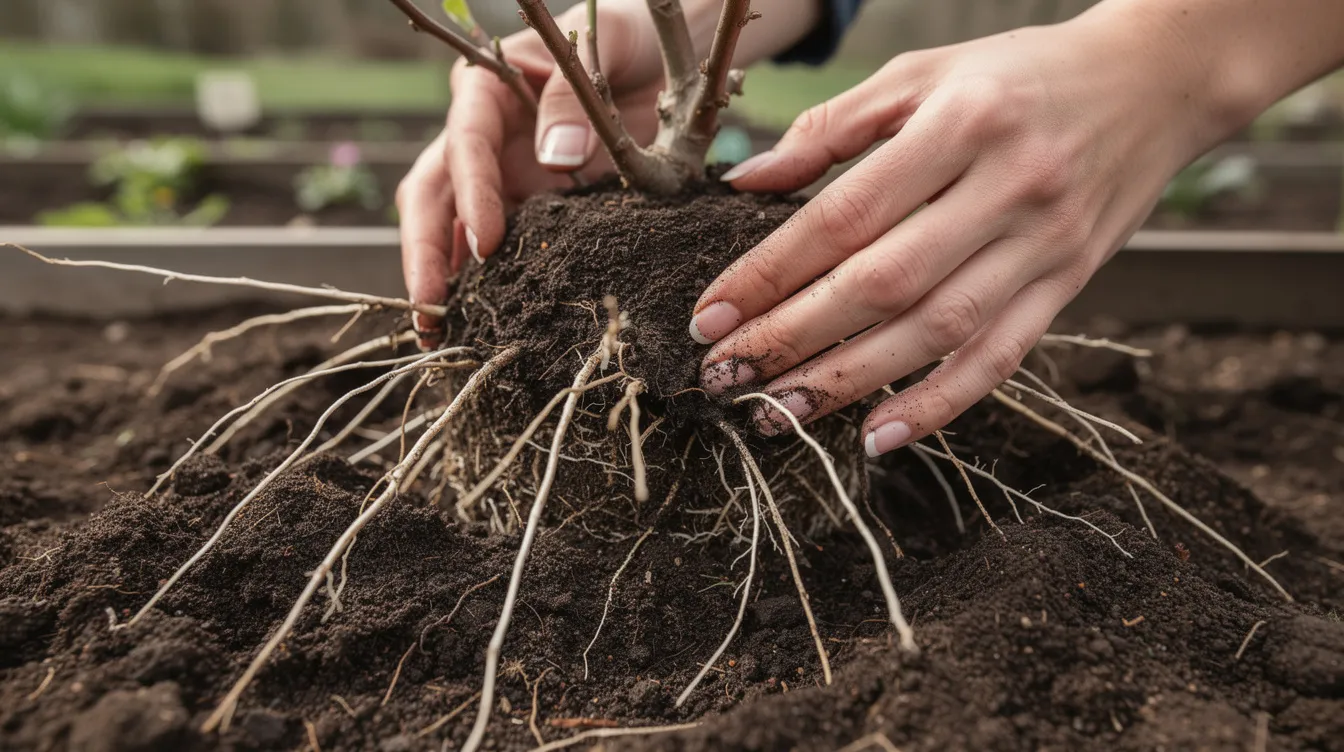
Planting bare root plants requires immediate action when they arrive. Soak roots in water for 1-2 hours before planting, then spread them out in a wide hole with the crown (where roots meet stem) at or slightly above finished soil level. Crowns buried too deeply suffer from stem rot, while those too high expose roots to drying.
Potted plants offer more flexibility but watch for root circling. Tease apart any circling roots before planting to prevent girdling as the plant matures. Water thoroughly after planting and apply 2-4 inches of organic mulch (wood chips, pine needles, or shredded bark) around but not against stems.
First-Year Care
Remove most or all flowers during the first year after planting. This sacrifice feels painful but channels energy into root establishment, producing a larger, more productive plant sooner. Healthy plants established in year one start producing fruit reliably by year three.
Maintain consistent moisture and vigilant weed control during the first two growing seasons. Newly planted berries cannot compete effectively with established weeds for water and nutrients.
Caring for Berry Bushes: Water, Fertilizer, and Mulch
Once established, berry bushes need steady moisture, moderate fertility, and effective weed suppression to maintain productivity over their 15-30 year lifespans.
Watering Guidance
Almost all berry bushes require approximately 1-2 inches of water weekly during active growth, adjusted for rainfall and soil type. Sandy soils drain quickly and need more frequent watering; clay soils retain moisture longer but become waterlogged more easily.
Drip irrigation or soaker hoses keep foliage dry, reducing disease incidence—particularly important in humid climates where powdery mildew and gray mold thrive. Track rainfall with a simple gauge and supplement only as needed. Overwatering promotes root rot and lush vegetative growth at the expense of fruit production.
Fertilization
Begin with a soil test to determine actual nutrient needs rather than applying generic fertilizer. Most berry bushes benefit from light nitrogen applications in early spring as growth begins, with a possible second application after harvest for heavily-producing plants. Avoid heavy late-summer fertilizing that stimulates tender new growth vulnerable to early frost damage.
For blueberries specifically, use acid-forming fertilizers labeled for azaleas and rhododendrons. These supply appropriate nutrients while helping maintain the low pH that blueberries require.
Mulching
Maintain 2-4 inches of organic mulch around all berry bushes throughout the year. Proper mulching conserves soil moisture, moderates soil temperature (keeping roots cooler in summer and warmer in winter), and suppresses weeds that would otherwise compete for resources. Research shows good mulch practices reduce weed pressure by 70%.
Pine bark, pine needles, and acidic wood chips prove particularly valuable for blueberries, slowly acidifying the soil surface as they decompose. Refresh mulch annually as organic matter breaks down, keeping it a few inches away from plant stems to prevent rot.
Avoiding Common Mistakes
Overwatering and overfertilizing rank among the most common berry-growing errors. Both produce lush raspberry leaves and vigorous growth but result in poor fruiting. Berry bushes evolved in relatively nutrient-poor, well-drained soils—recreating those conditions, not exceeding them, produces the best results.
Training, Trellising, and Pruning Berry Bushes
Proper support and pruning keep berry bushes productive, manageable, and healthier by improving air circulation and light penetration. Different berry types require different approaches.
Raspberry and Blackberry Support
Understanding the primocane and floricane cycle is essential for pruning raspberries and blackberries effectively. Primocanes grow during the current season; floricanes are last year’s primocanes that now bear fruit. Most raspberries and blackberries produce fruit on floricanes, though fall bearing varieties produce on primocanes as well.
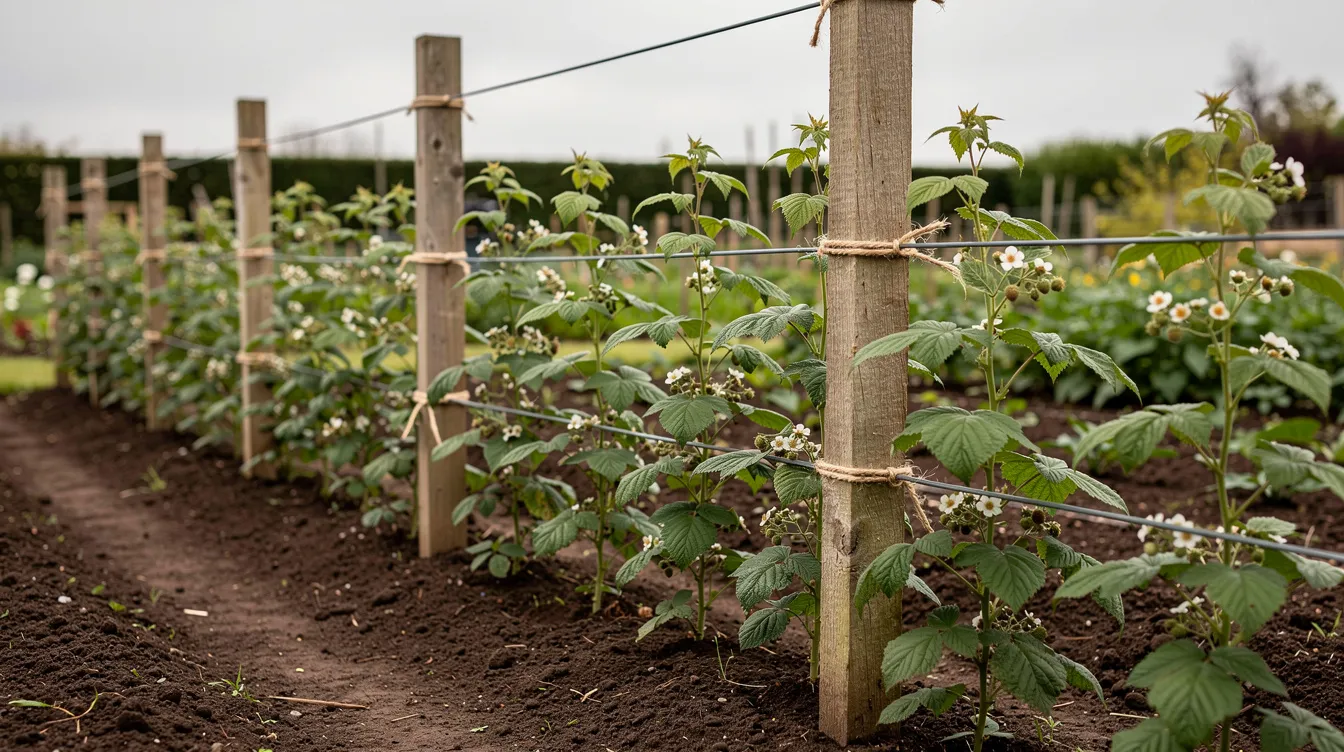
Simple trellis systems support raspberry canes and blackberry canes effectively. Install sturdy posts at row ends with 2-3 horizontal wires at heights of 2, 3.5, and 5 feet. Train canes to spread along these wires for maximum light exposure and air circulation. T-posts at row ends with a cross-arm allow fan-training that keeps fruiting wood accessible.
Pruning Timing for Cane Berries
For summer-bearing raspberries and blackberries that produce a summer crop on floricanes, prune dead canes immediately after harvest. These spent canes with brown bark will not produce again—remove them at ground level to make room for healthy primocanes that will bear next year’s fruit. Leaving dormant canes through winter provides some cold protection in marginal zones.
For primocane-fruiting (everbearing) varieties, you have options. Allow floricane production for an early summer crop followed by primocane production for a fall crop, or simplify management by mowing all canes to ground level in late winter for a single, larger fall crop. The latter approach eliminates overwintering disease spores but sacrifices the June harvest.
Tip-prune new canes at 5-6 buds in summer to encourage branching and more fruit—each cane tip removed stimulates lateral growth that produces additional fruiting sites.
Blueberry Pruning
Blueberry pruning follows different principles. During the first three years, prune lightly—remove only dead, damaged, or crossing branches. Once plants reach full production, shift to renewal pruning: each dormant season, remove approximately 20% of the oldest, thickest stems at ground level to stimulate new fruitful shoots from the base.
Perform blueberry pruning in late winter while plants remain dormant but before growth begins. Remove any low branches that will drag fruit on the ground, and thin dense interior growth to improve air circulation.
Tool Sanitation
Use clean, sharp bypass pruners for all berry pruning. Sanitize blades between bushes—particularly when any disease is present—using rubbing alcohol or a 10% bleach solution. This simple practice prevents spreading verticillium wilt and other pathogens through your planting.
Protecting Berry Bushes from Pests, Diseases, and Wildlife
Birds, deer, insects, and fungal diseases threaten berry production in every region, though specific pressure varies by location and berry type. Cultural practices prevent most problems; intervention addresses what remains.
Wildlife Protection
Birds claim berries as enthusiastically as gardeners do—sometimes more so. Netting provides 95% effective bird protection when properly installed before fruit colors. Drape netting over simple frames rather than directly on bushes to prevent birds from reaching through. Remove netting after harvest to prevent entanglement with new growth.
Deer browse new shoots and strip foliage, particularly from raspberries. Areas with high deer pressure require fencing—7-foot height effectively excludes deer—or repellent applications renewed after rain. A chicken wire fence may deter rabbits from young plantings.
Common Diseases
Most berry diseases result from poor drainage, overcrowding, or excessively humid conditions that keep foliage wet. Cane blights affect raspberries and blackberries, causing wilted cane tip and brown bark; remove and destroy infected plants promptly. Root rot kills berries planted in waterlogged soil—site selection and drainage improvement prevent this better than any treatment.
Gray mold (Botrytis) damages ripe fruit during humid weather; improve air circulation through pruning and avoid overhead watering in evening hours when foliage stays wet overnight. Good cultural practices reduce fungal disease by 30-40% compared to neglected plantings.
Insect Pests
The spotted wing drosophila (SWD), an invasive fruit fly, has emerged as a major pest of soft berries across the United States. Unlike native fruit flies that attack only overripe fruit, SWD lays eggs in ripe fruit still on the plant. Monitor with commercial traps, harvest raspberry fruit and other soft berries frequently (every 2-3 days when ripe), and remove fallen fruit immediately. Timely harvest alone reduces infestation by 80%.
The cane borer tunnels into raspberry and blackberry canes, causing wilting tips. Remove and destroy affected canes, cutting below the damaged area. Maintain overall plant health—stressed plants attract more borer damage.
Winter Protection
In cold climates, mulch roots deeply (6+ inches) after ground freezes to prevent damaging freeze-thaw cycles. For marginally hardy blackberries in zones 4-5, bend trailing canes to the ground in late fall and cover with straw or row cover fabric. Uncover gradually in spring as new growth begins.
Harvesting, Using, and Storing Your Berries
Harvest timing varies by species and climate but generally spans from late spring through fall. Blueberries and some strawberries ripen first (May-June in warm regions), followed by raspberries and currants in mid summer, with blackberries and primocane raspberries extending into late summer and fall.
Recognizing Ripe Fruit
Ripe fruit displays full color—not just surface color but uniform coloring throughout. Ripe berries detach easily with gentle pressure; if you have to tug, they’re not ready. Characteristic aroma and sweetness develop only at full maturity. Since most berries don’t continue ripening after picking, harvest at peak for best flavor.
Check plantings every 2-3 days during harvest season. Leaving a few berries to overripen attracts pests and signals plants to reduce production.
Handling Fresh Berries
Pick berries during the cool morning hours when fruit is firm and temperatures moderate. Handle gently, placing berries into shallow containers that prevent crushing lower layers. Avoid overfilling—many berries stacked deep compress and damage those beneath.
Refrigerate promptly if not eating immediately. Most fresh berries keep 3-7 days refrigerated, though quality declines daily. Don’t wash until ready to use; moisture promotes mold growth in storage.
Preservation Options
Method Best For Storage TimeNotes
Freezing All berries 8-12 months Freeze single layer on trays, then bag
Jam/Jelly All berries 1 year sealed Requires pectin for some types
Dehydrating Blueberries, raspberries 6-12 months Makes concentrated snacks
Fermenting Elderberries, muscadines Varies Wine, other beverages
Freezing preserves the most flavor with least effort. Spread berries in a single layer on sheet pans, freeze until solid, then transfer to freezer bags—this prevents berries from clumping into solid masses. Properly frozen berries retain 90% of fresh quality for up to one year.
Sweet Fruit Uses
Berry uses extend far beyond fresh snacking. Add to smoothies, yogurt, and cereals for nutritious breakfasts. Bake into pies, cobblers, muffins, and cakes. Create sauces for meats, shrubs for cocktails, or simple syrups for beverages. Blueberries rank among the highest antioxidant foods measured, with ORAC values exceeding 9,000 units per cup.
FAQ
The following questions address common situations not fully covered above, focusing on practical challenges U.S. gardeners encounter when growing berries.
Can I grow berry bushes in containers if I only have a patio or balcony?
Many berries grow successfully in containers, particularly blueberries, dwarf raspberries, and compact blackberry varieties. Use large containers—at least 15-20 gallons—to provide adequate root space and soil volume. Smaller containers dry out rapidly and restrict root growth, leading to stressed plants that produce fewer berries.
Container growing demands more attention than in-ground planting. Soil in pots warms and dries faster than garden soil, often requiring daily watering during summer. Use high-quality potting mix rather than garden soil, which compacts in containers and drains poorly. Fertilize lightly through the growing season since frequent watering leaches nutrients.
Winter protection becomes critical for potted plants in zones 5 and colder. Roots in containers experience temperatures closer to air temperature than insulated ground roots do. Move pots against a south-facing wall, into an unheated garage, or sink them into garden beds and mulch heavily to survive harsh winters.
How do I adjust my soil pH if it is too alkaline for blueberries?
If soil testing reveals pH above 6.0, elemental sulfur can acidify the topsoil—but slowly. Apply sulfur 6-12 months before planting at rates recommended for your soil type (typically 1 pound per 100 square feet drops pH by approximately one unit over 6 months). Work sulfur into the top 6-8 inches of soil and retest before planting.
For strongly alkaline soils common in the Interior West and Great Plains (pH 7.5+), amending native soil often proves impractical. Instead, build raised beds or use large containers filled with acidic media—peat moss, pine bark fines, composted sawdust, and sulfur mixed together create the pH 4.5-5.2 environment blueberries require.
Maintaining acidity requires ongoing attention. Recheck pH every 2-3 years and apply additional sulfur as needed. Use acid-forming fertilizers labeled for azaleas and rhododendrons. Mulch with pine needles or acidic bark to slowly acidify the soil surface.
What berry bushes are safest to plant near septic systems or drain fields?
Shallow-rooted shrubs like blueberries and most currants present fewer risks than aggressive cane berries. Raspberries spread through perennial roots and underground runners, potentially invading septic lines and distribution areas; blackberries similarly colonize available space. Both can damage system components over time.
Maintain at least 10-20 feet between berry plantings and septic system edges. Avoid deep digging that might damage buried lines. Blueberries’ shallow, fibrous root systems rarely penetrate below 12-18 inches and seldom cause problems at appropriate distances.
Local plumbing codes or health departments may specify setback requirements—check regulations before planting. When in doubt, choose the most conservative distance and avoid berries that aggressively spread beyond their original planting area.
How long will it take for my berry bushes to start producing a usable harvest?
Most berry bushes produce a few berries in year two, with substantial harvests beginning in years 3-5. Blueberries typically need 3-4 years to reach average yield potential of 10-15 pounds per bush. Raspberries often produce lightly in year two with full crops by year three—primocane varieties may fruit lightly in their first fall.
Removing most flowers during the first year delays initial fruit slightly but accelerates establishment, producing stronger plants that yield more heavily sooner. This practice channels energy into root and crown development rather than supporting fruit that taxes young plants.
With good care—consistent moisture, appropriate fertility, proper pruning—many berry bushes remain productive for 10-20 years or more. Blueberries commonly produce heavily for 30+ years; raspberries need periodic renewal but maintain yields indefinitely when properly managed.
Is it better to buy bare root or potted berry plants?
Bare root plants cost less ($10-20 per plant versus $25-40 for potted) and establish well when handled properly. Purchase from reputable nurseries in early spring, keep roots moist until planting, and get them in the ground promptly—exposed roots dry quickly and die. Bare root stock typically consists of dormant one or two-year plants ready for immediate growth when temperatures warm.
Potted plants offer flexibility, available for planting over a wider spring-to-fall window in most climates. They may bear sooner since root systems are already established. However, check for root circling before purchase—roots growing in circles eventually girdle the plant, causing decline years later. Gently remove from pots and examine root balls; reject any with severe circling.
Regardless of form, choose healthy plants with well-branched tops, firm stems showing no signs of disease, and—for potted stock—roots that fill but don’t choke the container. Regional nurseries typically offer better-adapted varieties than national chains stocking generic selections.
Berry bushes offer something rare in gardening: a one-time investment that pays dividends for decades. Whether you’re growing berries for fresh eating, preserving for winter, or simply enjoying the satisfaction of harvesting sweet fruit from your own land, these plants reward attention with remarkable generosity. Start with species suited to your region, prepare your soil thoughtfully, and give new plantings the consistent care they need during establishment. The work you do now—selecting the right cultivars, testing your soil, installing proper support—shapes harvests you’ll enjoy for 20 years or more.
If you’ve been considering berry bushes, this is your season to begin. Get that soil test. Visit a local nursery. Choose one or two varieties proven for your climate. The best time to plant was a decade ago; the second-best time is now.
Benefits of Growing Berries
Growing berries in your own garden is one of the most satisfying experiences for gardeners of all backgrounds. Whether you’re tending a few potted plants on a sunny patio or cultivating a full raspberry patch, berry plants reward your efforts with a steady supply of ripe fruit that’s as delicious as it is nutritious. Raspberry plants, blueberry bushes, and black raspberries are all popular choices, offering sweet berries and tart berries that can be enjoyed fresh, baked, or preserved.
One of the standout benefits of growing berries is the sheer abundance of fresh, healthy fruit you can harvest right outside your door. Red and yellow raspberries, for example, are known for their high yields and vibrant flavors, while fall bearing raspberries can produce fruit twice a year—giving you both a summer and a fall crop. Many berry plants, including purple raspberries and certain red raspberries, are self fertile, so even a single plant can start producing fruit. However, planting more than one variety often leads to more fruit and a longer harvest season.
Berry plants are also relatively easy to care for, making them a great choice for both new and experienced gardeners. They thrive in full sun and well drained soil, and benefit from organic mulch or peat moss to retain moisture and keep weeds at bay. Whether you choose to plant raspberries as bare root plants or potted plants, giving them a good start with healthy soil and regular watering sets the stage for years of productive growth. Pruning raspberries—especially removing dead canes and thinning out older wood—helps keep your raspberry canes vigorous and disease-free, ensuring a steady supply of sweet berries each season.
Beyond their delicious taste, berries are packed with vitamins, antioxidants, and fiber, making them a powerhouse addition to any diet. Growing your own means you can enjoy berries at their peak flavor and nutritional value, without worrying about pesticides or long transport times. Plus, berry bushes and canes add beauty and fragrance to your garden, with attractive foliage and blossoms that support pollinators and wildlife.


