Biodiversity and Food Forests:
How Layered Gardens Protect the Planet and Give Back to People
A food forest is the perfect way to grow your own food while doing some serious good for the natural world. By stacking all sorts of edible and useful plants in layers, you end up with a system that mirrors how nature works. And as a result, you get all these wonderful benefits that traditional monoculture farming just can't match. This article is all about breaking down what we mean by biodiversity, why it's so important for both our health and the planet's, and how to get started creating your own food forest.
What You Need to Take Away
Biodiversity is all about variety at three levels: the genes of a single species, the different species of plants and animals that exist, and the ecosystems in which they all work together. This is what keeps your food forest growing strong and healthy over time.
Food forests with loads of different species in them can actually help reduce the risk of infectious diseases and boost mental wellbeing, and they even produce food that's better for us than the kind of single-species crop fields you see in traditional farming.
Food forests are all about creating different layers of plants, from the trees at the top to the root crops at the bottom, and the key is that this biodiversity makes the whole system more resilient and healthier at every level.
Anyone can start increasing biodiversity, whether it's just a small group of 5-7 plant species in your backyard or a large community food forest with many layers.
This article is all about giving you some concrete ideas and step-by-step plans to get started and build or improve your own biodiverse food forest.
What Is Biodiversity (In Simple Terms)?
Biodiversity, from the words biological diversity, is basically all the different kinds of living things on our planet and how they all interact with each other. Think of it like the variety of life on Earth, from the tiny bacteria in a handful of soil to the hawks flying overhead, and every single connection between them.
There are a few different types that matter:
Genetic diversity is all about the variation within a single species. We used to have loads of different kinds of rice, for example, but now we've narrowed it down to just a few. When you grow three different kinds of apples instead of just one, you're helping to preserve that genetic diversity, which makes your trees more likely to survive.
Species diversity is all about having lots of different species in one place. A food forest with 50+ useful plants is going to be way more interesting to wildlife and beneficial insects than a single-species cornfield. The more species you have, the more different ecological niches you have for all those other creatures to call home.
Ecosystem diversity is all about having different kinds of habitats, such as forests, wetlands, and coral reefs. Each one supports its own unique life and its own natural processes.
Here's an example: if you have a simple hedgerow with elder, hawthorn, nettle and wild grasses, you're going to be hosting all sorts of insect species, nesting birds and soil fungi - even in a tiny strip of land. That's just the natural world doing its thing, and it's the same principle that a food forest is designed to harness.
Biodiversity loss is happening at a rate 10-100 times faster than it would naturally, and we're looking at about a million species at risk of extinction. This loss is costing the global economy a whopping US$10 trillion every year, so maintaining biodiversity isn't just an ecological priority - it's an economic one too.
Why Is Biodiversity Good for Our Health And Wellbeing?
Biodiversity isn't just about wildlife - it affects our health, our food, the air we breathe, and even our mental state. When we lose biodiversity, we're threatening the vital ecosystem services that support our health, so the consequences are huge.
Healthy diets depend on having a wide variety of foods to get all the nutrients we need. Eating a diverse range of plants, like currants, leafy greens, and walnuts, helps us avoid micronutrient deficiencies. A large study across 27 countries examined the diets of thousands of households and found that kids in areas with high forest cover had 25% more diverse diets than those in areas with less forest cover. That directly means better public health outcomes.
Medicinal plants are super important for local communities, providing food, cultural, and nutritional benefits. It's estimated that 60% of the world's population uses traditional medicines, and 118 of the 150 most commonly used medicines are derived from or based on natural sources. Losing biodiversity threatens traditional medicines that indigenous peoples have relied on for centuries.
The link between nature and infectious diseases is well established. The "dilution effect" works like this: having more species in an area can actually interrupt disease transmission. For example, Lyme disease risk is lower in areas with many mammals, birds, and predators than in areas with only mice and deer. Habitat loss and simplified landscapes have been linked to over 75% of new infectious diseases. Spending time outdoors in biodiverse environments is a real pick-me-up for well-being and mental health. All the evidence shows that exposure to diverse green spaces can significantly lower your blood pressure and reduce stress levels. Food forests are amazing places where you can pick berries with the kids, watch pollinators buzzing around the herbs, or just sit under the canopy of a fruit tree- it's a multi-sensory experience. But they're also doing that super important job of reducing urban heat islands and providing a green refuge in cities, which has a huge impact on community health - not to mention offering loads of space for outdoor recreation and play.
Biodiversity, Food Security, and Climate Change
Biodiversity and the care of our ecosystems are crucial for food security and for dealing with climate change. Diverse systems are way better at feeding our growing population in a rapidly changing climate, while simplified systems leave us exposed to risk.
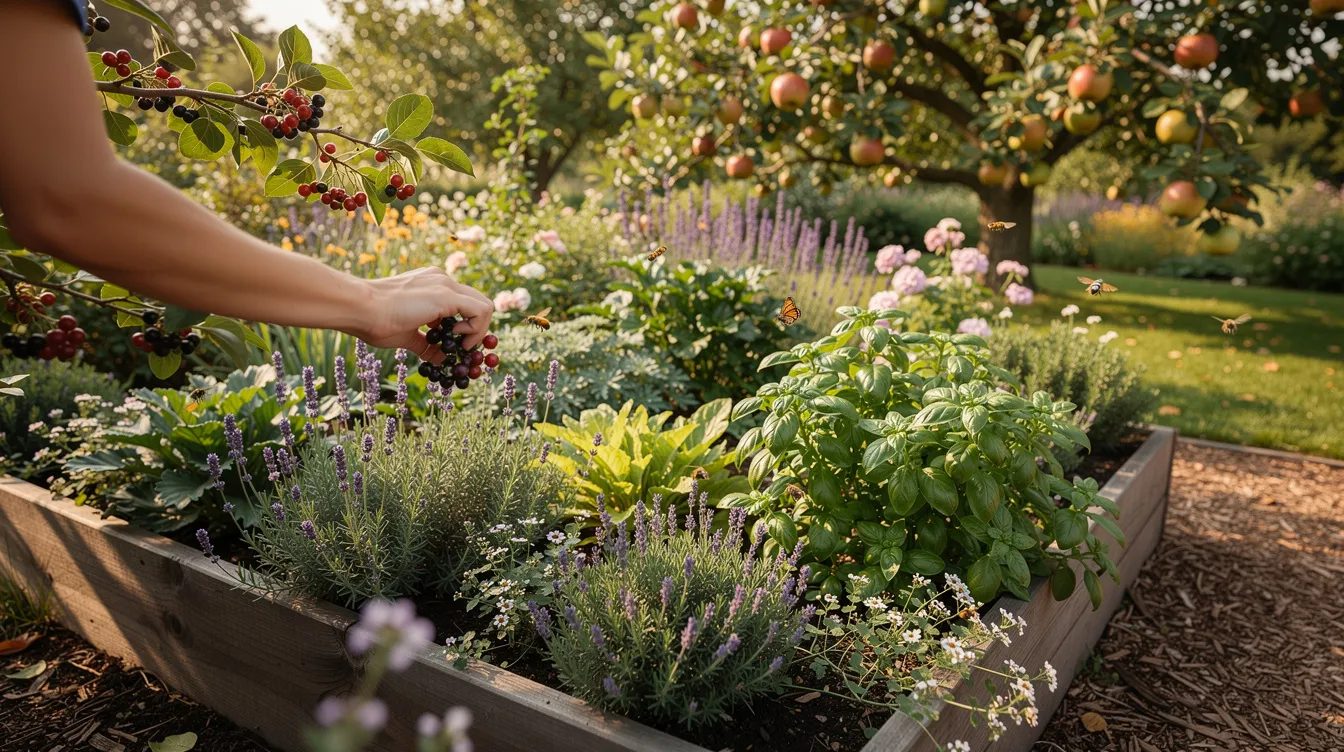
Having lots of different crops and species in the garden really helps improve the essential ecosystem services we need for long-term food security. For instance, planting a variety of apple trees means that if a late spring frost wipes out one of them, you've still got apples coming in from the ones that were late to bloom. And perennial food forest crops can extend the harvest season right through from early May berries to late September nuts. All this variety means fewer empty pantry moments when a single crop fails. The threat of biodiversity loss is serious: it's estimated to cost the UK's agricultural industry up to £700 million a year.
Pollinators like bees are contributing to crops worth over US$235 billion a year - in fact, without diversity among pollinators and other wildlife, key ecosystem services like pollination and natural pest control would collapse.
Food forests also act as carbon sinks and help to mitigate climate change. Deep-rooted trees and shrubs store carbon in both their wood and soil. Ecosystems like forests act as natural carbon sinks, absorbing over 2.6 billion tons of CO2 a year, making them one of the most valuable natural resources we have. A big meta-analysis from Oxford in 2023 found that mixed-species planted forests had about 70% more aboveground carbon storage than average monocultures and about 25% more than even the best single-species stands.
Food forests increase carbon storage and help regulate water. Mixed-species systems really cope way better with extreme weather because different species can tolerate different stresses. Biodiversity also acts as a buffer against environmental extremes and climate change, offering natural solutions to disasters such as floods and droughts. Sadly, wetland degradation has led to a 35% decline in global coverage since 1970, removing critical buffers for climate regulation and water management.
Genetic diversity within crops also protects against pests and diseases that thrive in warmer conditions. Growing several varieties of, say, potato or bean instead of just one can help guard against the kind of catastrophic failures we've seen in the past - from the Irish potato famine to banana Panama disease. With population growth and the demands it places, this approach is more important than ever.
How Food Forests Work: All the Layers Working Together
Food forests are human-designed ecosystems that mimic the structure and biodiversity of natural forests - they use multiple layers of edible and useful plants. Food forests combine trees, shrubs, herbs, and ground covers into an ecosystem where each layer supports the others.
Here are the classic seven layers of a temperate food forest with some real-world examples.
Layer Examples Function
Canopy trees Apples, sweet cherries, walnut Large fruit and nut production, carbon storage
Low trees Plums, pears, serviceberry Mid-level fruit, partial shade
Shrubs Currants, gooseberries, hazelnuts, Berries, nuts, wildlife habitat
elderberry
Herbaceous Comfrey, mint, chives, yarrow Nutrient mining, medicinal plants, pollinator food
Ground cover Strawberries, clover, thyme Soil protection, living mulch, retain moisture
Root layer Garlic, Jerusalem artichoke, Below-ground food production
perennial onion
Vertical/vine Grapevines, hardy kiwi, hops Vertical space use, additional harvests
Each layer plays a part in creating biodiversity, which is so important for resilience. Different root depths reduce competition and improve nutrient cycling. Varied flowering times feed pollinators year-round, supporting species diversity. Mixed root exudates feed all sorts of different soil microorganisms, boosting genetic diversity below ground.
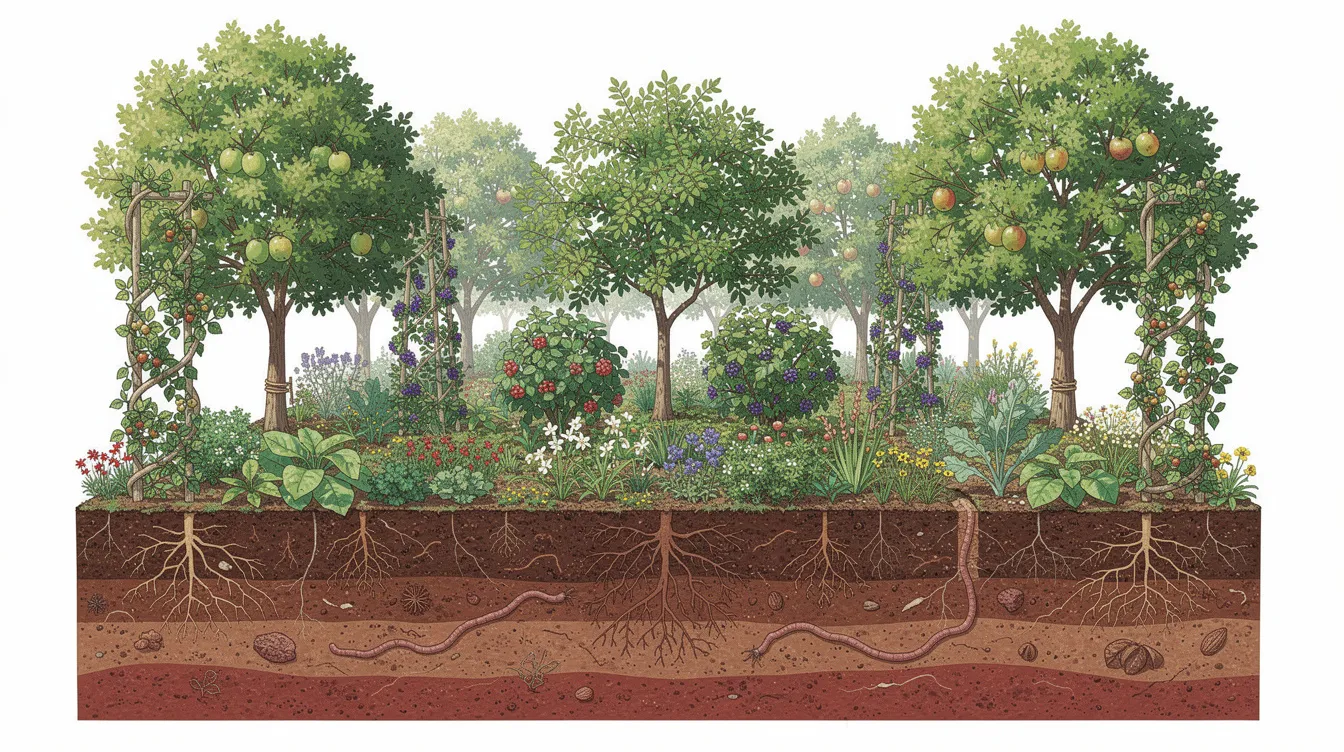
Food forests create habitats for wildlife and strengthen local food webs. They help by creating diverse habitats for all sorts of species, from ground-dwelling insects to birds in the canopy. We need these interactions for pollination, pest control, and soil health.
Food forests can be all different sizes:
A balcony or courtyard with dwarf fruit trees and climbing beans
An urban community plot that can connect all the fragmented green spaces in the city
Larger projects of 0.5-1 hectare or more in the peri-urban or rural areas - even human settlements with integrated tree cover At Sweetwater Farm on Whidbey Island, Washington, 24 acres have been transformed by integrating native species like Douglas fir with layers of fruit trees, vines, and mushrooms - a marriage of traditional wisdom with modern permaculture principles, all on a large scale to prove its effectiveness.
The Power of Biodiversity in Food Forests
Biodiversity is key to a self-sustaining food forest that needs fewer chemical inputs and is more productive after the initial investment. Compared with row-crop farming, food forests not only boost biodiversity but also enhance ecological functions and deliver a whole bunch of other benefits that make life easier for farmers.
Why Ecological Diversity Matters. When biodiversity is high in a food forest, natural pest control is better due to the presence of birds, ladybirds, hoverflies, and parasitic wasps. This approach creates a diverse range of habitats that sustain a variety of pollinators and other wildlife, while supporting soil fertility and natural pest control. With a mix of different trees and plants, if one crop is hit by disease, pests, or late frost, the chances of total crop loss are much lower thanks to the buffer provided by other species. A healthy ecosystem in a food forest provides food and shelter for other wildlife that keep the system in balance.
The Human Benefits. Regular access to a diverse selection of wild foods, such as berries, greens, herbs, and nuts, can lead to better nutrition and improved health outcomes for people. Being outdoors in a richly layered, wildlife-friendly environment has a proven track record of boosting mental health compared with spending time on bare lawns or concrete. Food forests offer a chance to get hands-on with ecology and gardening, providing clean air and a connection to plant life that urban environments just can't deliver.
Getting Ahead with Economic and Labor Savvy. Once established (5-7 years is a pretty typical timeframe for many temperate food forests), diverse perennial systems normally need less watering, tilling, and replanting - this opens up a range of possibilities for income, including fresh produce, value-added products, workshops, and even eco-tourism tied to themes of sustainability and renewable energy.
Long-term Benefits of Food Forests for Climate and the Environment. Food forests promote healthier soil through diverse plant life. They also help with water retention and prevent soil erosion. Shade reduces evaporation, and leaf litter builds 'sponge-like soil' that prevents flooding. Food forests reduce reliance on synthetic chemical pesticides and fertilizers by creating self-sustaining systems, a real game-changer for the environment.
Creating Real Biodiversity in a Food Forest
You don't need a vast amount of land to get started - even a small garden or community plot can host meaningful biodiversity, and every native species you add will strengthen local food webs - making it a great chance to break the rows of identical crops mould.
Working Out What You've Got. Before planting, observe how sun, shade, wind, and water patterns play out over the seasons. Create a map of existing species, and you might find some useful wildlife-friendly stuff already there, like an oak or a hedgerow - things like this make great biodiversity anchors to build your food forest around.
Choosing the Right Plants to Boost Genetic and Species Diversity. Mix up your plant selection to add some variety to your food forest - at least 3-4 different apple varieties with different harvest times and resistance to disease is a good place to start. Include native species such as hawthorn, hazel, and sloe to support local insects, birds, and other wildlife. Steer clear of invasive species that might overtake the natural ecosystem and instead seek out local seed networks for varieties that will thrive in your projected climate.
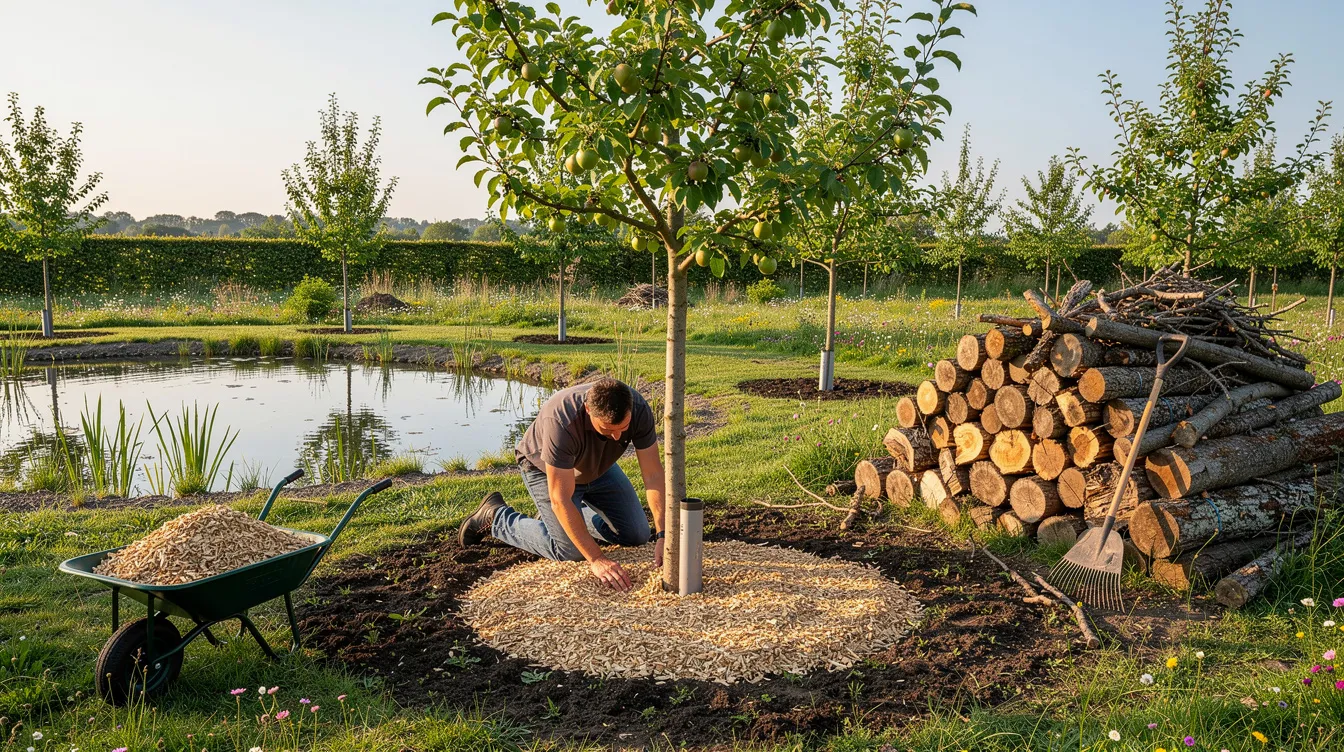
Structural and Habitat Variety. Add a few deadwood piles, small ponds or water dishes to attract beneficial insects and wildlife - simple things like nesting boxes, bee hotels, log piles and stone borders for reptiles and beetles can create a real haven for wildlife. Food forests can even connect up fragmented green spaces in urban areas.
Keeping Your Soil Healthy. Avoid digging or rototilling after perennials are in place - this will help protect fungal networks and soil structure, which is a big part of the soil's fertility. Use living mulches like clover and vetch along with leaf mulch or wood chips to feed soil organisms and keep the soil moist.
Planning for Continuous Growth and Harvest. Create a flowering calendar like crocus and willow in March, comfrey and currants in May, and oregano and thyme in July-August. This will keep nectar and pollen flows going for pollinators and stabilize species diversity across the year - it's a simple way to provide food for wildlife that keeps your system healthy.
In many ways, food forests can help people in communities access fresh produce, and the key to making it all happen is engaging local stakeholders from day one.
Keeping Your Biodiverse Food Forest Healthy
Planting is just the start - if you keep the pressure off the system with light-touch management over the years, you can really keep biodiversity strong for decades - and you'll get to see how the species composition shifts and adapts as the system matures. Low-input, diversity-friendly care. Think light pruning, heavy observing. There's no need to rush into action; take time to watch what's going on in your food forest before you decide to intervene. Cut back on synthetic pesticides and fertilizers - they harm beneficial insects and soil life, and that's just undermining all the biodiversity you're trying to build. Let nature do the hard work.
Succession and renewal. As your canopy trees get older (often after 10-20 years), the area gets much more shade. Time to add some shade-tolerant plants like ramsons, ferns, and currants. Gradually swap out the short-lived shrubs and herbaceous plants for new ones to keep your genetic and species diversity high. Don't worry if the ecosystem changes a bit - that's just the way it works.
Monitoring and simple indicators. Do a headcount of pollinator species on a sunny day. Make a note of the number of wild bird species visiting at different times of the year. Check if your soil is crumbly or compacted and keep a simple log of biodiversity and harvests each year. These simple observations will help you spot trends and adjust what you're doing before things go wrong.
Community involvement. Working together with schools, neighbors, and local groups not only spreads knowledge but also brings a wide variety of plants and seeds into the system. Community harvest days, workshops, and outdoor classrooms not only support food security but also bring people together and strengthen community health. And a food forest is a great place to bring people together, even in areas with very little green space.
The best food forests aren't static - they change and evolve over time. Change is normal, and it's a good thing - each season brings new plants, new interactions, and new harvests.
Frequently Asked Questions
How much land do I need to start a proper biodiverse food forest?
You'd be surprised what you can fit into a small space - a full seven-layer food forest can fit into as little as 250-500 sq ft. Even a corner of your garden as small as 100-200 sq ft can host a mini-guild of plants - one fruit tree, a few berry bushes, some herbs, and ground covers. Larger plots of half an acre or a full acre will support far more species diversity and wildlife habitat, but the principles of working with biodiversity can be applied even to tiny urban gardens and courtyards.
How long does it take for a food forest to start producing and for some real biodiversity to develop?
Herbs and some berries can be produced in the first year or two; shrubs usually start producing in 2-4 years, and most fruit or nut trees take 3-7+, depending on the rootstock and species. But you'll start to notice more wildlife, like birds and insects, appearing in the first 3-5 years once you've got a diverse mix of plants, water, and shelter in place.
Can I still grow annual vegetables without harming the biodiversity?
Yes - annuals like tomatoes, beans and lettuce can be grown in sunny glades, along the edges of the forest or in early-stage food forests before the canopy gets too dense. Use raised beds, thick mulch, and diverse companion planting to keep the soil full of life and species diversity while still getting your annual fix.
Is a biodiverse food forest a lot more work than a traditional veggie garden?
The initial design and planting phase (first 2-3 years) takes a bit more planning and elbow grease, especially when you're planting trees and mulching, but after that, maintenance is pretty light. Just some seasonal pruning, weeding and harvesting, with none of the watering, tilling and replanting that annual vegie beds need.
How do I choose species that will support biodiversity in my local climate?
Mix it up with some native trees and shrubs that do well in your area (like hawthorn, blackthorn, or hazel) plus some adapted fruit and nut varieties that are tested and rated for your region. Talk to local agroforestry groups, seed networks, and extension services for lists of species that are reliable and disease-resistant for your projected climate change scenario.
“This article was initially generated using Surfer SEO’s AI‑assisted content creation tools, which provided keyword research, structure guidance, and draft content based on top‑ranking pages. The draft was then extensively edited for tone, style, and factual accuracy, with additional human‑written sections added to enhance depth and context.”


