Creating a Balcony Garden
Creating a Balcony Garden
Turn Your Apartment Balcony into a Thriving Food Oasis
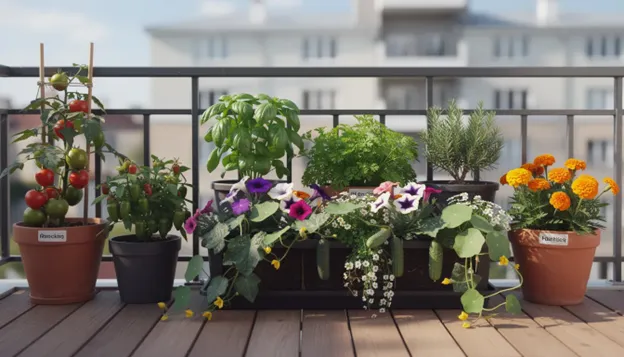
Container gardening is the perfect solution for anyone looking to grow a lush garden in a small space. Whether you have a tiny balcony, a compact patio, or even access to a rooftop, you can create a thriving oasis filled with leafy greens, vibrant flowers, and delicious vegetables. The beauty of container gardening lies in its flexibility—by choosing the right container size and quality potting soil, you can grow everything from tomatoes and peppers to herbs and salad greens, even if you’re working with limited space.
This guide is for apartment dwellers and anyone with limited outdoor space who wants to grow their own food and flowers. Balcony gardening offers a practical and rewarding way to enjoy fresh produce and greenery even without a traditional yard.
This approach is especially ideal for apartment dwellers who may not have access to a traditional yard. With just a few pots or planters, you can transform your balcony into a sustainable garden that provides fresh produce and a splash of color all season long. Container gardening also allows you to experiment with different plants, swap out flowers for vegetables as the seasons change, and easily move your garden to catch the best sunlight. Plus, it’s a wonderful way to bring life and greenery to your home, no matter how small your outdoor area may be.
By focusing on the essentials—container size, good soil, and the right mix of plants—you’ll be amazed at how much you can grow in a compact space. From crisp lettuce and fragrant basil to cheerful flowers and even small fruiting vegetables, container gardening makes it possible to enjoy the rewards of gardening in any setting. It’s a sustainable, creative, and deeply satisfying way to make the most of your balcony or patio.
Key Takeaways
Even a small balcony measuring 4x8 feet can produce organic vegetables, herbs, and edible flowers in containers using sustainable methods—no yard required.
Understanding your balcony’s sunlight exposure, wind patterns, and weight limits is essential before selecting crops and containers.
Quality organic potting mix with compost and coir, paired with natural fertilizers, creates healthy and productive container plants without synthetic chemicals.
Combining vegetables, herbs, and flowers in mixed containers delivers beauty, companion planting benefits, and natural pest control all at once.
Simple watering solutions like self-watering pots, drip lines, and mulching make maintaining a balcony food garden manageable for busy city dwellers.
Start with Your Balcony: Light, Wind, and Rules
Balcony gardening involves assessing sunlight and space, selecting appropriate plants, and using containers with proper drainage. Picture a typical apartment building balcony—maybe 4 feet deep and 10 feet wide, tucked between concrete walls with a view of rooftops and sky. Before you fill it with pots and dreams of summer tomatoes, knowing your balcony’s conditions is the essential first step to creating a balcony garden that actually thrives.
Tracking sunlight:
Observe your balcony for one full day, checking morning, midday, and afternoon to see where light falls and for how long.
Full sun is defined as receiving 6 or more hours of sunlight daily (Fact: "Full sun is defined as receiving 6 or more hours of sunlight daily."). Full sun means six hours or more of direct sunlight—ideal for tomatoes, peppers, and most vegetables.
Part sun (3-5 hours) works beautifully for leafy greens, many herbs, and root crops like beets and carrots.
Shade is defined as receiving less than 4 hours of sunlight daily (Fact: "Shade is defined as receiving less than 4 hours of sunlight daily."). Shade (under 3 hours direct light) limits you to lettuce, spinach, mint, and shade-tolerant greens.
Understanding microclimates:
Tall buildings and overhangs create shadows that shift throughout the day, sometimes giving you partial shade even on a south-facing terrace.
Heat-loving crops like tomatoes and peppers demand those full six hours, while leafy vegetables actually prefer protection from intense afternoon sun.
Light-colored walls can reflect additional warmth and brightness, sometimes compensating for reduced direct exposure.
Managing wind exposure:
Upper floors frequently experience strong, drying winds that can snap stems and topple pots.
Bamboo screens, fabric panels, or even a row of sturdy ornamental grasses act as effective windbreaks.
Group containers together to create a protective microclimate where plants shelter one another.
Planning for a water source is also crucial, as many balconies and rooftop gardens lack direct access to an outdoor water source. Consider how you’ll water your plants—alternatives like using a nearby sink or bathtub can help ensure your garden stays hydrated.
Building rules and weight limits:
Check your lease or building guidelines—many limit balcony weight to 200-500 lbs total
Wet soil weighs approximately 40 lbs per cubic foot, so ceramic pots packed with damp potting mix add up quickly
Lightweight materials like fabric grow bags and resin planters keep you safe and compliant while still looking beautiful
Balcony Garden Restrictions
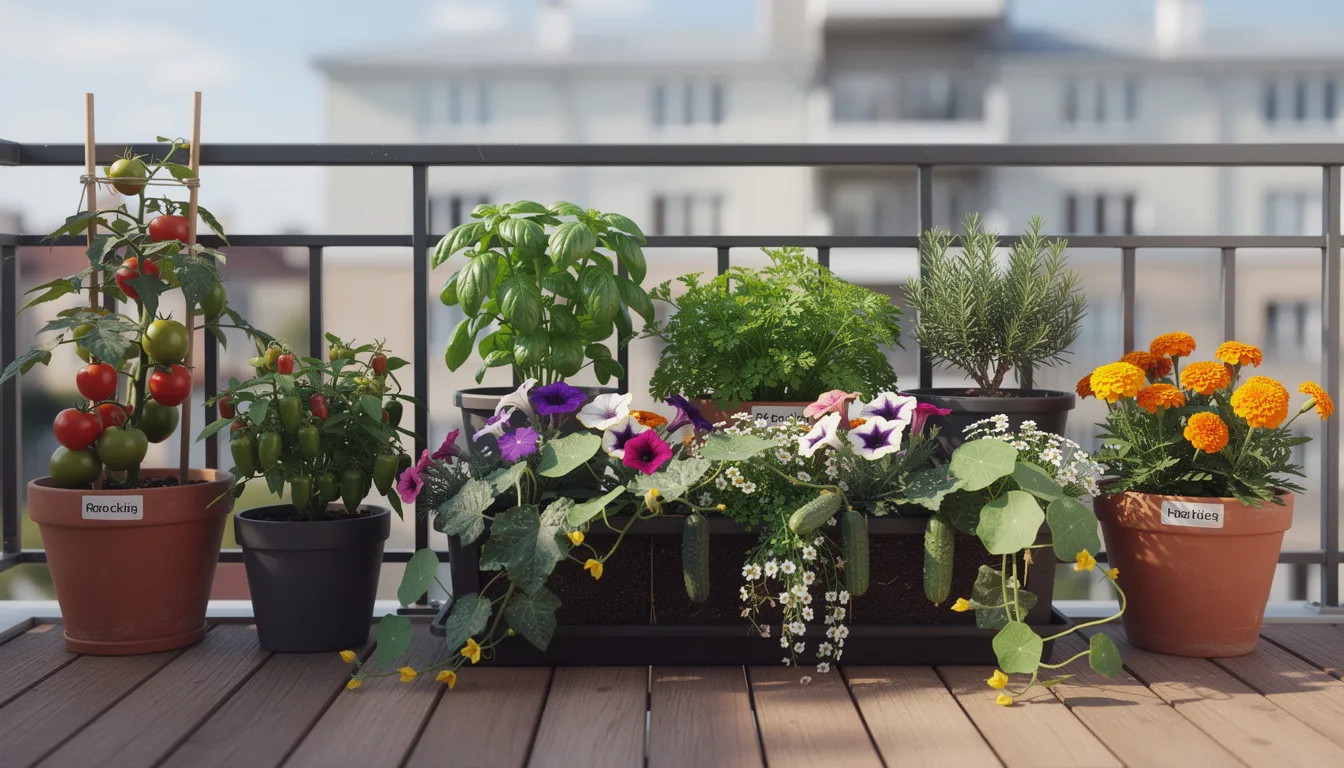
Before you start filling your balcony with containers and plants, it’s important to be aware of any restrictions that might apply in your apartment building or condo. Many buildings have specific rules about what you can place on your balcony, especially when it comes to balcony railings, the number and size of containers, and the types of plants allowed. These rules are often in place to ensure safety, maintain the building’s appearance, and prevent damage.
Plan Your Food Oasis Layout
Think of your balcony as a tiny outdoor room rather than just a ledge for a few pots. With thoughtful planning, you can create distinct zones for growing plants, a spot to sit with morning coffee, and even a small corner for storing tools and extra soil.
Sketching your plan:
Draw a simple scaled sketch (1 square = 1 foot) to visualize container placement, pathways, and seating
Leave at least 18 inches of walkable space for access and airflow between containers
Consider how you’ll move through the space to water, harvest, and simply enjoy your garden
Using vertical space:
Wall-mounted shelves hold small pots of herbs at eye level for easy snipping
Rail planters attach to balcony railings, adding growing area without taking floor space
Hooks for hanging baskets let you dangle trailing nasturtiums or cherry tomatoes overhead
A narrow trellis against the wall supports climbing crops like bush beans or cucumbers
Arranging by height and light:
Place taller plants (tomatoes, pole beans) at the back or sides so they don’t block sunlight from lower containers
Keep small pots of lettuce and herbs in the front where they’re easy to reach and harvest frequently
Grouping by water needs:
Thirsty crops like tomatoes and basil cluster together for efficient watering
Drought-tolerant perennials like rosemary and thyme share their own section with less frequent drinks
Planning for aesthetics:
Arrange containers by height to create a lush, layered look that draws the eye upward
Mix foliage textures—feathery dill beside broad kale leaves, spiky chives next to ruffled lettuce
Consider container colors and materials as part of your design, not just afterthoughts
Choose the Right Containers and Soil
Container choice directly impacts plant health, balcony safety, and the overall style of your small space garden. The right combination keeps roots happy, prevents structural worries, and creates a cohesive aesthetic.
Sizing your containers:
Large container sizes (5-gallon buckets or 12-14 inch pots) suit tomato plants, peppers, and larger plants like eggplant
Medium containers (8-10 inch pots) work well for salad greens, beets, and carrots
Long window boxes provide ideal homes for mixed herbs, green onions, and colorful annuals
Lightweight vs. heavy materials:
Fabric grow bags promote air-pruning of roots, resulting in 25% denser root systems, and they’re featherlight when empty
Resin pots and recycled food-grade buckets offer durability without the weight of traditional ceramic pots or terracotta
Heavy materials look beautiful but add significant weight—reserve them for ground-level spaces or use them sparingly
Drainage essentials:
Every pot must have drainage holes—no exceptions
Use saucers or trays beneath containers to protect balcony floors and prevent water from dripping onto neighbors below
Elevate pots slightly on pot feet or small stones to ensure water flows freely
Building the right soil:
Skip garden soil from the ground—it compacts in containers and often harbors pests
Choose a peat-free organic potting mix with compost, coir, and bark for structure and moisture retention
Avoid peat moss due to environmental concerns; coir (coconut husk fiber) absorbs 10 times its volume in water and comes from a renewable source
Adding organic matter:
Mix in home compost or worm castings (about 5% by volume) to boost microbial activity
Top-dress with additional worm castings monthly during the growing season
Avoid synthetic slow-release fertilizers—natural options keep your edible garden truly organic
Select Vegetables, Herbs, and Flowers for Containers
Compact and fast-growing varieties are your allies in a limited space. Selection must match your sun exposure—full sun opens doors to heat-loving crops, while partial shade calls for leafy greens and cooler-season favorites.
Vegetable plants for sunny balconies: Cherry tomatoes thrive in 5-gallon containers, with dwarf varieties like Tiny Tim producing 5-10 fruits per plant. Tomatoes are popular for balcony gardens and can produce fruit year-round if moved inside in cold-winter areas. Compact dwarf peppers yield impressively—20 to 50 fruits through the summer long. Peppers thrive in containers and prefer warm conditions. Bush beans don’t require trellising and produce abundantly in medium pots. For root vegetables, try short-rooted carrots like Paris Market in 12-inch deep containers, plus beets and radishes that mature quickly for succession planting. Potatoes are a versatile crop suitable for container gardening; plant seed potatoes in deep containers and harvest once the foliage dies back. Eggplants are well-suited for container gardening because they prefer warm conditions. Tomatoes, peppers, cucumbers, lavender, and succulents are all suitable for full sun conditions.
Leafy vegetables for any exposure: Cut-and-come-again lettuce varieties let you harvest outer leaves continuously for 4-6 weeks of salads. Spinach, kale, and chard handle partial shade gracefully and actually prefer some afternoon protection. These leafy greens form the backbone of a productive balcony garden, providing harvest after harvest from the same containers.
Herbs that earn their space: Herbs generally require less maintenance than vegetables and can add variety to your balcony garden. Basil loves full sun and pairs beautifully with tomatoes—plant them together for convenience and companionship. Basil is a great herb for balcony gardening and can be grown in a large pot. Parsley, chives, and cilantro tolerate varying light conditions. Perennials like rosemary and thyme return year after year with minimal care. Mint deserves its own pot (it spreads aggressively), and sage adds both culinary value and silvery texture.
Flowering companions: Marigolds emit natural chemicals that deter aphids and nematodes by 60-80%—tuck them around your vegetable plants. Nasturtiums serve double duty as edible flowers and “trap plants” that lure aphids away from crops you care about. Calendula attracts pollinators while offering medicinal petals for salves and teas. Alyssum and cosmos fill gaps with beauty while supporting beneficial insects.
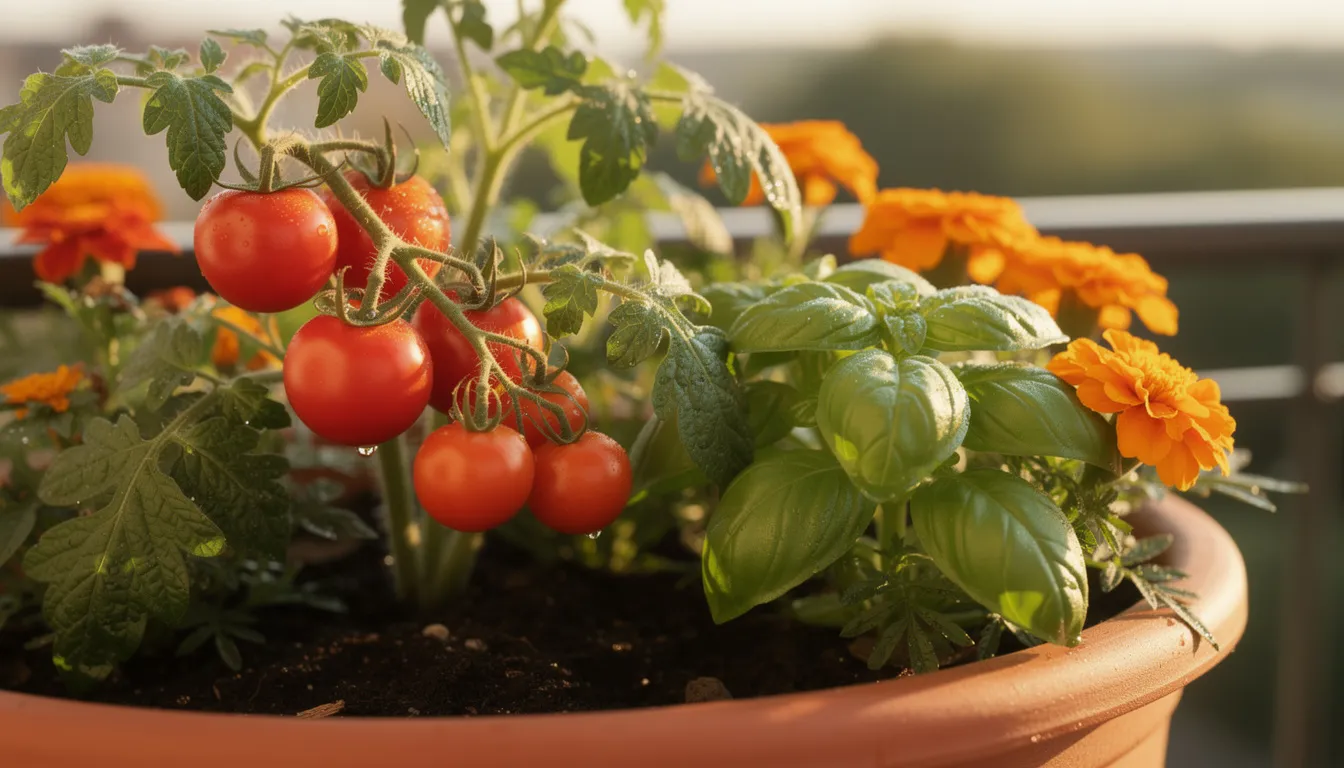
Example planting combinations: In a single 5-gallon pot, grow one compact tomato plant with basil around the edges and trailing nasturtiums spilling over the sides. This combination looks stunning, tastes delicious, and functions as natural pest control.
Seasonal timing: Cool-season crops like lettuce, arugula, spinach, and peas can begin in early spring before your last frost. Wait until after frost danger passes to plant warmth-lovers like tomatoes, cucumbers, and peppers. As summer winds down, transition back to kale, chard, and fall greens for harvest into late autumn.
Design for Beauty: An Edible, Aesthetic Balcony
Your balcony garden should feel like a mini urban courtyard—a lush retreat where you want to linger, not just a utilitarian row of plastic pots. With intention, even a small balcony becomes genuinely beautiful.
Creating container cohesion:
Choose a simple color palette for your pots—all terracotta tones, or a mix of black and natural wood
Consistency in container style creates visual calm even when plants themselves vary wildly
Mix in a few special pieces (a glazed pot, a copper planter) as focal points
Layering heights and textures:
Tall tomatoes or climbing beans provide vertical interest at the back
Mid-height peppers and kale fill the middle layer
Low herbs and trailing flowers spill over edges, softening hard lines and hiding plain walls
Mixing small trees, shrubs, foliage plants, and colorful annuals can add interest and diversity to your balcony garden.
Flowers cascading over railings and climbing up trellises can bring color and fragrance to your space.
Trailing or cascading plants can be used to create a lush look, with balcony edges covered for a more cohesive and appealing appearance.
Strategic placement:
Position your most attractive pots nearest the door or seating area where you’ll enjoy them most
Use lush herbs and colorful annuals to soften balcony railings and hide utilitarian elements
Place fragrant plants like basil and lavender where breezes carry their scent toward seating
Using colorful annuals such as marigolds, zinnias, and petunias can add vibrancy to your balcony garden.
Evening atmosphere:
Solar fairy lights wound through a trellis transform your patio into a magical space after dark
A small lantern or candles on a side table extend your enjoyment into evening hours
The garden becomes a relaxing retreat, not just a food production zone
Functional decor:
A narrow wooden bench doubles as both seating and an elevated stand for containers
Decorative hooks hold tools, watering cans, and hanging baskets
A small tray or basket keeps seed packets and gloves organized and accessible
Companion Planting and Organic Pest Control
When people and pets sit inches from your crops, avoiding chemicals isn’t just preference—it’s common sense. Flowers, herbs, and thoughtful plant pairings create a naturally balanced ecosystem right on your terrace.
Classic companion pairings:
Tomatoes with basil and marigolds form a powerhouse trio: basil enhances tomato flavor through shared volatiles, while marigolds repel pests
Lettuce tucked under taller peppers enjoys the shade while maximizing space
Peas interplanted with fragrant herbs benefit from natural pest confusion
Aromatic pest deterrence:
Strong-scented herbs like rosemary, thyme, and garlic chives confuse pests that navigate by smell
Interplant these throughout your containers rather than isolating them in a single pot
The more aromatic diversity, the more confused the pests become
Natural pest control tactics:
Hand-pick caterpillars, aphids, and other visible pests into soapy water—it’s surprisingly effective
Spray diluted soap solution (1 teaspoon castile soap per quart of water) directly on aphid colonies
Use neem oil sparingly in evening hours to avoid harming beneficial insects active during daylight
Attracting beneficial insects:
Pollen-rich flowers like calendula and alyssum draw ladybugs and hoverflies that devour aphids
Even a few small pots of these flowers attract pollinators and predators to your green space
On high-rise balconies above 10 stories, hand-pollinating with a small brush may increase fruit set significantly
Avoiding synthetic chemicals:
Skip synthetic pesticides and fungicides entirely—in dense urban settings, drift affects neighbors and indoor air quality
Healthy plants, good airflow (space containers 12 inches apart), and cleanliness prevent most problems before they start
Watering, Feeding, and Everyday Care
Balcony containers dry out faster than ground soil, especially in hot, windy cities where summer sun and reflected heat conspire against moisture retention. Consistent care makes the difference between struggling plants and a thriving food oasis.
Daily watering guidance:
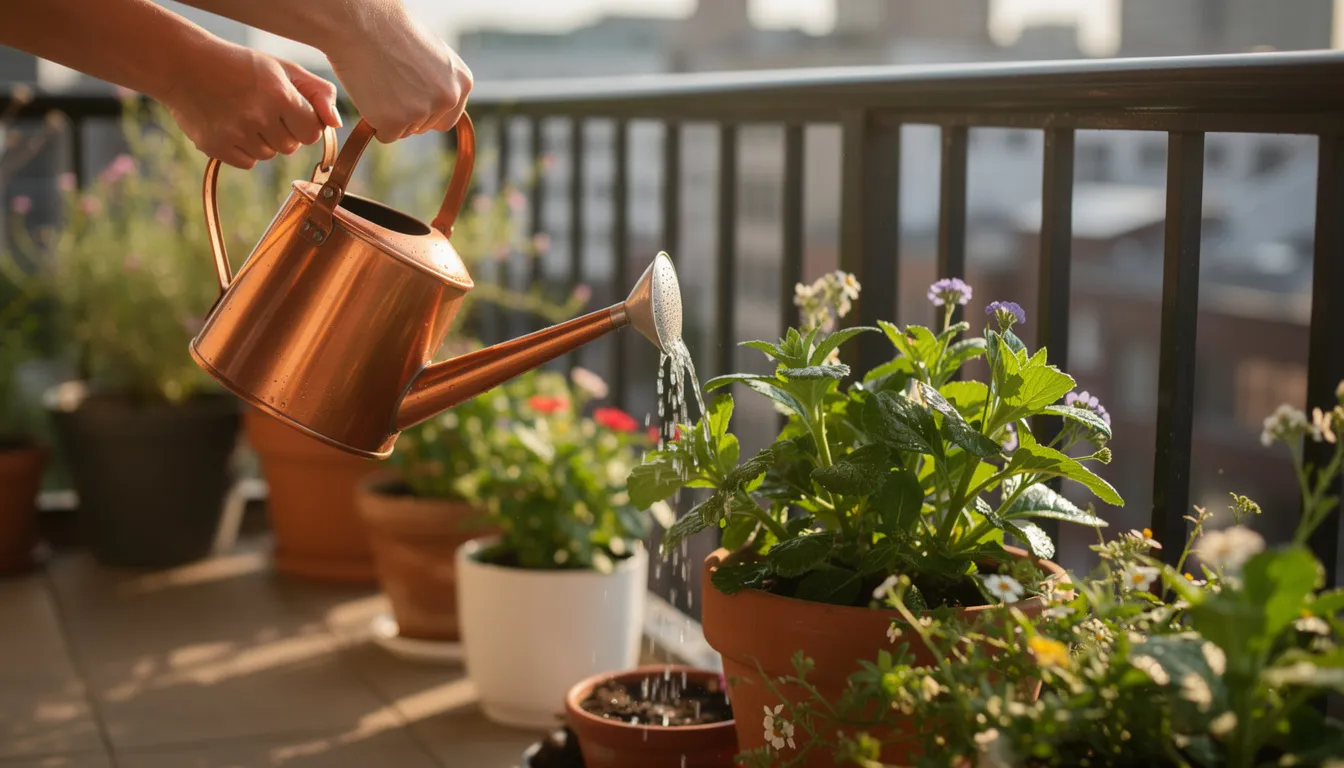
Balconies dry out quickly, so it is advisable to water regularly, ideally in the morning.
Check soil with your finger daily during summer—if the top inch feels dry, it’s time to water.
Water deeply until liquid flows from drainage holes, ensuring roots receive moisture 6 inches down.
Watering needs vary depending on the species of plants in your balcony garden.
Avoid shallow splashes that encourage surface roots and leave deeper soil parched.
Excess water can lead to root rot in balcony gardens.
Plants in containers need to be watered more frequently as they grow and temperatures rise.
Low-effort watering solutions:
Watering cans are essential for regular watering in balcony gardens.
Self-watering containers with built-in reservoirs reduce watering frequency significantly.
Simple gravity-fed drip kits from a railing-mounted reservoir deliver steady moisture.
Reuse indoor greywater (from rinsing vegetables, for example) where safe and permitted.
Consider Oya or ollas (terracotta watering pots) that release water slowly and can reduce usage by 50%.
Mulching for moisture retention:
Cover container surfaces with straw, shredded leaves, or coconut husk chips.
Mulch reduces evaporation by up to 30% and keeps soil temperature stable.
It also suppresses weed seeds that occasionally hitchhike in potting mix.
Organic feeding schedules:
Potted plants deplete nutrients quickly, so it is necessary to apply a balanced fertilizer or organic compost every few weeks during the growing season.
Regular fertilization is key to a thriving balcony garden.
Apply diluted liquid seaweed, fish emulsion, or compost tea every 2-4 weeks during the growing season.
Top-dress with worm castings monthly to maintain soil biology and slow-release nutrients.
Compost tea (steeped 1:10 ratio) provides gentle NPK feeding without synthetic salt buildup.
Quick daily and weekly tasks:
Remove yellowing leaves promptly to redirect energy and reduce disease
Check undersides of leaves for pest eggs and early infestations
Harvest frequently—picking lettuce leaves and herbs encourages continued production
Pinch herb tips to keep plants bushy rather than leggy and flowering prematurely
Sustainable and Low-Waste Balcony Gardening Practices
Container gardening on a balcony connects to broader sustainability goals in meaningful ways. Growing your own food means less packaging, shorter “food miles,” and a gentler impact on the environment—even from the tenth floor of an apartment building.
Repurposing materials:
Food-grade buckets from restaurants and bakeries make excellent large containers for growing vegetables
Wooden crates, with liner fabric added, create rustic raised planters
Glass jars work for rooting herb cuttings before transplanting
Reclaimed shelving and pallet wood become vertical growing structures
Small-scale composting:
A compact worm bin (vermicompost) fits indoors or in a shaded balcony corner
Kitchen scraps transform into rich fertilizer without leaving your home
Even a small bin produces enough worm castings to supplement several containers
Conserving water:
Capture rainwater in small containers where building rules and local regulations allow
Reuse water from rinsing produce, boiling pasta (cooled), or dehumidifiers
Every drop conserved reduces demand on municipal water sources
Choosing sustainable products:
Select peat-free, organic-certified potting mixes and amendments
Use untreated, locally sourced wood for any DIY structures like shelves or trellises
Avoid single-use plastic pots when possible—fabric bags and reused containers work beautifully
End-of-season soil reuse:
Don’t throw away old potting mix—refresh it with compost and use it again
Remove roots and debris, add 20-30% fresh compost, and the mix regenerates
Rotate crops so tomatoes and peppers don’t occupy the same soil or containers year after year, reducing disease pressure
Seasonal Calendar and Simple Crop Rotation
Even a balcony benefits from a loose yearly plan that keeps harvests coming from early spring through late fall. A simple calendar prevents empty pots and maximizes your limited space.
Temperate-climate growing schedule:
March-April: Sow cool-weather greens (lettuce, spinach, arugula), peas, and radishes directly in containers; these handle light frost and cool soil
May (after last frost): Transplant tomato plants, peppers, cucumbers, basil, and other warmth-lovers outdoors
June-August: Maintain summer crops with consistent water, feeding, and harvest; succession-plant quick greens in gaps
Late August-September: Transition to fall crops—plant kale, chard, beets, and cool-season salad greens for autumn harvest
Filling gaps with quick crops:
Radishes mature in 25-30 days—perfect for tucking into spaces between slower-growing vegetables
Baby salad greens reach harvest size in 3-4 weeks
These gap-fillers keep containers productive while you wait for tomatoes and peppers to ripen
Simple container rotation:
Avoid growing tomatoes, peppers, or other nightshades in the same pot two years running
Disease organisms and nutrient depletion build up in soil when crops repeat
Rotate families: follow tomatoes with leafy greens, then root crops, then back to tomatoes
Extending the season:
Hardy herbs like rosemary and thyme survive mild winters outdoors in protected corners
Cold-tolerant greens (kale, mâche, spinach) produce into late fall and even early winter
Bring a few small trees in pots or tender herbs indoors before hard frosts to overwinter by a sunny window
FAQ
How much food can I realistically grow on a small balcony?
Even a 4x8 foot balcony with 6-8 medium and large containers can provide weekly salads, regular herb harvests, and occasional tomatoes or peppers throughout summer. Studies suggest a 5-square-meter space can yield 25 -45 pounds ( 10-20 kg) of vegetables and herbs yearly—enough to noticeably reduce grocery purchases for fresh produce. Your yield depends on sun exposure, container size, and crop selection, but one or two cherry tomato plants, several pots of greens, and a few herb planters make a real difference.
Can I grow edible plants on a north-facing balcony?
A north-facing balcony with limited direct sun suits shade-tolerant crops better than fruiting vegetables. Lettuce, spinach, arugula, mint, parsley, chives, and many Asian greens thrive with just 3-4 hours of light. Tomatoes and peppers will struggle and likely produce little fruit, but you can still create a lush, productive garden focused on herbs and leafy vegetables that actually prefer protection from intense sun.
Is it safe to use city tap water and balcony runoff on my edible plants?
In most cities, tap water is perfectly safe for watering edible container plants. Chlorine levels, while present, rarely harm plants significantly. If you’re concerned, let water sit in an open container overnight—chlorine will dissipate naturally. Avoid using runoff that may contact painted surfaces, treated wood, or areas where contaminants could accumulate. When in doubt, stick with fresh tap or collected rainwater.
What if my balcony gets very strong wind?
High-rise balconies often experience strong, drying winds that can damage foliage, desiccate soil, and topple lightweight pots. Use heavier, stable containers on the floor rather than elevated surfaces. Group pots together so plants shelter one another. Install windbreaks like bamboo screens, fabric panels, or mesh that reduce wind speed by 40-60% without blocking light entirely. Stake tall plants like tomatoes and secure trellises firmly.
How do I keep my balcony garden from attracting pests into my apartment?
Healthy plants, good airflow between containers, and basic cleanliness minimize pest problems dramatically. Remove dead leaves, spent flowers, and fallen fruit promptly—these attract insects. Position plants slightly away from doors and windows rather than directly against openings. Use gentle organic controls (hand-picking, soap sprays, neem oil) early before small problems become infestations. A well-maintained garden creates far fewer pest issues than a neglected one, and most balcony insects have no interest in moving indoors.
Conclusion
In conclusion, starting a balcony garden is a rewarding way to bring new life and color to your apartment building, no matter how limited your space may be. With a little planning and the right tips, you can create a sustainable container garden that thrives all summer long—producing fresh vegetables, fragrant herbs, and beautiful flowers right outside your door. Container gardening is not only practical for growing vegetables and herbs in small spaces, but it also helps attract pollinators, supports a healthy environment, and adds a touch of nature to your daily life.
Remember to choose containers and soil that suit your plants’ needs, pay attention to any building restrictions, and select crops that will flourish in your unique balcony conditions. With creativity and care, your balcony can become a vibrant garden oasis, providing you with fresh harvests, a peaceful retreat, and a sense of accomplishment. Whether you’re a seasoned gardener or just starting out, container gardening offers endless possibilities for making the most of your space. So gather your pots, pick your favorite plants, and get ready to enjoy a lush, productive garden all summer long—right on your own balcony!


